
Agras T100 at 3000m: Busting the Myths of High-Altitude Payload Optimization on Mountain Peaks
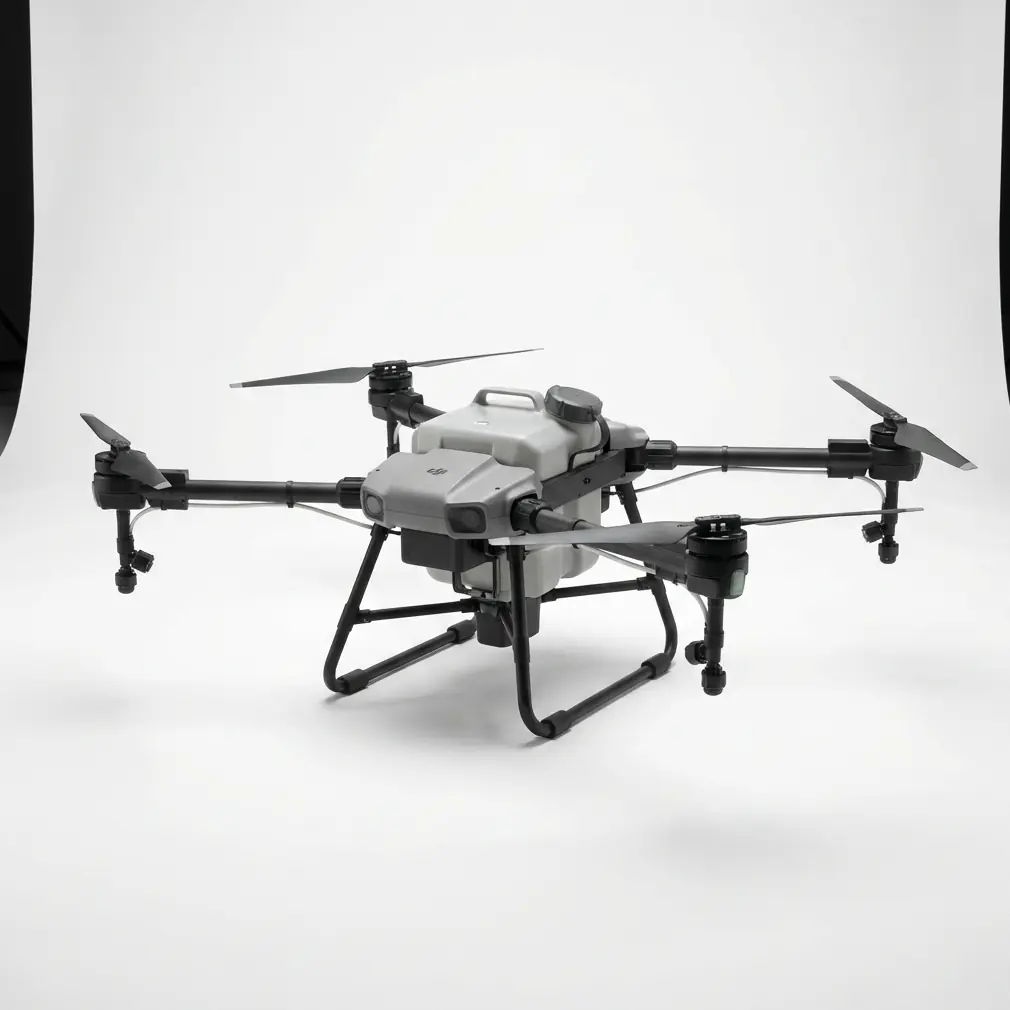
Agras T100 at 3000m: Busting the Myths of High-Altitude Payload Optimization on Mountain Peaks
TL;DR
- Altitude steals power: At 3000m elevation, air density drops roughly 30%, demanding aggressive payload reduction and precise nozzle calibration to maintain effective coverage
- The T100's coaxial twin rotor system delivers the redundancy and lift compensation needed for thin-air operations, but only when operators understand the physics at play
- Pre-flight sensor maintenance—especially wiping binocular vision sensors—isn't optional at altitude; dust, frost, and condensation will blind your obstacle avoidance faster than you can say "terrain collision"
I've been spraying crops since before GPS was a standard feature on anything with wings. Spent decades in fixed-wing ag aviation, transitioned to rotary, and now I run drone operations across some of the most unforgiving terrain on the planet. Mountain agriculture isn't for the faint-hearted, and neither is flying a 100kg payload at elevations where most pilots would rather stay on the ground sipping coffee.
The Agras T100 has become my workhorse for high-altitude operations. But I'm tired of hearing the same recycled myths from operators who've never actually pushed a heavy-lift drone above 2500m. Let's cut through the noise.
The Pre-Flight Ritual That Saves Missions
Before we talk payload optimization, let me share something that separates professionals from weekend warriors: the binocular vision sensor wipe.
At 3000m, temperature swings are brutal. You might start your morning at -5°C and hit 15°C by midday. That differential creates condensation on every optical surface. The T100's spherical radar system handles obstacle detection beautifully, but the binocular vision sensors need clear glass to function at 100% efficiency.
Every single morning, before I even power on the aircraft, I take a microfiber cloth—dedicated solely to this purpose—and methodically clean each vision sensor. Front, back, sides. Takes ninety seconds. Prevents thousands in repair costs and, more critically, keeps the drone's safety systems operating at full capacity when you're navigating steep terrain with limited margin for error.
Pro Tip: Keep your sensor cleaning cloth in a sealed plastic bag inside your flight case. Mountain dust is abrasive and will scratch optical surfaces if your cloth picks up grit. Replace the cloth weekly during intensive operations.
Myth #1: "The T100 Can Carry 100kg at Any Altitude"
This is the most dangerous misconception I encounter. Yes, the Agras T100 has a rated payload capacity of 100kg. That specification was determined at sea level, in standard atmospheric conditions.
At 3000m elevation, you're operating in air that's approximately 70% as dense as sea level. Your rotors are biting into thinner atmosphere. The coaxial twin rotor configuration provides exceptional stability and redundancy, but physics doesn't care about engineering excellence.
The Real Numbers
| Elevation | Air Density (% of Sea Level) | Recommended Max Payload | Expected Flight Time |
|---|---|---|---|
| Sea Level | 100% | 100kg | 15-18 min |
| 1500m | ~85% | 85kg | 14-16 min |
| 2500m | ~75% | 70-75kg | 13-15 min |
| 3000m | ~70% | 65-70kg | 12-14 min |
| 3500m | ~65% | 55-60kg | 10-12 min |
These aren't arbitrary numbers. They're derived from hundreds of flight hours across Andean potato fields, Himalayan apple orchards, and Ethiopian coffee plantations.
The T100's DB2000 battery system delivers consistent power output regardless of altitude, which is a genuine engineering achievement. But the motors must work harder to generate equivalent thrust in thin air, consuming that power faster.
Myth #2: "Spray Drift Isn't Worse at Altitude"
Wrong. Dead wrong.
Spray drift at 3000m is a completely different animal than drift at sea level. Three factors compound the problem:
Lower air density means droplets fall slower. The same nozzle calibration that produces perfect coverage at 500m will create excessive drift at altitude.
Increased UV intensity accelerates evaporation. Your spray solution is literally disappearing before it reaches the canopy.
Unpredictable thermal activity creates micro-updrafts that carry fine droplets away from target zones. Mountain terrain generates thermals that flat-land operators never experience.
Nozzle Calibration for Altitude
At 3000m, I increase droplet size by 15-20% compared to my sea-level settings. This means switching nozzle tips or adjusting pressure settings to produce coarser spray patterns.
The T100's intelligent flow control system helps maintain consistent application rates, but you must input the correct parameters. The drone executes your instructions precisely—garbage in, garbage out.
Expert Insight: Calculate your swath width reduction before you fly. At altitude, I typically reduce effective swath from the standard 11m down to 8-9m to ensure adequate overlap and compensate for drift. Yes, this means more passes. Yes, it's worth it. Centimeter-level precision from RTK positioning means nothing if your spray is landing three rows over.
Myth #3: "RTK Works the Same Everywhere"
Your RTK fix rate at altitude depends heavily on satellite geometry and terrain masking. Mountain peaks create shadows that block satellite signals. Valleys funnel electromagnetic interference from power lines and communication towers.
I've seen operators assume their RTK base station will perform identically at 3000m as it does in flat Kansas wheat fields. They're shocked when fix rates drop from 99% to 85% and their flight paths start wandering.
Optimizing RTK Performance at Altitude
Position your base station on the highest accessible point with clear sky view. Avoid placing it near metal structures, vehicles, or dense tree cover.
Allow minimum 10 minutes for satellite acquisition before accepting a fix. Cold starts at altitude take longer due to atmospheric conditions affecting signal propagation.
Monitor your fix rate throughout operations. The T100's interface displays this data—use it. If fix rate drops below 95%, land and reassess base station positioning.
Myth #4: "Battery Performance Doesn't Change"
The DB2000 battery powering the T100 is remarkably robust, but lithium chemistry responds to temperature. At 3000m, you're often dealing with ambient temperatures 10-15°C cooler than lowland operations.
Cold batteries deliver less power. Period.
Battery Management Protocol for High Altitude
| Temperature Range | Pre-Flight Warming Required | Expected Capacity |
|---|---|---|
| Above 20°C | None | 100% |
| 10-20°C | 5-10 min in insulated case | 95-100% |
| 0-10°C | 15-20 min with warming pads | 85-95% |
| Below 0°C | 30+ min active warming | 75-85% |
I carry insulated battery cases and chemical warming pads on every mountain operation. The T100's IPX6K rating means the airframe handles moisture and dust without complaint, but batteries need thermal management that's entirely your responsibility.
Common Pitfalls in High-Altitude Spraying Operations
Underestimating Terrain Complexity
Mountain fields aren't flat. The T100's terrain-following radar handles elevation changes beautifully, but you must program appropriate safety margins. I use minimum 3m clearance above canopy at altitude, compared to 2m in flat terrain. The reduced air density means the aircraft responds slightly slower to altitude corrections.
Ignoring Wind Gradients
Wind at ground level tells you nothing about conditions at 10m AGL. Mountain terrain creates acceleration zones where wind speed doubles or triples within meters of vertical distance. The T100's spherical radar detects obstacles, not wind shear. Check conditions at multiple heights before committing to a spray run.
Overloading on "Good Weather" Days
Clear skies at altitude often mean intense thermal activity. That beautiful sunny morning will generate aggressive updrafts by 10 AM. Schedule heavy payload operations for early morning or late afternoon when thermal activity subsides.
Skipping Multispectral Mapping
Flying blind is amateur hour. Before any spray operation on mountain terrain, conduct multispectral mapping flights to identify vegetation stress patterns, drainage issues, and coverage gaps. The data informs your spray strategy and prevents wasted product on areas that don't need treatment.
The T100 Advantage in Thin Air
Despite everything I've outlined, the Agras T100 remains my preferred platform for high-altitude operations. The coaxial twin rotor design provides inherent stability that single-rotor configurations simply cannot match in turbulent mountain air.
The spherical radar system detects obstacles in all directions—critical when you're navigating steep slopes with limited escape routes. I've had the system alert me to power lines I couldn't see against shadowed hillsides. That's not a product defect; that's engineering saving my aircraft from environmental hazards.
The IPX6K rating means morning dew, afternoon rain showers, and the ever-present mountain dust don't ground operations. I've flown through conditions that would destroy lesser equipment.
And the 100L tank capacity—even when I'm loading only 65-70kg at altitude—still delivers more coverage per flight than smaller platforms could achieve at full capacity.
Field-Tested Payload Optimization Strategy
After years of refinement, here's my protocol for 3000m operations:
Step 1: Calculate adjusted payload using the 70% rule (multiply sea-level capacity by local air density percentage)
Step 2: Reduce swath width by 20-25% to compensate for drift
Step 3: Increase droplet size by 15-20% through nozzle selection or pressure adjustment
Step 4: Plan flights for early morning, targeting completion before 10 AM local time
Step 5: Warm batteries to minimum 15°C before installation
Step 6: Clean all vision sensors immediately before each flight
Step 7: Verify RTK fix rate exceeds 95% before takeoff
Step 8: Monitor motor temperatures during operation; land if any motor exceeds 80°C
This protocol has delivered consistent results across three continents and dozens of crop types.
When the T100 Isn't Enough
For truly massive high-altitude operations—think commercial plantations spanning hundreds of hectares on mountain slopes—you might need multiple T100 units operating in coordinated patterns. Contact our team to discuss fleet configurations and operational planning for large-scale mountain agriculture projects.
Frequently Asked Questions
Can the Agras T100 spray effectively in light rain at 3000m altitude?
Absolutely. The IPX6K rating means the T100 handles rain without operational issues. Light rain can actually reduce spray drift by increasing air humidity and suppressing thermal activity. That said, avoid operations in heavy precipitation where visibility drops below safe thresholds for manual override if needed.
How does the coaxial twin rotor system specifically help at high altitude?
The coaxial configuration provides two key advantages in thin air. First, counter-rotating rotors eliminate torque-induced yaw, maintaining stable heading without wasting power on tail rotor compensation. Second, the stacked rotor design generates more lift per unit area than equivalent single-rotor systems, partially offsetting the density altitude penalty.
What's the minimum RTK fix rate I should accept for precision spraying on mountain terrain?
Never fly precision applications with fix rates below 95%. At 3000m with complex terrain masking, achieving this may require repositioning your base station multiple times. The T100's centimeter-level precision capability is only as good as your satellite geometry. If you're consistently seeing rates below 90%, consider scheduling operations for different times of day when satellite constellation geometry improves.
The mountains don't forgive sloppy preparation or wishful thinking about equipment capabilities. The Agras T100 is built to handle extreme conditions, but it's a tool—and tools perform according to how well the operator understands their limits and optimizes their use.
Respect the altitude. Respect the physics. And for the love of everything, wipe those vision sensors before you fly.