
Agras T100 in Remote Fields: A Practical Pre
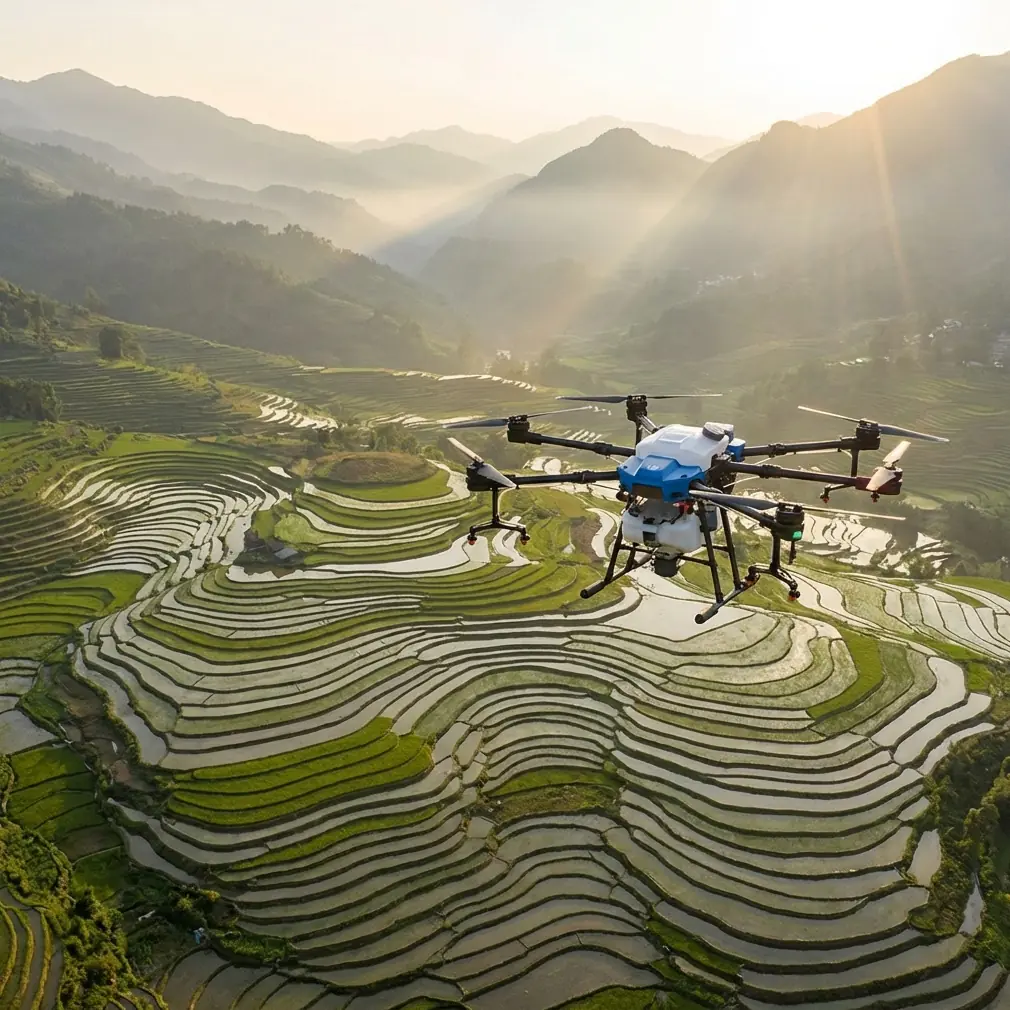
Agras T100 in Remote Fields: A Practical Pre-Flight Method That Protects Accuracy
META: A field-tested Agras T100 tutorial for remote agricultural work, covering pre-flight cleaning, airflow awareness, proactive control habits, nozzle calibration, RTK fix discipline, and why small setup mistakes become big coverage errors.
Remote field work exposes an agricultural drone to two kinds of trouble at once: environment and operator drift.
Environment drift is literal. Dust, crop residue, moisture, and fine chemical buildup collect where airflow matters most. Operator drift is more subtle. It starts when the pilot stops leading the aircraft and begins chasing it, correcting one small mistake after another. On a platform like the Agras T100, those two problems feed each other. Dirty flow paths distort spray behavior. Late control inputs force extra corrections. Coverage quality drops long before the mission actually fails.
That is why a serious Agras T100 routine should begin with a simple discipline: clean first, think ahead second, then fly.
This article is built around that sequence because it matches how real field reliability works, especially when you are capturing fields in remote areas where support, water access, and spare time are limited.
Why airflow is the first thing to respect
One of the most useful teaching examples from drone education is surprisingly basic: when a motor spins a wheel or disc at high speed, the surrounding air is dragged along by viscosity, and you can physically feel the wind near the edge without touching it. That small classroom observation matters in the field because the Agras T100 is not just a flying tank with arms. It is an airflow machine.
Every spray pass depends on controlled moving air. Rotor wash influences droplet behavior. It affects how the spray column opens, how droplets settle into the canopy, and how much material is pushed sideways when conditions are marginal. If residue accumulates around critical surfaces, guards, outlets, or nozzle assemblies, airflow no longer behaves the way the operator expects.
That has direct consequences for spray drift and uniformity.
A lot of crews treat cleaning as cosmetic. It is not. It is aerodynamic maintenance. In remote operations, this matters even more because dry access roads, exposed loading points, and repeated takeoffs from improvised staging areas can rapidly coat the aircraft. If you are seeing inconsistent edge coverage, unexplained changes in swath width, or a need to keep compensating for deposition quality, the problem may begin before takeoff.
The pre-flight cleaning step most teams rush through
The safest version of pre-flight cleaning is not complicated, but it must be deliberate. Before loading for a mission, inspect and clean the areas where buildup changes airflow or spray delivery:
- rotor-adjacent surfaces where dust cakes onto leading edges or housings
- nozzle bodies and tips
- liquid lines and visible junction points
- landing gear and lower frame areas that collect mud and residue
- sensors and positioning hardware that support stable autonomous work
- camera or imaging surfaces if multispectral or field documentation workflows are part of the mission
For the Agras T100, the operational significance is straightforward. If nozzle calibration is performed after residue has already narrowed or distorted the flow path, calibration can validate a flawed condition. You may think the machine is ready because the process was completed, but the real-world output across the boom or atomization system is already compromised.
The same is true for positioning. If you are relying on centimeter precision for repeatable field capture, boundary accuracy, or route consistency across irregular plots, the RTK fix rate only helps when the aircraft’s overall condition supports stable execution. Precision positioning cannot rescue poor spray formation. Nor can it compensate for a pilot who starts reacting late.
A remote-field habit borrowed from basic physics
Another useful teaching experiment involves a glass, a candle, water, and a dish. When the candle is covered by the glass, the water level rises and continues rising even after the flame goes out. The lesson is not academic trivia. It is a reminder that pressure differences produce visible mechanical effects even when the air itself cannot be seen.
That perspective is useful around the Agras T100 because agricultural drone work often fails in invisible ways first. Pressure balance, atomization consistency, and moving air interactions all show up as field symptoms only after the cause has been in place for a while. A nozzle partially obstructed by dried chemistry may not announce itself dramatically. A vent path contaminated with residue may not trigger obvious alarms. But subtle pressure-related changes can widen one section of the application pattern and tighten another.
In remote crop blocks, where refill logistics and daylight windows are tight, these small deviations become expensive in agronomic terms. Overlap increases. Missed strips appear. Follow-up passes eat battery cycles and labor time.
So when you clean the T100 before a mission, do not think of it as housekeeping. Think of it as restoring the pressure and airflow conditions your application plan assumes.
Stop flying behind the drone
The second major lesson comes from model aircraft training, and it is one of the sharpest ideas any professional drone operator can borrow: there are passive reactors and active controllers.
Passive reactors watch the aircraft, wait for it to do something, then respond. They are always a fraction late. That delay forces more corrections, which creates even less time to understand the real cause of the deviation. Training progress slows. Accuracy suffers.
Active controllers do the opposite. They break the maneuver down before it starts. They decide what should happen, then command it. They stay ahead of the aircraft rather than chasing it.
That distinction is critical for Agras T100 work in remote fields. Agricultural flights may not look like aerobatics, but the mental discipline is the same. If you only react to what the drone is already doing, you will spend the whole mission cleaning up preventable errors:
- entering rows slightly off-angle
- letting speed changes alter application consistency
- noticing drift only after the downwind edge has already been affected
- correcting route spacing after the swath pattern has already shifted
- trying to solve a coverage problem in the air that was really a pre-flight setup issue
The training principle says each new action should be mentally decomposed in advance. That is exactly how remote agricultural missions should be flown. Before takeoff, the operator should already know the sequence: staging point, route orientation, expected wind influence, nozzle condition, target swath width, RTK status, return triggers, and what will cause a pause for inspection.
If every command is correct at the moment it is given, the need for repeated adjustment falls sharply. That is not theory. It is the difference between a clean mission and a frustrating one.
A practical Agras T100 pre-flight routine for remote capture work
Here is the workflow I recommend when using an Agras T100 in remote field conditions.
1. Clean before calibration, not after
This is the step most commonly reversed. Teams often check settings first because software feels more official. In reality, physical condition comes first.
Remove visible dust, crop fibers, and dried chemical traces from nozzle and airflow-related surfaces. Wipe sensor faces carefully. If the aircraft was transported over rough, dry roads, assume contamination is present even if it looks minor.
Operational significance: this protects nozzle calibration integrity and helps maintain a predictable spray pattern.
2. Check for signs of uneven airflow exposure
Remember the spinning-disc lesson: air movement around fast rotating parts is not abstract. It can be felt and it shapes everything downstream. Visually inspect for dirt patterns that suggest one side of the aircraft has been collecting residue differently from the other. Uneven deposits often hint at uneven exposure, splashback, or contamination around delivery zones.
Operational significance: asymmetric buildup can show up as application inconsistency long before it looks serious on the frame.
3. Confirm RTK fix discipline before route commitment
If the mission depends on repeatability, don’t rush this stage. Wait for a stable RTK fix rate and verify that the aircraft is holding the level of positioning reliability needed for the field geometry. Remote parcels often have tree lines, terrain interruptions, or staging compromises that reduce confidence if you cut corners here.
Operational significance: centimeter precision matters most where field edges are irregular, access is narrow, and overlap needs to be controlled to protect both input efficiency and crop health.
4. Review wind with spray drift in mind, not just flight stability
Many operators ask, “Can I safely fly?” The better question is, “Can I safely apply?” A drone can remain stable in conditions that are still poor for deposition quality. The rotor system may keep the aircraft composed while droplets behave badly at canopy level.
Operational significance: good flight stability does not equal good agronomic performance.
5. Define the swath width you expect to hold
Do not treat swath width as a static brochure value. In real remote field operations, it changes with wind, crop structure, altitude discipline, and nozzle state. Decide in advance what effective swath you are willing to trust that day.
Operational significance: route planning based on optimistic swath assumptions is one of the easiest ways to create striping.
6. Fly the first pass like a diagnostic pass
The first segment of the mission should confirm the machine, not just start the job. Watch for pattern behavior, aircraft attitude, consistency, and any sign that your pre-flight assumptions were too generous. If something is off, stop early. Remote operations punish the habit of “finishing this tank and checking later.”
Operational significance: early interruption saves far more time than late correction.
Where multispectral thinking helps, even in a spray mission
Even if the day’s mission is centered on application rather than scouting, a multispectral mindset still improves outcomes. In plain terms, think in layers. The field is not uniform, and neither are the risks. Areas with different canopy density, moisture retention, or stress levels can respond differently to the same application pattern. That makes consistency even more valuable.
A clean, well-calibrated Agras T100 with stable positioning gives you the best chance of matching treatment behavior to field variability. It does not turn every acre into a lab environment, but it reduces one major source of noise: the aircraft itself.
Why remote operators need a written standard
Remote work has a way of normalizing shortcuts. Water is farther away. Light fades sooner than expected. The road back is long. Someone says the drone “looks fine.” That is how avoidable errors become routine.
Write the standard down. Include the cleaning step, RTK check, nozzle inspection, and a requirement to brief the first pass before launch. Even a 4-point laminated checklist changes operator behavior because it moves the mission from memory to method.
And if your team is building a repeatable T100 workflow for isolated sites, it helps to compare notes with people who have seen the same operational friction in the field. I often suggest teams keep a direct line for setup questions, especially around route planning, calibration behavior, and remote staging issues. If you need that kind of field-side discussion, use this direct Agras support chat: https://wa.me/85255379740
The bigger lesson behind the T100
The most useful thing about the two reference ideas here is that neither one came from a modern ag drone manual. One comes from a simple explanation of how a fast rotating part drags air and creates felt wind. The other comes from pilot training that separates reactive flying from planned control.
Together, they describe exactly how the Agras T100 should be handled in remote agricultural work.
First, respect invisible forces. Airflow and pressure are not side details; they are part of your application system. Second, stay mentally ahead of the aircraft. A professional mission is not a string of corrections. It is a sequence that was understood before the motors spun up.
That is what makes the difference between merely operating an Agras T100 and getting reliable field results from it.
Ready for your own Agras T100? Contact our team for expert consultation.