
Agras T100 in Remote Fields: What Actually Matters Before
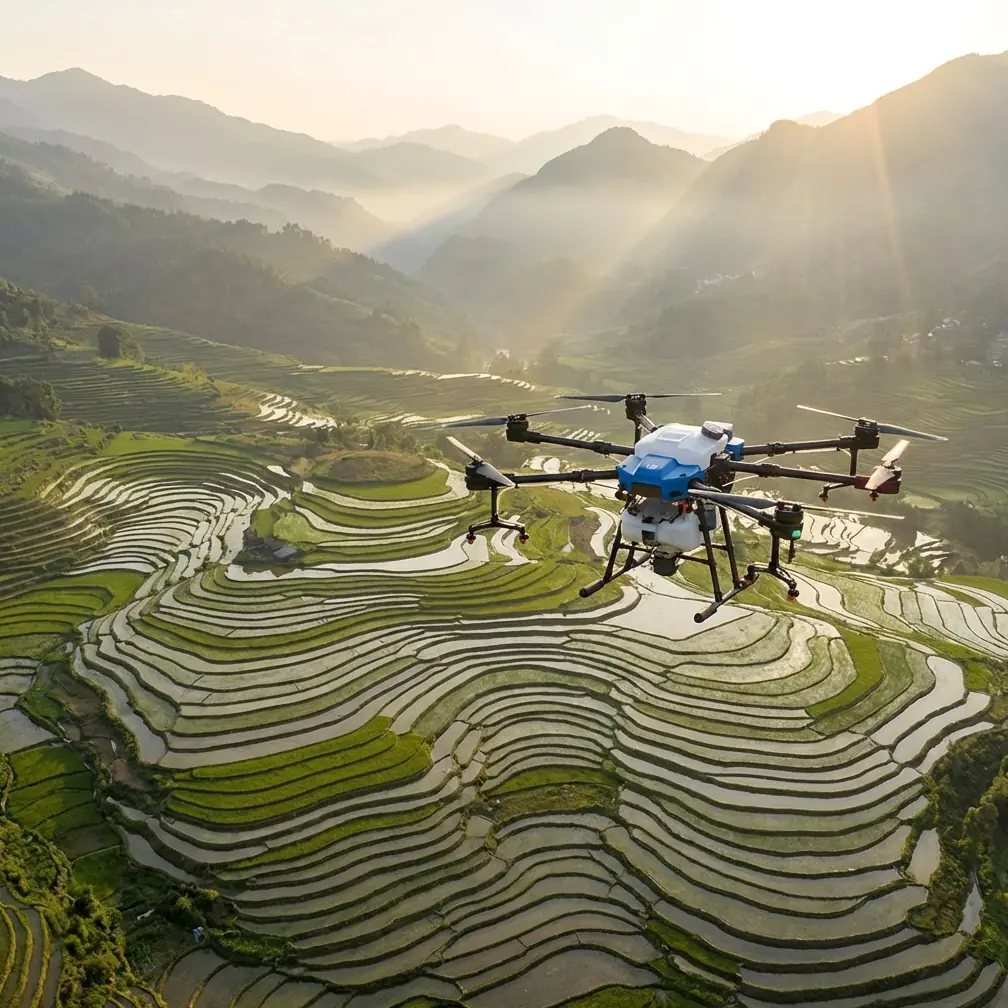
Agras T100 in Remote Fields: What Actually Matters Before the First Pass
META: A field-focused expert article on Agras T100 operations in remote areas, covering pre-flight cleaning, orientation discipline, spray consistency, RTK precision, and practical setup decisions that affect results.
Remote-field work exposes every weak habit in a spray program.
When a machine operates close to the farmyard, operators can recover from rushed setup, a dirty sensor surface, or sloppy route planning. In distant plots, those same mistakes cost time, chemical accuracy, and confidence. That is why the Agras T100 conversation should not start with headline specifications alone. It should start with discipline: how the aircraft is prepared, how it holds its intended orientation through a route, and how the operator manages distance, perspective, and spray quality when the field is far from easy support.
The T100 belongs in serious agricultural workflows, but only if the workflow around it is equally serious.
The real remote-field problem: distance amplifies small errors
A remote parcel changes the economics of every decision. If nozzle calibration is slightly off, you do not just lose a few minutes. You may end up with uneven application over a large block, then spend the rest of the day deciding whether the issue was pressure, droplet behavior, route overlap, or wind. If an RTK fix rate is unstable, centimeter precision on paper means very little in practice. If the aircraft’s body, sensors, or spray path are contaminated before takeoff, the risk is not abstract. It shows up as reduced reliability when you are least able to troubleshoot.
That is why one of the smartest habits for T100 operators is also one of the simplest: add a pre-flight cleaning step that is treated as mandatory, not optional.
Not a quick wipe when the aircraft looks dusty. A deliberate check.
In agricultural work, residue builds quietly. Chemical mist, dust from access roads, dried deposits around the spray system, and field debris all interfere with consistency. On a platform expected to deliver stable swath width and accurate application, “mostly clean” is not good enough. A pre-flight cleaning routine protects safety features, preserves sensor performance, and reduces the chance that yesterday’s residue becomes today’s problem. For remote operations, this should be on the checklist before battery confirmation, route upload, and takeoff approval.
If your team needs a practical field checklist built around remote spraying conditions, it can help to message a field operations specialist here: https://wa.me/85255379740.
Why orientation discipline matters more than many operators realize
One of the reference materials describes a training scenario where a drone must fly a patrol around a right triangle route while keeping the same heading throughout the flight. That sounds like an educational exercise. It is actually a sharp lesson for agricultural operations too.
The point is not geometry for its own sake. The point is that route execution and aircraft orientation are not always the same thing.
In remote field spraying, especially around irregular boundaries, utility edges, tree lines, or segmented planting zones, the aircraft may need to preserve a stable operational attitude relative to the task rather than constantly “looking into” each turn. A route can change while the logic of the job stays fixed. That matters when you are trying to maintain spray behavior, camera perspective for verification, or stable operator awareness over a difficult section of land.
The training example specifically notes that the aircraft flies around three points forming a right triangle and must not rotate because the viewing requirement demands an unchanged heading. Operationally, that is a valuable mental model for T100 users. Do not think only in terms of getting from waypoint to waypoint. Think in terms of what must remain constant during the maneuver.
For a remote field, that constant might be:
- a stable spray presentation over a sensitive crop edge
- a consistent observation angle for confirming coverage
- predictable lateral behavior near an obstacle line
- a repeatable pass structure that supports overlap control
This is where centimeter precision and RTK performance become more than brochure terms. If the T100 is being used in a field where overlap tolerance is tight and drift risk is not trivial, the value of a strong RTK fix rate is operational, not theoretical. Better positional confidence supports cleaner line holding, more consistent swath spacing, and fewer corrective inputs by the operator.
The 1 meter lesson that scales into agricultural logic
Another training reference uses a simple follow logic: keep about 1 meter, or 1000 millimeters, from the target. If the drone gets farther than that, it moves forward. If it gets closer, it moves back.
At first glance, that has little to do with a large agricultural aircraft. In fact, it reveals one of the most transferable ideas in drone operations: build control around measurable distance thresholds, not vague visual impressions.
In remote fields, operators often make judgment calls based on what “looks right” from a distance. That is where inconsistency creeps in. With the T100, the better habit is to define acceptable tolerances in advance. That can apply to route spacing, obstacle clearance, refill planning, return logic, and field-edge handling. The principle from the 1 meter exercise is simple but powerful: when the system exceeds a threshold, it should respond in a defined way.
Good agricultural teams run the aircraft the same way.
- If RTK quality drops below the acceptable level, pause or switch workflow.
- If wind increases enough to threaten droplet placement, revisit the mission plan.
- If nozzle output no longer matches the expected application profile, recalibrate before continuing.
- If contamination is found during cleaning, resolve it before launch rather than hoping it will not matter.
Remote work rewards binary discipline. Either the condition is acceptable or it is not.
Spray drift is not just a weather issue
People often discuss spray drift as if it starts and ends with wind. That is too narrow. Drift is influenced by the total operating picture: droplet size, boom or nozzle condition, aircraft speed, height stability, route spacing, and edge behavior. In a remote field, where visual references may be poor and support staff may be limited, those variables can slide out of control faster than expected.
This is where nozzle calibration deserves more attention than it usually gets.
Calibration is not glamorous, but it directly affects whether the T100 is applying product evenly across the planned swath width. When output from one nozzle deviates, the field result is not always obvious from the operator’s position. You may only discover the problem later through crop response, missed zones, or excessive deposition. In remote sites, that delay is expensive.
The stronger method is to connect cleaning, calibration, and mission planning into one sequence:
- Clean the aircraft and confirm key spray-related components are free of buildup.
- Verify nozzle condition and calibration before the day’s first mission.
- Confirm route parameters in relation to expected drift risk and desired swath width.
- Monitor positional integrity, including RTK fix stability, during execution.
- Recheck the system after refills and after moving between fields with different dust or residue conditions.
That sequence sounds basic. Basic is good. Basic done well is what keeps remote operations profitable.
A photography insight that oddly fits agricultural drone work
The reference set includes a note from portrait photography: when a subject faces the camera straight on, symmetry is strong and eye contact is emphasized, but the face can appear wider and flatter. A slight chin lift or a modest turn of the body can restore dimensionality.
That is not an agricultural fact, but it points to something useful for T100 operators capturing field conditions in remote areas.
Perspective changes interpretation.
When documenting crop issues, boundary conditions, drainage patterns, lodging, stand irregularity, or treatment outcomes, a straight-on view is not always the most informative one. Symmetry can simplify a scene, but it can also hide texture and depth. A slightly adjusted capture angle can reveal canopy variation, row structure, pooling, or transition zones more clearly. If a T100 workflow includes visual documentation alongside spraying or post-treatment assessment, the operator should not default to the most obvious angle every time.
The significance here is practical: better angle choice supports better field judgment. In remote operations, where you may not have the luxury of repeated site visits, the value of clear visual information is high. Sometimes a subtle shift in aircraft position or camera relationship to the crop tells you more than another straight pass.
Training logic still matters, even on advanced platforms
One of the strongest lines in the training material says that during flight, the aircraft is constantly telling you what it needs. That is exactly right, and advanced agricultural platforms do not change it.
The same source also argues that many errors come from focusing too much on the action itself and forgetting the setup, including keeping the wings level. For agricultural operators, substitute “wings level” with “mission fundamentals stable.” The machine may be sophisticated, but poor setup still causes most field failures.
In T100 operations, the recurring mistakes are usually not dramatic. They are procedural.
- The aircraft is launched without a proper cleaning check.
- The spray system is assumed to be fine without confirmation.
- The route is built around convenience rather than field logic.
- The operator chases speed while neglecting consistency.
- Positional precision is trusted blindly instead of verified.
- Visual documentation is collected, but from weak angles that limit interpretation.
The training text also mentions that 99% of current problems can be traced to two areas: paying too much attention to the maneuver itself and mixing up the sequence of steps. That maps surprisingly well to agricultural drone work. Operators often obsess over throughput or coverage numbers while skipping the boring sequence that makes those numbers believable.
A remote-field T100 team should think in ordered phases:
Preparation. Clean, inspect, calibrate, verify RTK condition, assess weather.
Planning. Define route logic, field edges, swath width, refill strategy, and drift controls.
Execution. Maintain stable parameters, avoid over-correcting, monitor system feedback.
Review. Check application quality, residue buildup, data integrity, and field notes before moving on.
That structure prevents rushed decision-making in places where rushed decisions are costly.
Why IPX6K-class durability does not remove the need for care
Agricultural users often hear ruggedness ratings and subconsciously translate them into “less maintenance needed.” That is the wrong takeaway. If a machine is designed for harsh work, that is an argument for disciplined upkeep, not a substitute for it.
For T100 operators working with wet chemistry, road dust, and repeated field transitions, protection features such as IPX6K-class resistance help the aircraft endure the environment. They do not excuse residue accumulation, neglected seals, dirty connectors, or careless post-flight handling. Remote operations are exactly where these details matter most because the cost of a small preventable issue rises with every kilometer from base.
A durable aircraft deserves a durable routine.
Multispectral thinking, even when the mission is spray-first
Not every T100 mission is strictly about applying product. In remote agriculture, the strongest workflows connect treatment with verification. Even if a farm uses a separate multispectral platform for detailed analysis, the decision chain still benefits from tighter coordination between imaging logic and application logic.
That means the spraying team should understand what evidence matters after the pass. Are you trying to confirm treatment consistency, compare zones, identify stress patterns, or support later agronomic review? If so, route design, orientation control, and capture perspective should be chosen with those goals in mind rather than treated as an afterthought.
A remote field rarely forgives fragmented thinking. The aircraft mission, the imagery, the agronomic question, and the operator checklist have to fit together.
What the best Agras T100 operators do differently
They respect the machine, but they respect process even more.
They know that a 1000 mm distance rule in a training document is really a lesson about threshold-based control. They understand that a route flown around a triangular pattern without changing heading is really a lesson about maintaining the right constant during motion. They even recognize that a portrait photography note about slightly changing angle is a reminder that perspective shapes interpretation.
Most of all, they do not skip the cleaning step.
That one decision influences safety features, system reliability, sensor confidence, and spray consistency. For remote fields, where recovery options are limited, it may be the most undervalued part of the entire day.
The Agras T100 is not at its best just because it arrives at the field. It is at its best when the operator arrives with a repeatable method.
Ready for your own Agras T100? Contact our team for expert consultation.