
Agras T100 in Extreme Forest Conditions: What Actually
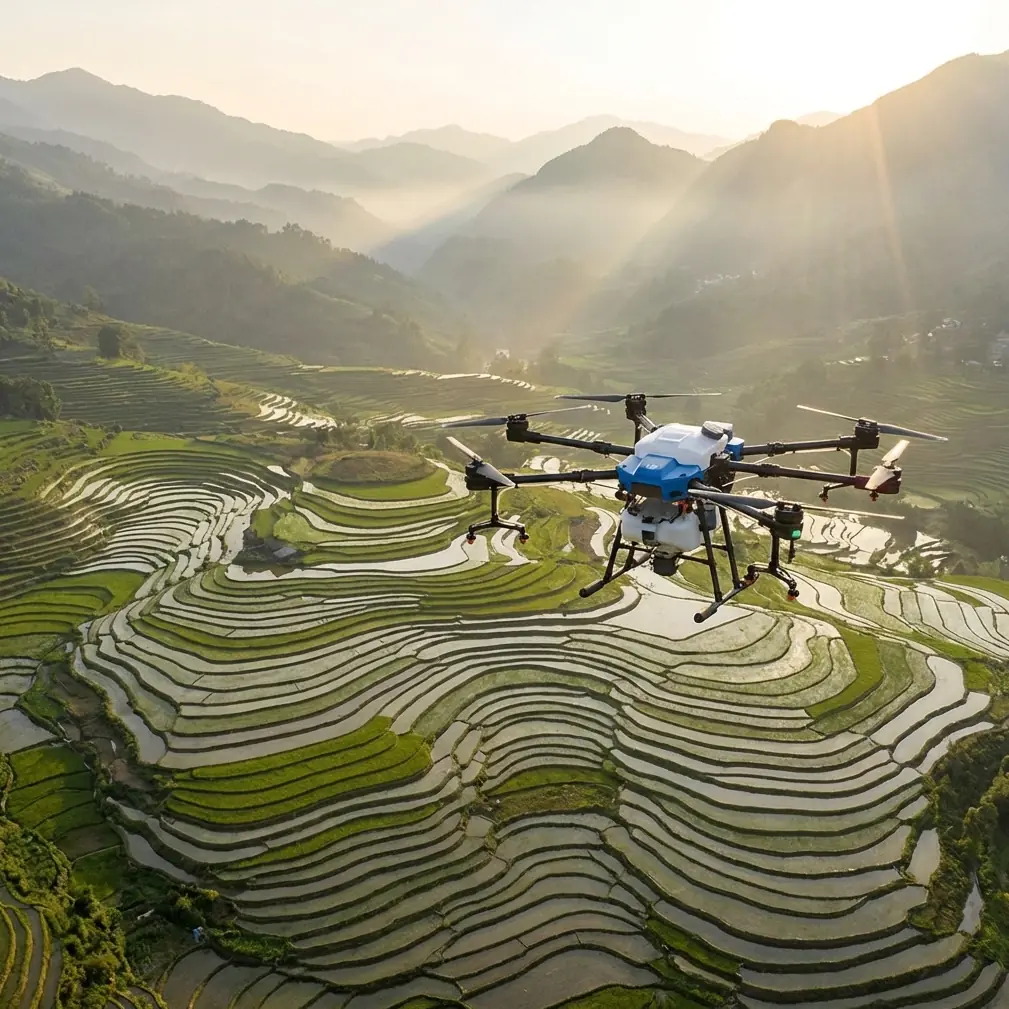
Agras T100 in Extreme Forest Conditions: What Actually Matters in the Field
META: Practical Agras T100 advice for forest work in extreme temperatures, with expert guidance on battery discipline, visibility, calibration thinking, and precision-focused operations.
Forestry work exposes a spray platform to the kind of stress that brochure copy usually avoids. Dense canopy edges. Uneven lift over ridgelines. Moisture at dawn, dust by midday, and temperature swings sharp enough to change battery behavior in a single mission window. If you are looking at the Agras T100 for forest operations in extreme temperatures, the real question is not whether the aircraft is capable on paper. The question is whether the whole operating system around it stays stable when the environment stops cooperating.
That is where most teams either build consistency or lose it.
I have seen this most clearly on early-morning missions near coastal forest belts and river-adjacent tree lines. The visual scene can be spectacular: the sun breaking over the horizon, sky turning orange-red, light scattering gold across surface moisture. People remember that kind of sunrise vividly. Yet photos taken on a phone often come back flat, gray, and lifeless compared with what the eye saw. That gap between expectation and recorded reality is a useful way to think about drone operations in forests too. Conditions can look manageable from the truck. Data and aircraft behavior may tell a different story.
With the T100, forest performance is less about raw ambition and more about disciplined execution: battery temperature control, nozzle calibration, swath-width restraint, and maintaining a strong RTK fix rate when trees and terrain are trying to degrade precision.
The core problem: forests amplify every small operational mistake
Open-field spraying gives you room to recover from imperfect setup. Forest environments do not.
A slight drift issue in row crops may cost some coverage uniformity. In forest corridors, the same mistake can push material off target, waste payload, and leave untreated pockets under irregular canopy edges. A lazy calibration routine in a broad acre setting is bad practice. In forests, it becomes a compounding error because the aircraft is already dealing with airflow disruption, thermal layering, and changing ground-clearance demands.
Extreme temperatures make this worse from both directions.
In heat, batteries can arrive at the launch point already under stress if they have been sitting in a vehicle or direct sun. In cold, they may show acceptable voltage at rest and then sag more aggressively under load once the aircraft commits to a climbing or contour-following segment. Either condition affects mission rhythm. And mission rhythm matters more than many operators admit. Once flight timing becomes inconsistent, the rest follows: rushed swaps, skipped checks, and coverage decisions made on optimism rather than telemetry.
The T100’s appeal in this environment is tied to the same things operators care about across professional ag platforms: repeatability, centimeter precision, manageable spray drift, and enough weather tolerance to keep working when the day is not easy. Terms like RTK fix rate, swath width, multispectral workflow planning, and IPX6K-level durability are not marketing jargon in forestry. They are the difference between a controlled mission and a long day of avoidable corrections.
Battery management is not a side note. It is the mission.
If I had to give one field tip that consistently saves operators from trouble in extreme forest temperatures, it would be this:
Never judge battery readiness only by charge percentage. Judge it by temperature history.
That sounds simple, but it changes behavior.
A battery that is fully charged after riding in a hot vehicle is not “ready” in the same way as a battery charged, stored, and staged within a stable temperature band. The same is true in cold dawn deployments. A pack can show you enough charge to launch, then behave differently once the aircraft starts working over elevation changes or dense canopy margins.
My own rule in forest operations is to create a battery rotation that mirrors the discipline of instrument checks. Packs are not just charged. They are sequenced, shaded, monitored between flights, and kept away from fast temperature shock. If you come out of a cold morning and the day heats rapidly, do not let batteries move directly from chilled storage to hard use to sun-baked staging. That kind of swing shortens confidence long before it shortens battery life.
The practical benefit is mission stability. Stable batteries support predictable power delivery. Predictable power delivery supports better altitude holding, more consistent speed control, and less temptation to tighten turnaround times in ways that hurt application quality.
Forest operators often want to talk first about payload or route automation. I usually start with battery handling because a good aircraft cannot compensate for poor energy management habits.
Why centimeter precision matters more in forests than in broadacre blocks
The reference terms around T100 operation often highlight RTK and centimeter-level accuracy. In forestry, that precision is not just a nice specification for clean maps. It has operational consequences.
When you are working around irregular woodland edges, juvenile replanting zones, firebreak margins, or pest-treatment corridors, every meter of drifted path planning adds up. A strong RTK fix rate helps the aircraft hold intended lines even when visual landmarks are inconsistent and the terrain itself is trying to distort your perception of speed and spacing.
This matters especially when extreme temperatures influence air density and flight feel. Operators tend to compensate manually when the aircraft “looks” slightly different in motion, and that can introduce spacing errors. Reliable positioning reduces the need for unnecessary pilot correction.
There is also a planning advantage. If your broader workflow includes multispectral assessment before treatment, the value is not in saying you used advanced sensors. The value is in matching diagnosis to execution. A stressed forest stand mapped for health variability only becomes actionable if the application aircraft can follow the prescription with real spatial confidence. That is where RTK discipline and route integrity stop being abstract.
Nozzle calibration is where forest spray quality is won or lost
The most common mistake I see in difficult environments is assuming that a good aircraft automatically guarantees a good spray outcome. It does not.
Nozzle calibration decides whether your mission behaves like a treatment plan or a guess.
Forests complicate atomization because the air is rarely uniform. You may launch in cool, moist conditions at first light and then find the lower layers warming fast while shaded sections remain comparatively stable. That means droplet behavior can vary significantly across the same mission period. If you are not calibrating with environmental reality in mind, you are applying based on yesterday’s assumptions.
The phrase “spray drift” gets thrown around casually, but in forests it has to be treated as a design constraint. Swath width should be chosen conservatively enough to preserve deposition consistency rather than stretched to chase hourly output. Wider is not always better. In tree-dense environments, aggressive swath decisions can produce a false sense of efficiency while quietly undermining target coverage.
Good calibration practice for the T100 setup mindset means:
- matching nozzle behavior to the specific product and target canopy condition,
- validating effective swath width instead of relying on nominal expectations,
- checking output consistency after temperature shifts,
- and resisting the urge to keep the same parameters from morning through late afternoon just because the job site is the same.
The site may be the same. The air is not.
Visibility and signaling matter more than people think
One surprising lesson from a completely different reference thread is useful here. In an educational drone programming context, a full-color LED can be controlled across 255 brightness levels, with red, green, and blue combined to create different colors. There is also an 8x8 matrix display with 64 illuminated cells for characters and patterns. On the surface, that sounds unrelated to a forestry aircraft.
It is not.
Those details reinforce a broader operational truth: visual signaling is only effective when it is intentional, programmable, and adapted to context. In forest work, especially at dawn, dusk-adjacent staging, fog-prone valleys, or smoky post-burn environments, crews benefit from clear visual state cues. Not because lights are a gimmick, but because extreme conditions erode communication efficiency.
I am not suggesting the T100 is an educational drone. The significance is conceptual. Precision systems work best when human-machine communication is equally precise. If your crew can quickly distinguish aircraft status, mission phase, or ground handling readiness through consistent visual routines, you cut down hesitation and confusion during high-pressure turnarounds. In extreme temperatures, where gloves, condensation, glare, and fatigue are all in play, small clarity gains matter.
That same logic applies to app-based workflows, battery staging labels, and preflight confirmation language. Make the system easier to read than the environment.
Ruggedness is only useful if your process is equally rugged
A lot of readers looking into the T100 are understandably drawn to durability cues such as IPX6K-class protection. In forest operations, resistance to water ingress and harsh washdown conditions is genuinely relevant. Morning dew, chemical residue, mud at the landing zone, and splash contamination are normal, not exceptional.
Still, rugged hardware does not excuse fragile procedures.
If you are operating in extreme cold, your rinse, inspection, and restart sequence should account for moisture accumulation around critical touchpoints. If you are working in high heat, your post-flight routine should reduce thermal soak rather than letting the aircraft bake while ground staff prepare the next tank cycle. Hardware resilience buys margin. It does not replace discipline.
The same goes for transport and deployment logic. One of the reference documents describes a very different aircraft that was engineered for easy disassembly and field delivery, with a launch setup that could be mounted on a vehicle. It also underscores a hard engineering truth: even sophisticated teams sometimes abandon elegant concepts in favor of what works reliably in real environmental constraints. In that case, seasonal and latitude-related limitations made solar power less practical than expected, so the design moved toward a more dependable solution.
That lesson carries over neatly to T100 forest operations. Use the workflow that remains stable across actual field variables, not the one that sounds clever in planning meetings.
A practical operating pattern for extreme-temperature forest missions
If your reader scenario is forest capture, assessment, or treatment in difficult temperatures, this is the pattern I recommend:
1. Build the morning around verification, not speed
First light can be beautiful, but beauty hides instability. Just as a sunrise over water can look vivid to the eye yet turn dull and gray in a phone photo, a forest block can look calm while still carrying microclimate complexity. Confirm wind behavior near canopy edges, not just at the launch point.
2. Stage batteries as a controlled workflow
Keep packs thermally protected before flight. Rotate deliberately. Record any pack that behaves differently under load, even if the charge reading looked normal.
3. Reconfirm nozzle behavior after environmental shifts
Do not assume the setup that worked in cool morning air is still ideal after several degrees of warming. Forest missions punish static thinking.
4. Protect RTK quality
Monitor fix reliability before committing to fine-margin work around sensitive boundaries. If the positioning environment is degraded, adjust the mission plan rather than hoping the aircraft will simply muscle through it.
5. Use conservative swath assumptions
The objective is treatment quality and repeatability, not the illusion of faster coverage.
6. Standardize crew communication
Clear status indicators, consistent handoff steps, and simple pre-launch confirmations reduce mistakes when temperatures are extreme and time pressure rises.
If you are comparing workflows or want to discuss a forest-specific T100 setup, you can send a field scenario directly through this WhatsApp line for technical discussion.
The bigger point
The Agras T100 becomes interesting in forestry not because it promises perfection, but because it can support a disciplined operator who understands that environment, aircraft, and application system must stay in balance. Extreme temperatures expose weak routines fast. They also reward crews who think carefully about precision, power management, and calibration.
That is the real story.
Not maximum headline capability. Not abstract specifications. Real field confidence.
A strong RTK fix rate matters because forests distort easy assumptions about spacing. Nozzle calibration matters because spray drift is not theoretical when airflow breaks around canopy edges. Battery temperature history matters because power consistency determines whether the aircraft behaves predictably through the hardest parts of the route. And ruggedness matters only when paired with ground procedures that are just as deliberate.
Run the T100 that way, and it stops being just another platform in the category. It becomes a dependable part of a forestry operation that has to deliver under pressure, across temperature extremes, without pretending the environment will make things easy.
Ready for your own Agras T100? Contact our team for expert consultation.