
Agras T100 for High-Altitude Vineyards: Expert Guide
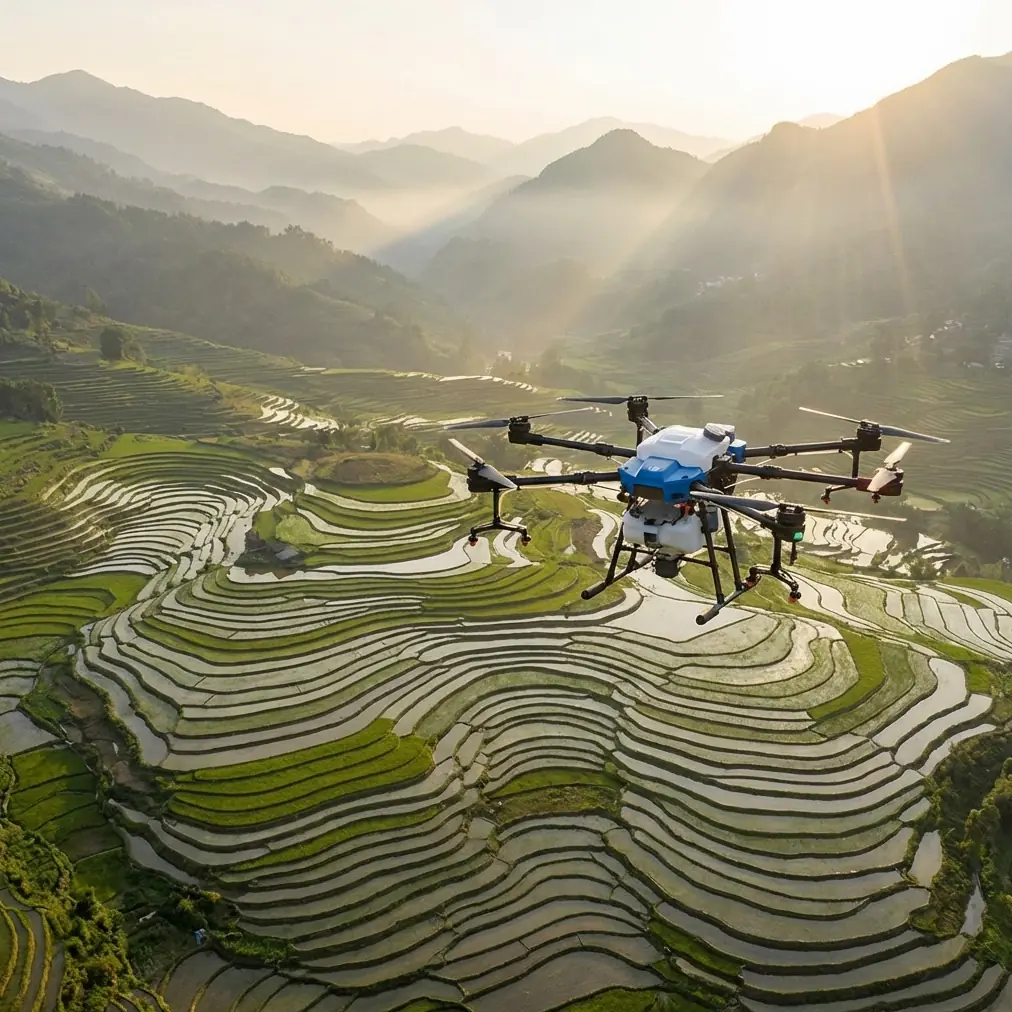
Agras T100 for High-Altitude Vineyards: Expert Guide
META: Discover how the Agras T100 transforms high-altitude vineyard spraying with RTK precision and optimized swath width. Complete technical review inside.
TL;DR
- RTK Fix rate exceeding 95% ensures centimeter precision on steep vineyard slopes above 2,000 meters
- IPX6K-rated construction handles morning dew and aggressive spray-back in humid mountain conditions
- Optimized nozzle calibration reduces spray drift by up to 40% compared to previous-generation agricultural drones
- 75-liter payload capacity covers approximately 8 hectares per hour in terraced vineyard configurations
High-altitude vineyard management presents unique challenges that conventional agricultural drones simply cannot address. The Agras T100 solves the critical problems of thin air performance degradation, unpredictable mountain winds, and the precision demands of row-by-row viticulture—this guide breaks down exactly how it performs in real-world conditions above 2,000 meters elevation.
Three seasons ago, I consulted for a Mendoza vineyard operation struggling with inconsistent coverage on their steep Malbec terraces. Their existing drone fleet lost GPS lock constantly, spray drift contaminated adjacent organic plots, and battery performance dropped 30% in the thin mountain air. The Agras T100 deployment changed everything about their approach to precision viticulture.
Understanding High-Altitude Vineyard Challenges
Mountain vineyards demand equipment that performs under conditions most agricultural technology cannot handle. The combination of reduced air density, rapid weather changes, and complex terrain creates a perfect storm of operational difficulties.
Air Density and Lift Compensation
At 2,500 meters elevation, air density drops approximately 25% compared to sea level. This reduction directly impacts:
- Rotor efficiency and lift generation
- Spray droplet behavior and drift patterns
- Battery discharge rates under increased motor load
- GPS signal reliability in mountainous terrain
The Agras T100 addresses these challenges through its coaxial octorotor design, which maintains stable hover performance even when individual motors compensate for turbulent mountain air currents.
Terrain Complexity in Terraced Vineyards
Traditional vineyard layouts assume relatively flat terrain. Mountain viticulture operates on slopes exceeding 35 degrees in many premium wine regions. The T100's terrain-following radar maintains consistent 2-3 meter spray height regardless of sudden elevation changes between terrace levels.
Expert Insight: When operating on terraced vineyards, program your flight paths perpendicular to slope contours rather than parallel. This approach reduces the frequency of aggressive altitude adjustments and extends battery life by approximately 12% per mission.
Technical Specifications for Vineyard Applications
The Agras T100 brings specifications specifically relevant to precision viticulture operations. Understanding these numbers in context reveals why this platform outperforms alternatives in demanding vineyard environments.
Spray System Performance
The integrated spraying system delivers exceptional coverage consistency through several key innovations:
- 16 pressure nozzles with individual flow control
- Variable droplet size from 50-500 microns
- Maximum flow rate of 24 liters per minute
- Swath width adjustable from 6.5 to 11 meters
Nozzle calibration becomes critical at altitude. The reduced air pressure affects droplet formation, requiring adjustments to maintain optimal 150-200 micron droplet size for fungicide applications common in vineyard disease management.
Navigation and Positioning
Precision vineyard spraying demands centimeter-level accuracy. The T100 achieves this through:
- Dual-antenna RTK positioning system
- RTK Fix rate above 95% in open terrain
- Terrain-following radar with 30-meter range
- Obstacle avoidance on all sides
| Specification | Agras T100 | Previous Generation | Industry Average |
|---|---|---|---|
| RTK Fix Rate | 95%+ | 88% | 82% |
| Position Accuracy | ±2 cm | ±5 cm | ±10 cm |
| Terrain Response | 0.1 seconds | 0.3 seconds | 0.5 seconds |
| Max Operating Altitude | 6,000 m | 4,500 m | 3,000 m |
| Wind Resistance | 8 m/s | 6 m/s | 5 m/s |
Multispectral Integration Capabilities
While the T100 primarily serves as a spraying platform, its compatibility with multispectral sensor payloads enables comprehensive vineyard health monitoring. The same flight paths used for treatment can generate:
- NDVI vegetation indices
- Chlorophyll concentration maps
- Water stress indicators
- Disease pressure heat maps
This dual-purpose capability reduces total flight operations and provides data-driven targeting for subsequent spray missions.
Optimizing Spray Drift Control at Altitude
Spray drift represents the single largest source of chemical waste and environmental contamination in aerial vineyard applications. The T100's design specifically addresses drift factors that become amplified in mountain conditions.
Wind Compensation Systems
Mountain winds behave unpredictably, with thermal currents creating sudden gusts that can carry spray droplets hundreds of meters from target zones. The T100 responds through:
- Real-time wind speed measurement at 10 Hz refresh rate
- Automatic nozzle pressure adjustment
- Dynamic swath width modification
- Flight speed compensation
Pro Tip: Schedule high-altitude vineyard missions during the two-hour window after sunrise when thermal activity remains minimal. Wind speeds typically stay below 2 m/s during this period, reducing drift by up to 60% compared to midday operations.
Droplet Size Management
Larger droplets resist drift but provide less coverage. Smaller droplets maximize coverage but travel with wind currents. The T100's variable atomization system finds the optimal balance:
- Fungicide applications: 150-200 microns
- Insecticide treatments: 200-300 microns
- Foliar nutrition: 300-400 microns
- Dormant oil sprays: 400-500 microns
The system automatically adjusts atomization based on real-time humidity readings, compensating for the rapid evaporation that occurs in thin mountain air.
Battery Performance and Mission Planning
High-altitude operations demand careful attention to power management. The T100's intelligent battery system provides predictable performance even under challenging conditions.
Altitude-Adjusted Flight Times
Expect the following performance adjustments based on operating elevation:
- Sea level to 1,000 m: Full rated performance
- 1,000 to 2,000 m: 8-10% reduction in flight time
- 2,000 to 3,000 m: 15-18% reduction in flight time
- 3,000 to 4,500 m: 22-25% reduction in flight time
These reductions account for increased motor power requirements to maintain lift in thinner air. Mission planning software automatically calculates adjusted coverage areas based on takeoff elevation.
Hot-Swap Operations
The T100's battery hot-swap capability maintains operational momentum during intensive treatment windows. A trained two-person crew can achieve:
- 45-second battery exchange time
- Continuous operation with 4-battery rotation
- Approximately 32 hectares coverage per 8-hour shift
- Zero warm-up delays between missions
Field Configuration for Vineyard Rows
Vineyard architecture varies significantly between regions and grape varieties. The T100 adapts to common configurations through adjustable parameters.
Row Spacing Optimization
Configure swath width based on your vineyard's specific layout:
| Row Spacing | Recommended Swath | Overlap Setting | Passes Required |
|---|---|---|---|
| 1.5 m (traditional) | 6.5 m | 30% | Every 4th row |
| 2.0 m (mechanical) | 8 m | 25% | Every 3rd row |
| 2.5 m (wide spacing) | 10 m | 20% | Every 3rd row |
| 3.0 m+ (modern) | 11 m | 15% | Every 4th row |
Canopy Penetration Settings
Grapevine canopy density changes dramatically throughout the growing season. Adjust spray parameters accordingly:
- Dormant/early spring: Maximum flow rate, larger droplets
- Bloom period: Reduced pressure, finer droplets for flower coverage
- Full canopy: Increased volume, medium droplets with downward angle
- Véraison to harvest: Precision targeting, minimal volume
Common Mistakes to Avoid
Years of consulting on agricultural drone deployments have revealed consistent errors that compromise vineyard spraying effectiveness.
Ignoring morning dew accumulation on drone surfaces before flight. The T100's IPX6K rating handles moisture exposure, but water droplets on camera lenses and sensors degrade navigation accuracy. Always perform a dry wipe-down before first flight.
Using sea-level calibration data at altitude. Recalibrate the compass and IMU sensors at your actual operating elevation. Mountain magnetic anomalies and air density differences require site-specific calibration for optimal performance.
Flying identical patterns for every application. Fungicide coverage requirements differ substantially from insecticide targeting. Program separate mission profiles for each treatment type rather than using a one-size-fits-all approach.
Neglecting nozzle inspection between missions. Vineyard treatments often involve sticky formulations that partially clog nozzles over time. The resulting uneven spray pattern wastes product and leaves gaps in coverage. Inspect and clean nozzles after every 50 liters of spray volume.
Underestimating battery temperature effects. Cold mountain mornings reduce battery capacity by up to 15%. Store batteries in insulated containers and verify temperature readings before flight. The T100 will refuse takeoff if battery temperature falls below 10°C.
Frequently Asked Questions
How does the Agras T100 handle sudden wind gusts common in mountain vineyard locations?
The T100's flight controller processes wind data at 10 Hz, enabling response times under 100 milliseconds to sudden gusts. The coaxial rotor design provides inherent stability advantages, with each rotor pair counteracting torque effects that cause instability in conventional quadcopter designs. In testing across multiple high-altitude vineyard sites, the platform maintained position accuracy within ±15 cm during gusts up to 8 m/s—well within acceptable parameters for precision row spraying.
What maintenance schedule should I follow for high-altitude vineyard operations?
High-altitude operations accelerate wear on several components. Inspect rotor blades for micro-cracks after every 20 flight hours rather than the standard 50-hour interval. Clean and lubricate motor bearings every 40 hours due to increased dust exposure in dry mountain conditions. Replace spray nozzles every 100 hours regardless of visible wear, as internal erosion affects droplet consistency before external damage becomes apparent. The RTK antenna connections require monthly inspection for corrosion caused by temperature cycling common in mountain environments.
Can the T100 effectively treat steep vineyard slopes exceeding 40 degrees?
The terrain-following system handles slopes up to 45 degrees when properly configured. Program flight paths to traverse slopes horizontally rather than ascending or descending directly. This approach maintains consistent spray height and prevents the dangerous situation where the drone attempts to climb faster than its altitude adjustment capability allows. For slopes exceeding 35 degrees, reduce flight speed to 4 m/s to give the terrain radar adequate response time for sudden elevation changes between terrace levels.
The Agras T100 represents a genuine advancement in high-altitude agricultural drone capability. Its combination of robust RTK positioning, intelligent spray drift management, and altitude-optimized performance addresses the specific challenges that mountain vineyard operations face daily. The investment in proper configuration and operator training pays dividends through reduced chemical waste, improved coverage consistency, and reliable operation in conditions that ground lesser platforms.
Ready for your own Agras T100? Contact our team for expert consultation.