
Agras T100 in Windy Highway Corridors: A Practical Field
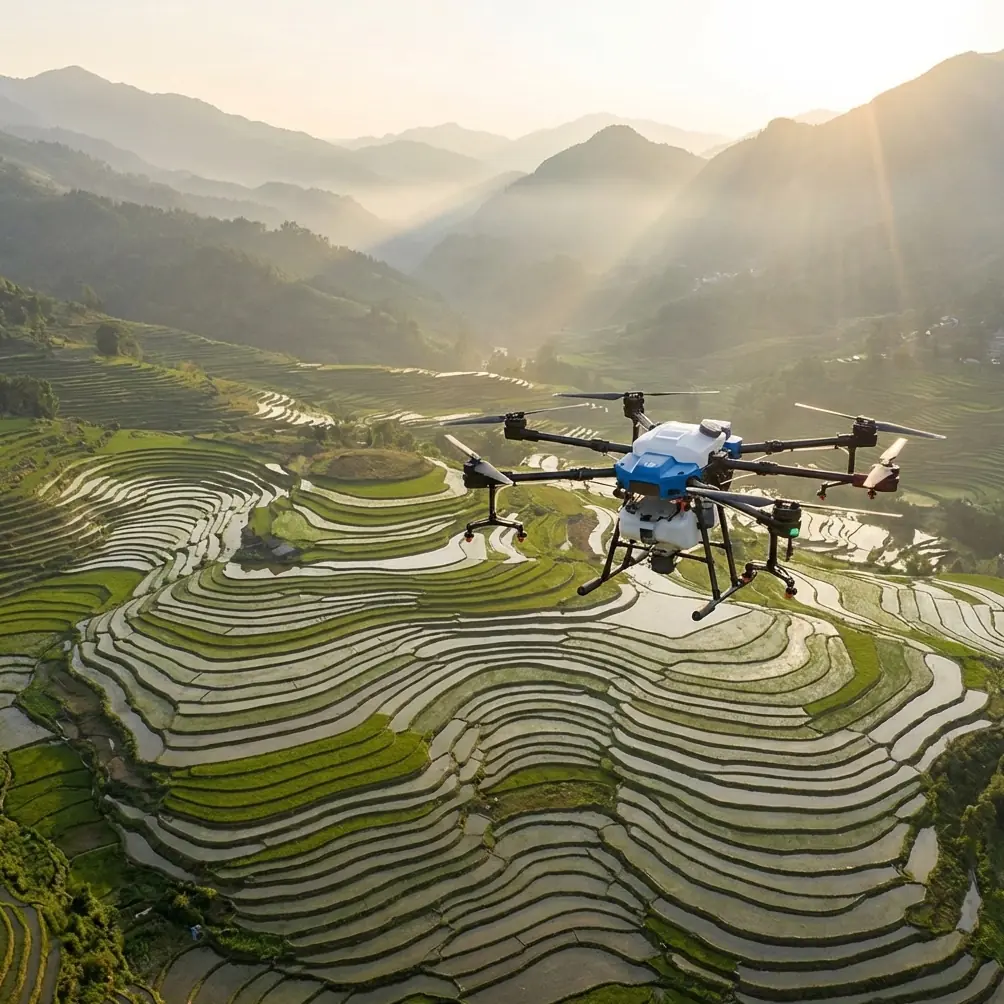
Agras T100 in Windy Highway Corridors: A Practical Field Guide for Stable, Accurate Operations
META: Expert how-to guide for flying the Agras T100 in windy highway environments, with practical advice on spray drift, RTK precision, nozzle calibration, weather shifts, and safe mission planning.
Highway work looks straightforward on paper. Long linear corridors. Predictable access points. Clear mapping objectives. Then the wind starts bouncing off barriers, embankments, overpasses, and moving traffic, and the mission changes character fast.
That is where the Agras T100 earns real attention.
I would not frame the T100 as a generic “do everything” platform. In a highway environment, especially when conditions turn uneven mid-flight, what matters is repeatability. You need a drone that can hold a clean line, preserve positional confidence, and let the operator make quick adjustments without losing control of the mission. For crews working near road infrastructure in windy conditions, those details matter more than marketing adjectives.
This guide is built around that exact scenario: operating an Agras T100 around highways when the weather shifts during the flight. The goal is not to romanticize the platform. It is to help you get usable results, reduce drift-related errors, and avoid the common mistakes that show up when wind and corridor geometry start working against you.
Why highway wind is different
Open farmland wind is one thing. Highway wind is another.
A corridor creates its own mess of airflow. Sound walls channel gusts. Passing trucks throw turbulence into your operating envelope. Raised sections and cut slopes create abrupt changes in crosswind intensity. Even when the broader forecast looks acceptable, the air along a highway shoulder can behave like a series of miniature weather zones.
That matters whether your mission is visual documentation, corridor inspection support, or adjacent treatment work where spray drift must be controlled. The T100’s value in this environment comes from how well it supports disciplined flight planning, stable tracking, and fast configuration changes once conditions stop matching the forecast.
If you are filming highways in windy conditions, the temptation is to think only about camera smoothness and aircraft stability. That is too narrow. You also have to think like an operations manager. Wind affects route geometry, safe offset distance, battery planning, signal integrity, and if you are using the aircraft for application-related work near vegetation or right-of-way management, nozzle calibration and swath width become operational issues, not just setup details.
Start with the mission geometry, not the aircraft menu
Before the T100 ever lifts off, define the corridor in segments.
Long straight routes encourage lazy planning. Operators try to run the whole line as one continuous job. That usually works until the wind shifts halfway through and now the second half of the route requires different headings, different speed assumptions, and tighter offset control. Break the corridor into smaller operational blocks. Each block should have:
- A clear launch and recovery zone
- A preferred upwind or crosswind approach
- A fail-safe exit path
- A known obstacle profile
- A realistic battery reserve threshold
For highway work, I recommend treating bridges, interchanges, elevated ramps, and noise barrier sections as separate micro-environments. The T100 may be capable of handling a broad mission footprint, but operator discipline should still assume that every major structure changes the local air behavior.
This is also where centimeter precision becomes more than a technical talking point. If your RTK fix rate is strong and consistent, route alignment is easier to trust when the aircraft is being nudged laterally by corridor wind. Centimeter-level positioning does not remove the wind. It reduces uncertainty about where the aircraft should be relative to the route, and that makes your corrections cleaner.
RTK fix rate is not a background statistic
A lot of crews glance at RTK status once and move on. That is a mistake in this kind of operation.
When working near highways, a reliable RTK fix rate is one of the first indicators that your mission will remain orderly when conditions deteriorate. Structures, vehicles, and uneven terrain can complicate signal conditions. If your fix becomes inconsistent, your confidence in route adherence drops right when the aircraft is already dealing with turbulent air.
Operationally, that changes how you fly. A strong RTK lock supports tighter line tracking and more predictable repeat passes. If you lose that confidence, you need to widen your tolerance and shorten your working segment. On a windy corridor, that can be the difference between a controlled adjustment and a mission that starts unraveling.
For teams documenting road assets or repeating passes for comparable visual output, a stable RTK solution supports cleaner overlap and better continuity. For adjacent spray-related work, it helps maintain intended spacing and keeps your swath width from becoming theoretical rather than real.
Mid-flight weather changes: what actually happens
Here is the scenario I see often.
You launch in manageable conditions. The first section is clean. The T100 tracks well, heading is stable, and the corridor looks easy. Ten minutes later, the air changes. A side gust starts hitting from the exposed side of the highway. Down near a retaining wall, it is mild. Rise above the shoulder and suddenly the aircraft is working harder to stay on line.
This is where pilots either stay methodical or start chasing the drone.
The better move is to pause the original assumptions and reassess four things immediately:
- Wind direction relative to the corridor
- Groundspeed versus intended coverage or filming pace
- Lateral correction behavior
- Margin for return and safe recovery
The T100 can handle changing conditions best when the operator stops treating the mission as fixed. If the wind rotates into a stronger crosswind, change your pass direction where possible. If your route depends on a particular heading, reduce the length of each active segment. If the air near barriers becomes unstable, raise or lower the operating profile only after evaluating how the turbulence changes across those layers.
For filming-related work, this matters because visual smoothness is not just about gimbal behavior. It is about route confidence. When the aircraft is repeatedly correcting for gusts, footage can still look passable while the actual line quality deteriorates. If the mission includes repeatability, alignment to assets, or comparison against previous passes, that hidden degradation matters.
Spray drift control starts before the first pass
Even if your primary reader scenario is filming highways in wind, the Agras T100 sits in a category where application discipline matters. And near highway vegetation, medians, embankments, or right-of-way maintenance zones, spray drift is one of the biggest operational risks.
Wind drift does not begin at the nozzle. It begins with poor planning.
If crosswinds are unstable, your first response should not be to hope the aircraft compensates. Revisit nozzle calibration, droplet behavior, pass direction, and actual achievable swath width in that moment. The nominal swath width you use in calm conditions may no longer be defensible when gusts start moving product laterally. Shrinking the effective swath and accepting more passes is often the smarter choice.
Nozzle calibration is especially critical after any major operational change. If you adjust speed, altitude, or route strategy because the weather has shifted, calibration assumptions can drift out of sync with what the aircraft is now doing over the target area. That is how operators end up with uneven coverage, off-target deposition, and post-mission confusion about whether the problem was weather or equipment.
The practical lesson is simple: in a windy highway corridor, calibration is not a one-time checklist item. It is part of mission control.
Swath width is a field decision, not a brochure number
One of the most common mistakes with larger ag platforms is treating swath width like a guaranteed constant. It is not. It is a working estimate that must be adjusted for actual conditions.
Along highways, the wind can vary substantially over a short distance. A sheltered section behind a barrier may support one spacing pattern. Fifty meters later, an exposed embankment may demand tighter spacing because drift and lateral movement are now affecting consistency.
That is why I tell crews to think in terms of “verified swath” rather than “assumed swath.” The T100 can only deliver a usable operational width if the operator validates that width against the real air mass, not the planned one.
This applies to imaging missions too. If you are filming or documenting infrastructure, your effective corridor width per pass may narrow once the aircraft is spending more energy correcting position. The mission plan should reflect the width you can hold accurately, not the width you wish you had.
IPX6K matters when the highway turns dirty
Highway operations are not only windy. They are dirty.
Mist, grime, road spray, and fine particulate can get everywhere, especially if the weather shifts and the surface environment turns messy. In that context, an IPX6K-rated airframe has operational significance. It means the platform is better suited to harsh field conditions where water exposure and contamination are realistic concerns, not rare exceptions.
That does not mean you ignore maintenance. It means the aircraft is built with the assumption that real work is not happening in laboratory air. After highway missions, especially in mixed moisture and dust, inspection and cleaning discipline still matter. But an aircraft with IPX6K protection starts from a more practical baseline for crews working around exposed infrastructure.
For operators who regularly deal with roadside humidity, drizzle, or blown moisture from traffic, that durability profile is not cosmetic. It affects downtime, inspection confidence, and the willingness to keep working through marginal but manageable field conditions.
Where multispectral thinking enters the picture
Multispectral capability is not the first thing most people associate with highway operations, but it deserves mention in corridor work near vegetation and managed right-of-way zones.
If your broader mission includes assessing vegetation health near highways, drainage corridors, or encroachment zones, multispectral workflows can add a layer of decision support beyond simple visual review. The T100 becomes more useful when it is part of an operational stack, not treated as a one-mission tool.
That matters because windy conditions often force tradeoffs. You may postpone one type of pass and prioritize another. If a visual mission becomes less efficient due to gusts, it helps to know whether a different data capture objective still justifies the sortie. Experienced crews think in mission value, not just airborne minutes.
A field-tested workflow when conditions shift
If the weather changes mid-flight, here is the sequence I recommend:
First, stop trying to preserve the original tempo. Speed hides problems. Slow the operation mentally before you slow the aircraft physically.
Second, check RTK confidence and route fidelity. If the fix rate is unstable, do not pretend precision is intact.
Third, reassess your wind angle against the corridor. Highway geometry can make one direction workable and the opposite direction wasteful.
Fourth, tighten your working assumptions. Shorter segments. Smaller verified swath width. More conservative overlap. Lower tolerance for drift.
Fifth, inspect outcome quality early. Do not wait until the mission is complete to discover that the second half of the flight was compromised by conditions that were obvious halfway through.
This is also the right moment to coordinate with a field specialist if the operation has application or corridor-management implications. If you need a second set of eyes on route setup or drift control, you can message our flight planning desk while the aircraft is grounded and the mission is still recoverable.
What separates competent pilots from reliable operators
Anybody can fly a drone when the corridor is calm.
Reliable operators stand out when the weather changes and the mission still finishes in a controlled, documented, defensible way. With the Agras T100, the hardware can support that standard, but only if the operator understands what the platform is actually good at.
Its practical strengths in this scenario are not abstract. They show up in the details:
- RTK-supported centimeter precision helps maintain route confidence in lateral wind
- Careful nozzle calibration reduces the risk of drift-related inconsistency
- Real-world swath width adjustment preserves usable coverage when air conditions change
- IPX6K durability better suits messy roadside environments
- Multispectral-adjacent workflows can expand mission value in right-of-way analysis
Those are not disconnected features. They are part of one operational story. In a windy highway environment, the T100 performs best when the crew treats precision, environmental awareness, and adaptability as one system.
That is the real takeaway. The drone does not solve the wind. It gives a disciplined operator the tools to keep the mission accurate when the wind stops cooperating.
Ready for your own Agras T100? Contact our team for expert consultation.