
Agras T100 for Remote Construction Site Inspection
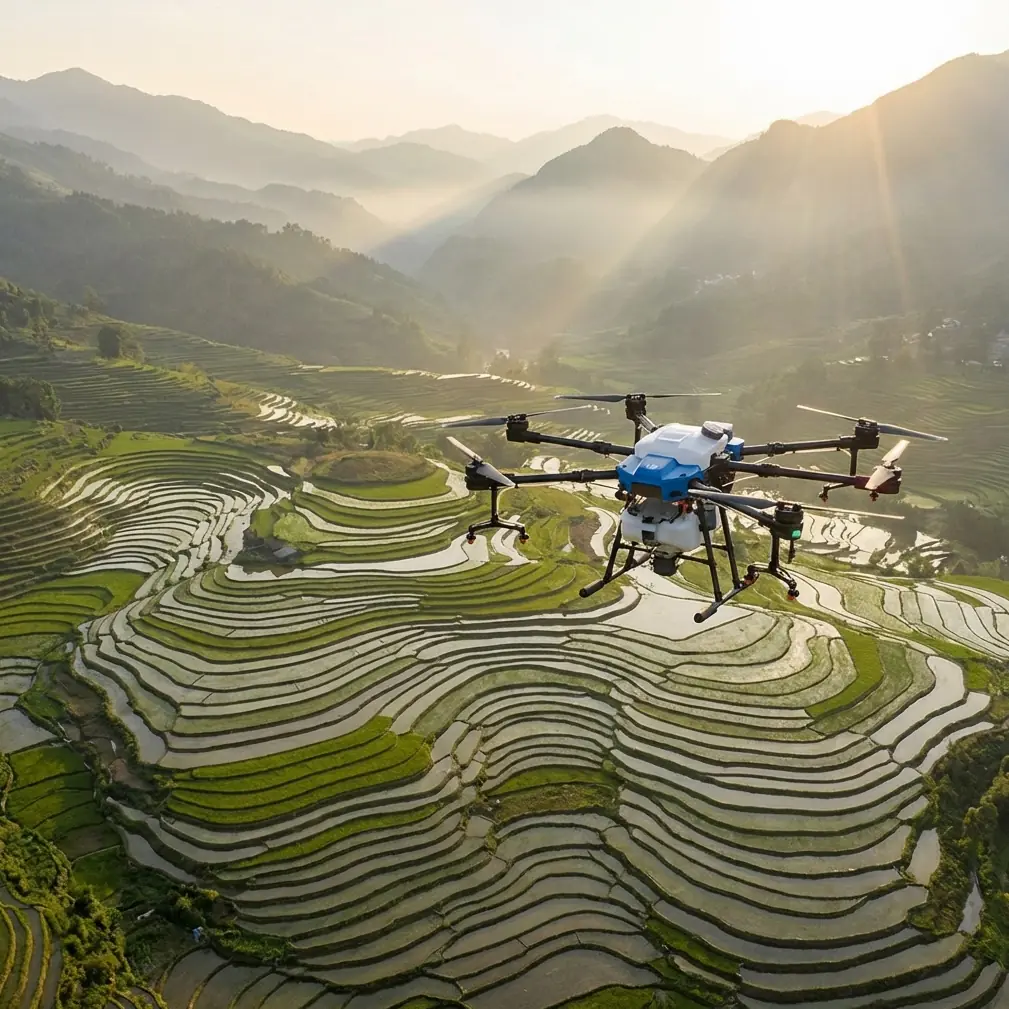
Agras T100 for Remote Construction Site Inspection: A Technical Review from the Field
META: A technical review of the Agras T100 for remote construction site inspection, covering RTK accuracy, battery management, weather resilience, calibration discipline, and operational limits.
Remote construction sites punish weak workflows.
They expose every shortcut in positioning, power planning, weather sealing, and payload setup. A drone that looks excellent on a spec sheet can become awkward very quickly when the launch point is muddy, the access road is long, the site boundary is irregular, and the pilot has one narrow weather window to document grading progress, drainage work, stockpile movement, and edge conditions before light fades.
That is the context in which the Agras T100 becomes interesting.
The T100 is usually discussed through the lens of agricultural operations, yet a serious operator looking at remote construction inspection will notice something else: many of the features that matter in spraying also matter in demanding industrial field documentation. Stable low-altitude flight, disciplined route repeatability, strong environmental sealing, robust obstacle awareness, and dependable battery handling all translate well when the real task is collecting consistent visual intelligence across large, rough, exposed work zones.
This is not a generic drone recommendation. It is a technical review of why the Agras T100 deserves a closer look for construction-site inspection in remote locations, and where its agricultural DNA creates both strengths and limitations.
Why the Agras T100 fits remote construction work better than many expect
A remote construction site has four recurring operational problems.
First, site access is poor. You may be launching from crushed rock, wet clay, or a temporary haul-road shoulder. Second, repeatability matters. Earthworks inspection is rarely a one-off mission; you need the same route flown over days or weeks to compare trench progress, berm changes, equipment staging, and water pooling. Third, the environment is hostile. Dust, splashing mud, and sudden weather shifts are normal. Fourth, downtime hurts more because charging logistics and spare-battery rotation are harder when the nearest indoor workspace is a long drive away.
The Agras T100’s architecture addresses several of those pain points indirectly. A platform built for field use is usually more tolerant of rough deployment conditions than a lightly built drone designed primarily for short urban mapping sessions. That matters when the mission is not glamorous. It is repetitive, exposed, and operationally unforgiving.
One detail worth emphasizing is the role of RTK fix rate in inspection quality. In agricultural workflows, RTK is valued because it helps maintain tightly controlled paths and application accuracy. On a construction site, that same centimeter precision has a different payoff: it makes recurring documentation much more useful. If the aircraft can hold a stable and repeatable line along haul roads, foundation footprints, drainage channels, or retaining walls, visual comparisons become operational evidence rather than just pretty aerial footage.
That is a major difference. A site superintendent or project engineer does not need cinematic motion. They need spatial consistency.
Centimeter precision is not just a mapping feature
Many operators talk about RTK as if it only matters for survey-grade mapping. That is too narrow.
On remote construction inspection jobs, centimeter precision affects how confidently you can verify changes in slope trimming, trench alignment, pipe staging, spoil placement, and access-route condition. Even where the payload is not a dedicated survey camera, the stability and repeatability of an RTK-assisted route reduce ambiguity. If you revisit a site after rain, for example, you can compare standing-water patterns at nearly the same viewing geometry and track whether drainage remediation actually worked.
That is where RTK fix rate becomes more than a technical checkbox. A strong fix rate supports reliable autonomous or semi-automated passes, especially near long linear features such as roads, fencing, utility corridors, and embankments. If fix quality degrades, the resulting dataset may still be usable, but the comparison value falls fast.
For remote construction inspection, the operational significance is simple: higher positional confidence means less time arguing about whether an apparent change is real or just a different flight line.
Weather sealing and field resilience are not optional
The T100’s IPX6K-style field resilience is especially relevant here. Construction sites produce two kinds of contamination that drone marketing often understates: airborne particulates and wet grime. Fine dust from grading and aggregate handling can get everywhere. Water is rarely clean; it is mixed with clay, cement residue, or site runoff. A drone platform with serious environmental protection has a practical advantage, not a theoretical one.
This does not mean you should fly carelessly in bad weather. It does mean the aircraft is better suited to the realities of launch, recovery, transport, and cleanup in exposed conditions. The difference becomes obvious after repeated field cycles. Seals, connectors, motors, hinges, and landing gear experience less cumulative stress when the platform was designed from the outset for wet and dirty work.
That is one of the strongest arguments for considering an agricultural aircraft in an industrial inspection role. It has been built for abuse.
Battery management: the field lesson that saves missions
The most useful battery advice I can offer from field experience is not glamorous: never land a battery at “acceptable” temperature and assume it is ready for a quick turnaround just because its state of charge looks healthy.
Remote construction sites tend to create hidden thermal stress. The aircraft may fly in full sun over reflective gravel, concrete formwork, or compacted pale soil that radiates heat upward. Then the battery is swapped fast because the team wants one more pass over a slope failure or drainage cut. On paper, the pack appears ready. In reality, voltage behavior under the next load cycle may become less stable, especially if the pack never had time to normalize thermally.
My rule in harsh field conditions is simple. Track battery temperature trend, not just remaining capacity. If one pack returns noticeably warmer than the others after an equivalent mission, pull it out of the immediate rotation and let it cool in shade before charging or relaunching. That one decision can preserve consistency late in the day, when pilots are tired and site managers suddenly request “just one more flight.”
The T100’s usefulness in remote work depends heavily on disciplined battery rotation. Big outdoor platforms reward operators who think like field engineers, not hobbyists. Label packs clearly, log cycle behavior, and match battery deployment to mission priority. Use your healthiest, coolest packs for the most positional-critical flights, particularly when you need clean repeat routes tied to RTK.
What spray-system thinking teaches inspection pilots
The Agras T100 comes from a spraying ecosystem, and that heritage has an unexpected benefit: it encourages calibration discipline.
Construction inspection pilots can learn a lot from spray operators because agricultural work punishes inconsistency. Terms like nozzle calibration, swath width, and spray drift may sound irrelevant to inspection until you look closer. In practice, they train the operator to think in patterns, overlap, environmental conditions, and edge control.
Take swath width. In spraying, a pilot must understand exactly how wide an effective pass really is under current conditions. For inspection, the parallel concept is image coverage geometry. If you do not think carefully about altitude, camera angle, and effective visual corridor width, you end up with blind strips, inconsistent overlap, and poor comparison value between flights. Agricultural pilots are often better prepared for this than pure camera-drone operators because they already think operationally about pass spacing.
Spray drift offers another useful analogy. During agricultural missions, wind can move droplets off target. During inspection, wind shifts the aircraft, changes gimbal behavior, increases motion blur risk, and complicates consistent oblique capture near vertical structures or spoil faces. The underlying lesson is identical: environmental drift degrades mission quality gradually, then suddenly.
Nozzle calibration may seem even further removed, yet the habit behind it matters. Calibration is really about verifying that the system is producing the output you think it is producing. Construction-site inspection needs the same mentality. Before a serious documentation mission, verify sensor cleanliness, lens condition, storage status, RTK health, compass status, route parameters, and return-to-home assumptions. Too many operators skip these checks because they are “only inspecting.” That is exactly how avoidable data gaps happen.
Where multispectral thinking can help, even if not every mission needs it
The T100 discussion often intersects with multispectral thinking because many industrial and land-management users now want more than visible-light imagery. On a construction site, multispectral is not mandatory for every mission, but the mindset behind it is useful. It pushes teams to ask better questions about what they are trying to detect.
Visible imagery is excellent for stockpiles, access roads, staging areas, erosion scars, trenching progress, and general compliance documentation. But difficult conditions such as moisture intrusion, stressed vegetation along disturbed edges, sediment migration, or drainage inefficiency may benefit from a more layered sensor strategy.
That does not mean the Agras T100 instantly becomes a multispectral platform for every buyer. It means the aircraft belongs in a broader operational conversation. If the site program grows beyond simple visual inspection, you want a drone workflow that already supports disciplined route planning, repeatability, and environmental resilience. Those foundational traits matter before advanced payload choices do.
Operational strengths on remote sites
For remote construction work, the T100’s strongest case rests on repeatable field execution rather than headline novelty.
It is well suited to:
- documenting earthworks progression across wide, open, uneven terrain
- repeating inspection paths with high positional consistency using RTK
- operating in dusty and wet site conditions where lighter platforms age quickly
- supporting crews that need an aircraft ready for practical, outdoor deployment rather than delicate handling
This becomes especially valuable when the inspection mission is tied to decision-making. Consider a remote road build crossing hilly ground. One week the concern is drainage scouring near a culvert approach. The next week it is shoulder settlement and aggregate spread. Then it is staging-area encroachment after a rain event. A resilient aircraft with centimeter precision can revisit those zones methodically and produce records that are more useful than ad hoc flyovers.
The limits deserve equal attention
The T100 is not automatically the best answer for every construction inspection program.
Its agricultural design priorities may make it less elegant than a dedicated compact mapping drone for firms focused on lightweight transport, dense urban access, or highly specialized photogrammetry workflows. Teams working around tight structures, interior voids, or congested vertical environments may prefer platforms optimized specifically for those conditions.
There is also a workflow question. If your site-inspection program depends on ultra-specialized sensor integration, automated defect analytics, or highly standardized engineering deliverables, you need to evaluate the entire chain, not just the aircraft. The drone is only one part of the evidence pipeline.
Still, for remote locations where resilience, route repeatability, and field practicality matter most, the T100 enters the conversation earlier than many buyers expect.
A smarter way to deploy it on remote jobs
If I were configuring the Agras T100 for serious remote construction inspection, I would build the operation around three disciplines.
First, mission standardization. Establish fixed route templates for recurring inspection goals: drainage review, perimeter change detection, haul-road condition, stockpile documentation, and cut/fill progress. Repetition creates decision-grade evidence.
Second, battery governance. Do not improvise pack rotation. Record thermal behavior, charging order, and mission pairing. A battery system is not just a power source; it is part of flight reliability.
Third, environmental thresholds. Define wind, visibility, surface glare, and precipitation limits before you travel to the site. When teams make these decisions on the tailgate under schedule pressure, judgment degrades.
If you are building that kind of workflow and want to compare setup ideas with a field-oriented team, you can message an operator directly and pressure-test your inspection plan before deployment.
Final assessment
The Agras T100 makes sense for remote construction site inspection because its core strengths map surprisingly well to the realities of outdoor industrial work. RTK-supported centimeter precision improves repeat-route credibility. IPX6K-style environmental resilience supports operations in dirty, wet, exposed sites. Agricultural habits around calibration, swath discipline, and environmental awareness translate into better inspection execution. And strong battery management, especially temperature-aware rotation, has an outsized effect on mission reliability in the field.
That combination is what matters.
Not the marketing category. Not the label attached to the aircraft. The real question is whether the platform can produce dependable, repeatable information under the exact conditions your site imposes. In remote construction environments, the Agras T100 often looks stronger on that test than many people assume.
Ready for your own Agras T100? Contact our team for expert consultation.