
How to Inspect Wildlife in Complex Terrain With the Agras T1
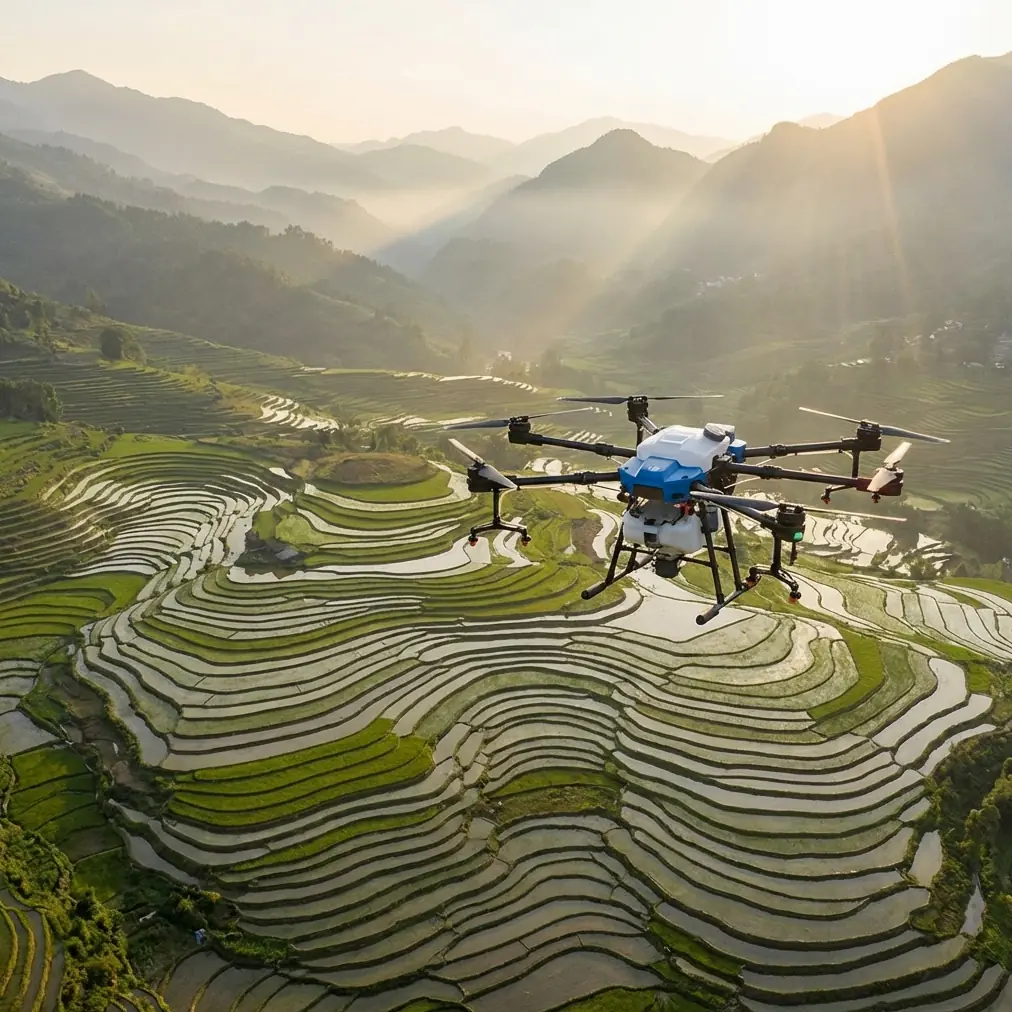
How to Inspect Wildlife in Complex Terrain With the Agras T100
META: A practical field guide to using the Agras T100 for wildlife inspection in steep, irregular environments, with setup tips on RTK accuracy, pre-flight cleaning, nozzle isolation, swath control, and weather-aware operation.
Wildlife inspection in broken terrain asks more from an aircraft than a flat-field crop mission ever will. Slopes disturb airflow. Valleys interrupt signal geometry. Moisture, dust, and plant debris collect where they should not. And when the aircraft was originally built around agricultural productivity, the operator has to be more deliberate about how that platform is adapted for observation work.
That is where the Agras T100 becomes interesting.
On paper, it belongs to the agricultural drone class. In practice, some of the same characteristics that matter in spraying and field coverage also matter when you are trying to observe animal movement, habitat condition, nesting areas, water access routes, or vegetation stress in hard-to-reach ground. Payload architecture, route stability, environmental sealing, and precise positioning all carry over. The trick is not to treat wildlife inspection like a crop application mission. It is to configure the T100 so its strengths support data collection while minimizing disturbance and avoiding unnecessary operational risk.
This guide is written from that angle: not as a brochure, but as a field method.
Start with the right mission mindset
If your goal is wildlife inspection, the aircraft is not there to dominate the site. It is there to sample it carefully.
Complex terrain changes what “good flying” means. In open farmland, efficiency often centers on speed and coverage. In wildlife corridors, forest edges, rocky ravines, wetlands, and mountain foothills, efficiency starts with predictability. You want repeatable paths, controlled altitude relative to terrain, and stable georeferencing so observations can be compared across flights. That is where centimeter precision matters. It is not just a nice specification. It is the difference between saying, “animals were somewhere near this ridge,” and being able to document repeated use of one crossing point over time.
The T100’s RTK-capable workflow is especially useful here. A strong RTK fix rate improves positional consistency when you revisit the same route to monitor habitat change, grazing patterns, erosion near burrows, or vegetation pressure around water sources. In wildlife inspection, that consistency cuts down on interpretation errors. If the aircraft drifts between passes or logs imagery with weak positional confidence, you may mistake mapping noise for actual ecological change.
Before anything else, do the pre-flight cleaning that most crews rush
The most overlooked safety step is also one of the simplest: clean the aircraft before you power into the mission.
That matters even more with a drone like the T100, because field exposure is part of the job. Dust, dried residue, grass fibers, mud splash, and moisture can accumulate around arms, motor housings, landing gear interfaces, connectors, vision-related surfaces, and spray-system components. Even if you are not planning an application mission, contamination left in or around those assemblies can still affect aircraft behavior and onboard safety checks.
A proper pre-flight cleaning step should include:
- Wiping down the airframe to remove dust and plant debris
- Checking that sensors and protective surfaces are clean and unobstructed
- Inspecting the landing gear and arm joints for packed dirt
- Looking at nozzles and fluid lines, even if spraying is disabled, to confirm there is no residual buildup
- Verifying connectors are dry and seated correctly after cleaning
The operational significance is straightforward. First, contamination can interfere with reliability. Second, residue from previous spray work creates a cross-use problem if the aircraft is now being deployed near sensitive wildlife habitat. Third, cleaning gives the pilot a reason to slow down and notice hairline damage, loose fittings, or blocked passages before takeoff instead of after a warning appears in the field.
The T100’s IPX6K-style environmental protection is valuable here because inspection work often happens in wet brush, mist, irrigation edges, or after light rain exposure. But sealing is not a substitute for maintenance. Weather resistance helps the aircraft tolerate harsh conditions; it does not excuse a dirty airframe.
Disable assumptions inherited from spraying work
One of the easiest mistakes is to carry agricultural setup habits into a wildlife survey.
The T100 is associated with spray coverage, nozzle performance, and swath width management. Those are not irrelevant. They simply need to be reframed.
For wildlife inspection, swath width becomes a planning concept for observation coverage rather than chemical distribution. Think of it as the width of the corridor your sensors can observe effectively at a given altitude and speed. Too wide, and you lose detail. Too narrow, and you waste battery cycling over terrain features that do not need repeated passes. In complex terrain, this matters because slopes compress and expand your practical viewing field. A route that appears efficient in a flat map may produce blind zones once ridgelines and vegetation height are taken into account.
Nozzle calibration also has a place in this discussion, even if no liquid is being dispensed. Why mention it? Because a wildlife operator using a dual-purpose platform needs certainty that all spray functions are either properly calibrated for another mission type or fully isolated for an inspection mission. Residual pressure, leakage, or accidental activation has no place around animals, nesting sites, or protected vegetation.
In other words, if the T100 has been used in agriculture, then spray drift is not merely an agronomy topic. It becomes a contamination-control issue. The safe wildlife workflow is to verify that the aircraft is configured strictly for observation and that the spray subsystem is inactive, clean, and secure before entering habitat-sensitive airspace.
Use RTK as a conservation tool, not just a flight feature
A lot of operators talk about RTK in broad terms. For wildlife inspection, that undersells its value.
A high RTK fix rate supports repeatable transects. That means you can fly the same edge of a forest, the same drainage line, or the same plateau margin on different days and compare data with far less uncertainty. If you are watching seasonal movement, checking for habitat fragmentation, or monitoring restoration progress, centimeter precision is practical, not theoretical.
Let’s say you identify hoof tracks, den entrances, or canopy disturbance near a ridge shoulder. If your aircraft can consistently revisit those exact lines, your time-series observations become more credible. You can tell whether an apparent change is really movement on the ground or just a slightly shifted flight path. This is one of the strongest arguments for using a robust positioning workflow in ecological inspection.
Complex terrain does create RTK challenges. Valleys and rock faces can affect signal conditions, and tree cover may reduce the quality of your positioning solution. That means crews should not just check that RTK is enabled. They should confirm that the fix is stable before starting the data run. If the fix degrades, it may be smarter to pause and reposition than to collect a half-usable dataset.
Pair route design with animal behavior
The T100 may be able to cover a lot of ground, but wildlife inspection is not a race.
In sensitive environments, route design should reflect how animals actually use the terrain. Saddles between hills, water channels, sparse breaks in dense cover, and transitional vegetation lines are often more informative than broad open expanses. Plan your flight paths to intersect these ecological features at controlled speed and moderate stand-off distance rather than simply filling a polygon.
This is also where altitude discipline matters. Flying lower can improve visual detail, but it can also increase disturbance, especially in birds and herd animals. Higher passes reduce disturbance but may limit the detail you need. The answer is not a fixed number. It is an adaptive profile based on species sensitivity, terrain obstruction, and the sensor package being carried.
If you are integrating multispectral observation, the T100 can support a stronger habitat-assessment workflow than a simple visual pass. Multispectral data is useful when the inspection question is not only “Where are the animals?” but also “Why are they favoring this area?” Vegetation vigor, moisture patterns, forage variability, and surface stress can help explain movement and congregation patterns. In rugged landscapes, that ecological context often matters more than a single sighting.
Manage airflow and drift logic, even when you are not spraying
Rotor wash changes how the aircraft interacts with the site. In agricultural work, operators think about spray drift. In wildlife inspection, the same aerodynamic awareness helps avoid disturbing loose nesting material, dusting burrow entrances, or scattering surface clues such as tracks, feathers, or scat before they are documented.
That is one reason stable stand-off flying matters. If the aircraft is repeatedly dropping low over uneven ground, your downwash can alter the scene you are trying to inspect. The T100’s mission planning should therefore keep enough clearance for safe terrain separation while preserving image usefulness. On steep slopes, even small altitude misjudgments can bring the aircraft much closer to the surface than the pilot intended.
A good rule in wildlife inspection is to fly as if the habitat itself is evidence. Once disturbed, some details are gone.
Weather sealing helps, but weather judgment still decides the mission
The T100’s IPX6K-level protection is attractive for crews working in damp vegetation, windblown dust, or post-rain conditions. In practical terms, that kind of sealing supports mission continuity when the environment is less than forgiving. But terrain amplifies weather in unpredictable ways. Gusts accelerate along ridges. Moisture lingers in shaded gullies. Fine dust rises from dry tracks and hangs in still air.
For that reason, weather review for wildlife inspection should include microclimate thinking, not just a general forecast. If a route crosses open rock, scrub edge, and wet creek vegetation in one mission, the aircraft may encounter three different environmental behaviors in ten minutes. Sealing helps preserve equipment integrity. It does not cancel the need to shorten a route, delay launch, or split a mission window.
Build a clean data chain after landing
A wildlife mission is only as useful as its post-flight discipline.
After landing, inspect the aircraft again. Remove plant matter, moisture, and dirt before they dry into hard residue. Check whether debris accumulated around moving parts or sensor surfaces during the mission. If you swapped between observation and agricultural roles in previous operations, document that the inspection sortie was performed with the spray system inactive and clean. This kind of traceability matters for both internal safety culture and external environmental accountability.
Then review the mission against three criteria:
- Was the RTK solution stable enough to trust the positional record?
- Did the chosen swath width produce the detail needed for the inspection objective?
- Did the route minimize disturbance while still capturing habitat-relevant evidence?
That review loop is what turns a capable aircraft into a dependable wildlife tool.
A practical field workflow for the Agras T100
For teams that want a repeatable method, this sequence works well:
- Clean and inspect the airframe before power-up
- Confirm all observation surfaces and connectors are clear
- Verify spray components are clean, isolated, and inactive
- Check RTK status and wait for a dependable fix
- Plan narrower, terrain-aware swaths in areas with dense habitat complexity
- Fly routes that match ecological features, not just map geometry
- Keep enough stand-off altitude to reduce downwash disturbance
- Use multispectral capture when habitat condition is part of the question
- Recheck the airframe after landing and log any contamination or anomalies
If your team is refining a similar workflow and needs a field-oriented setup checklist, this direct WhatsApp line for technical coordination is a practical place to start.
The Agras T100 is not a wildlife aircraft by label alone. It becomes one through method. Its value in complex terrain comes from how well the operator controls precision, cleanliness, route logic, and disturbance. Get those right, and the platform can do more than reach difficult ground. It can help you observe that ground consistently enough for the findings to matter.
Ready for your own Agras T100? Contact our team for expert consultation.