
Agras T100 in Urban Forest Mapping: A Case Study
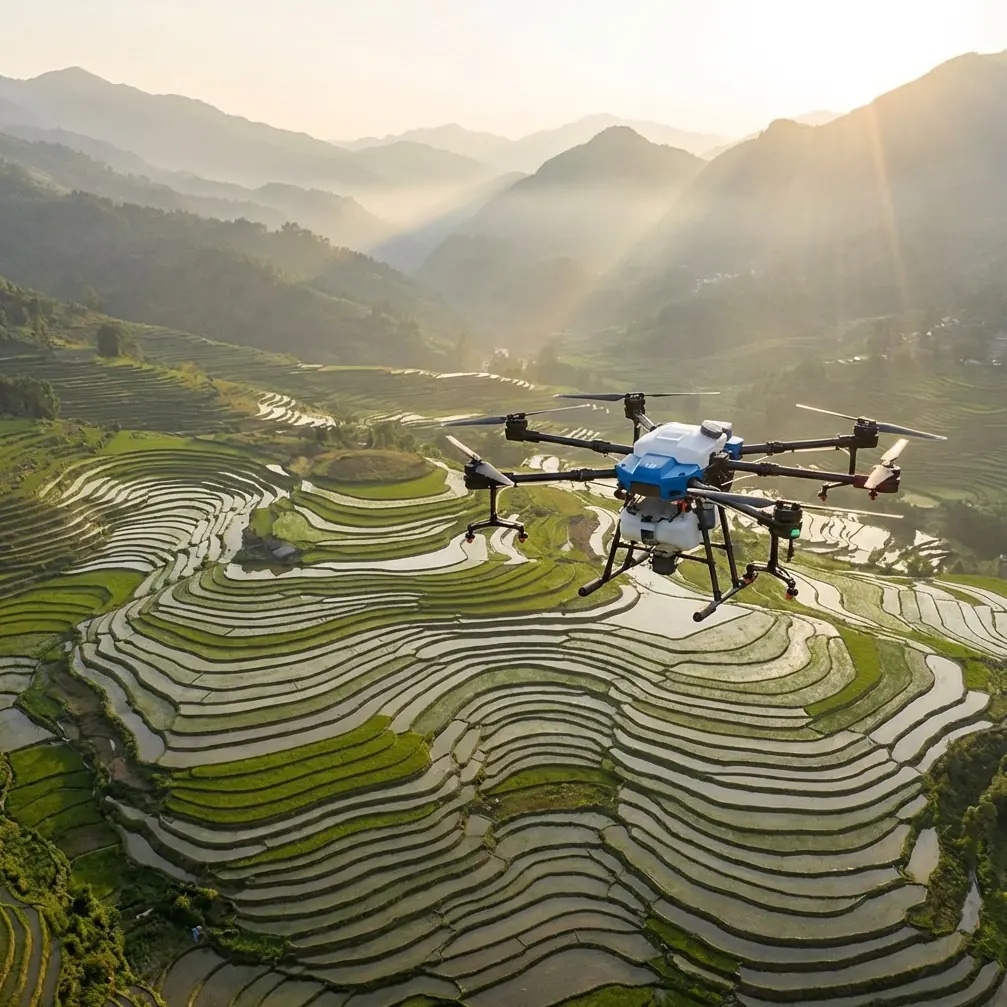
Agras T100 in Urban Forest Mapping: A Case Study in Precision, Drift Control, and Pilot Discipline
META: A field-based expert analysis of using the Agras T100 around urban forests, with practical insights on spray drift, training rules, RTK precision, battery handling, and why pilot competency matters as much as aircraft capability.
When people first hear “Agras T100,” they usually picture crop protection. That is fair. The Agras line is rooted in agricultural work. But in urban forest environments, that instinct can be too narrow.
A dense tree corridor beside roads, parks, campuses, utility easements, and peri-urban greenbelts creates a very specific operational puzzle. You need low-altitude access. You need tight control over drift if you are applying anything. You need hover stability near irregular canopy edges. You need disciplined route planning because urban-adjacent airspace is never forgiving. And if the mission includes forest health assessment or treatment verification, centimeter-level positional consistency suddenly matters far more than marketing slogans.
That is where the Agras T100 becomes interesting. Not as a generic “big drone,” but as a platform whose value depends on whether the operator can connect aircraft capability with regulatory discipline and field reality.
This case study looks at the T100 through that lens: an urban forest mapping workflow with occasional spot-treatment support, interpreted through two overlooked reference points. The first is Chinese civil UAV pilot management requirements, which spell out training expectations in unusual detail. The second is an older but still relevant assessment of agricultural UAV operations, especially its observations on low-altitude work, reduced drift, hover advantages, and the steep training burden that has historically slowed adoption.
Why the Urban Forest Scenario Changes the Conversation
Open-field agriculture forgives some operational sloppiness. Urban forest edges do not.
Tree lines distort airflow. Buildings create turbulence. Roads, pedestrians, utility structures, and fragmented green parcels compress the available safety margin. In this environment, the T100’s usefulness is not just about payload or spray volume. It is about repeatability. The aircraft must hold position cleanly, maintain a reliable route through broken canopy geometry, and support data collection or treatment work without turning every mission into a manual improvisation exercise.
That is why the old observation from agricultural UAV practice still matters: low operating height reduces drift, hovering is possible, and no dedicated runway is needed. Those are not abstract advantages. In urban forestry, they are operational enablers.
A runway-free aircraft can stage from a small service lane or cleared park margin. Hover capability makes it possible to inspect a difficult crown edge or verify treatment performance without continuous forward motion. Low-altitude operation helps keep application or observation targeted, which is critical where urban vegetation sits near footpaths, parking areas, or residential boundaries.
The source material goes even further on resource efficiency in spraying: UAV spray systems can reduce pesticide use by at least 50% and cut water consumption by 90% compared with conventional approaches. For an urban forest team, that matters less as a headline and more as a planning constraint. Lower water demand changes logistics. Smaller refill footprints reduce support-vehicle movement. Tighter application volumes can simplify work in restricted staging areas. If a T100 mission includes selective canopy treatment rather than broad-acre spraying, those efficiencies become practical rather than theoretical.
The Real Bottleneck Is Often Not the Aircraft
One line in the reference material deserves more attention than it usually gets: operators historically needed model-aircraft handling experience or at least four months of training, which limited agricultural UAV adoption.
That is not an outdated footnote. It points to the central truth of platforms like the Agras T100: high-capability hardware does not remove the need for structured pilot competence. In fact, it raises the consequences of weak training.
The pilot management regulation is especially revealing here. It does not just say “get trained.” It breaks the expectation down into ground instruction, theory testing, system knowledge, communication procedures, and practical or simulated flight training with logged records. It specifically requires knowledge in aviation regulations, airport-area operations, collision avoidance, radio communication, night operations, and high-altitude operations. It also requires oral examination on the specific UAV system being used, including aircraft characteristics and communication, navigation, and surveillance functions.
For an urban forest T100 mission, that is not bureaucratic excess. It is exactly the difference between a professional operation and a risky one.
Imagine a mapping run along a municipal forest strip near controlled or sensitive airspace. The aircraft’s route may be technically simple. The airspace coordination is not. The regulation requires at least 4 hours of training in airspace application and air traffic communication, 4 hours in route planning, 4 hours in system check procedures, 20 hours in normal flight procedure command, and another 20 hours in emergency flight procedure command for the aircraft commander role. That training structure tells you something important: competent UAV work is built around planning, systems thinking, and abnormal-situation management, not joystick reflex alone.
For the T100 in urban forest work, that matters operationally in three ways:
Route planning is part of risk management.
Tree canopy, building setbacks, electromagnetic noise sources, and public-access zones need to be anticipated before takeoff.Communication systems are mission-critical.
The regulation explicitly highlights C2 data links, working coverage, backup communication means, and communication failure procedures. In urban greenbelts, signal quality can degrade near structures or terrain breaks. A pilot who understands link behavior is far more valuable than one who only knows the app interface.Emergency handling is not optional.
The source specifically names avoidance of other aircraft, engine failure, lost link, emergency recovery, and forced landing in practical training. Urban forest edges leave very few forgiving recovery areas.
A Practical T100 Workflow for Urban Forest Mapping
In the field, the strongest T100 mapping workflows are rarely built around one sensor or one mission objective. They are layered.
A typical urban forest operation may start with route design based on canopy boundaries and known obstacles, then use RTK-supported flight for repeatable coverage. If the team is assessing vegetation stress, a multispectral payload or companion workflow may be used to identify problem zones. If the goal is operational treatment, those same mapped zones can inform swath width selection, nozzle calibration, and lower-drift application passes.
This is where some of the provided LSI concepts become more than keyword targets.
RTK fix rate and centimeter precision
In urban forest work, centimeter precision is not just about prettier maps. It affects comparison across time. If you are monitoring canopy decline, pest recurrence, or treatment efficacy, the real value comes from revisiting the same corridor and trusting the alignment of your data. A stable RTK fix rate reduces uncertainty when you are tracing narrow edges between tree cover and infrastructure.
Urban settings can be harsh on satellite geometry and signal consistency. Tall trees and nearby structures can both interfere. The lesson is simple: do not assume the T100 is “precise” because the spec sheet says so. Watch fix stability before committing to a mission segment that requires repeated line accuracy. If the mission includes both mapping and spot application, poor RTK consistency can ripple into swath overlap issues and uneven treatment coverage.
Swath width and nozzle calibration
In open cropland, operators often think in broad coverage blocks. Urban forest corridors reward restraint. A theoretical swath width is rarely the correct swath width once you factor in canopy gaps, edge turbulence, and nearby public areas.
Nozzle calibration is where professional discipline shows up. The old agricultural reference highlighted reduced drift and stronger canopy penetration from rotor downwash. Both are true in principle. But those benefits only hold when droplet size, flight height, speed, and nozzle output are tuned to the vegetation structure. Too aggressive, and the downwash that should improve penetration can create unwanted displacement near edges. Too conservative, and the treatment never reaches the intended foliage layers.
For T100 operators working around urban tree cover, the right question is not “How wide can I spray?” It is “How narrow should I keep the effective band to control variability?” That mindset usually leads to cleaner results.
A Battery Tip From the Field That Actually Matters
Here is the battery management lesson I have seen good crews learn early and everyone else learn the hard way: do not judge pack readiness only by charge percentage when working urban forest routes.
A battery showing a healthy state of charge can still underperform if it has not stabilized thermally after transport, rapid charging, or a previous sortie. In wooded urban margins, the mission profile often alternates between hover, short acceleration bursts, and repeated corrections around irregular canopy edges. That is a different electrical demand pattern than a smooth, open-field pass.
My field rule for the T100 is straightforward: after installing a fresh pack, allow a brief systems-on pause while confirming link stability, RTK behavior, and voltage consistency under idle load before committing to the route. It costs little time. It can save a mission. If the aircraft is going to spend part of the sortie holding position near canopy edges or executing frequent speed changes, that early check is more revealing than the percentage number on its own.
This is also where weather awareness comes in. The pilot regulation requires meteorology training, including identifying critical weather conditions and using aviation weather reports and forecasts. In urban forestry, battery behavior, wind variability, and canopy-induced turbulence all meet in the same moment. A technically legal launch is not always a smart launch.
Why Training Rules Belong in Any Serious T100 Discussion
Many articles about aircraft like the Agras T100 skip the operator side because it is less exciting than airframes and payloads. That is a mistake.
The regulatory source requires instruction on aircraft systems such as navigation, flight control, power, data links, and electrical systems. It also requires pilots to understand performance characteristics like flight speed, climb and descent rates, turning behavior, environmental limitations such as wind and precipitation, and maximum endurance. These are not academic details.
In an urban forest case, they translate directly into operational judgment:
- Turning performance determines whether the aircraft can transition safely at the end of a narrow tree-lined corridor.
- Wind and precipitation limits shape whether a canopy-edge mission will remain accurate enough for mapping or controlled enough for treatment.
- Maximum endurance is not just flight duration; it defines your reserve margin if rerouting or holding becomes necessary.
The same regulation also highlights communication emergency procedures, including ATC communication failures and C2 data-link faults. That should sharpen how we evaluate T100 deployment near urban infrastructure. A robust platform is valuable, but a robust contingency plan is what makes it professionally usable.
If your team is building an urban forest program around the T100, this is where to invest intellectual energy. Not in “tips and tricks,” but in system-specific SOPs, recurrent training, and mission rehearsals that reflect actual local airspace and terrain complexity.
The Bigger Industry Context Still Applies
The second source paints a picture of a sector that, at the time, was still immature: nearly 200 domestic model aircraft manufacturers, but only a little over 10 entities with independent R&D capability that had entered the agricultural market, alongside more than 20 agricultural equipment research institutes. That matters because it explains why training, workflow integration, and operator experience remained such major constraints.
Even now, those same forces shape outcomes. The aircraft can be capable, but if the workflow connecting flight platform, treatment system, geospatial data, and pilot procedure is weak, the operation underdelivers.
Urban forest mapping with the Agras T100 sits exactly at that intersection. It borrows from plant protection. It borrows from geospatial practice. It relies on aviation discipline. And it succeeds only when those pieces are designed to work together.
If you are building or refining that workflow and want a practical discussion rather than a brochure conversation, you can message our UAV team directly here.
What the T100 Actually Rewards
The Agras T100 rewards operators who think in layers.
Not just flight, but route logic.
Not just payload, but drift behavior.
Not just data capture, but revisit consistency.
Not just compliance, but trained judgment.
The reference materials used here are a useful reminder that the fundamentals have not changed. Agricultural UAVs earned their place because they can work low, hover accurately, reduce drift, and reduce operator exposure. But those advantages only become reliable in demanding settings when the crew understands aircraft characteristics, communication procedures, emergency actions, weather, and mission design at a professional level.
For urban forest mapping, that is the real story of the Agras T100. It is not merely a platform that can fly over trees. It is a tool that becomes genuinely effective when centimeter precision, nozzle discipline, RTK stability, and pilot training are treated as one system.
That is what separates a clean, repeatable mission from a messy one.
Ready for your own Agras T100? Contact our team for expert consultation.