
Agras T100 on Coastal Solar Farms: A Field Report on Flight
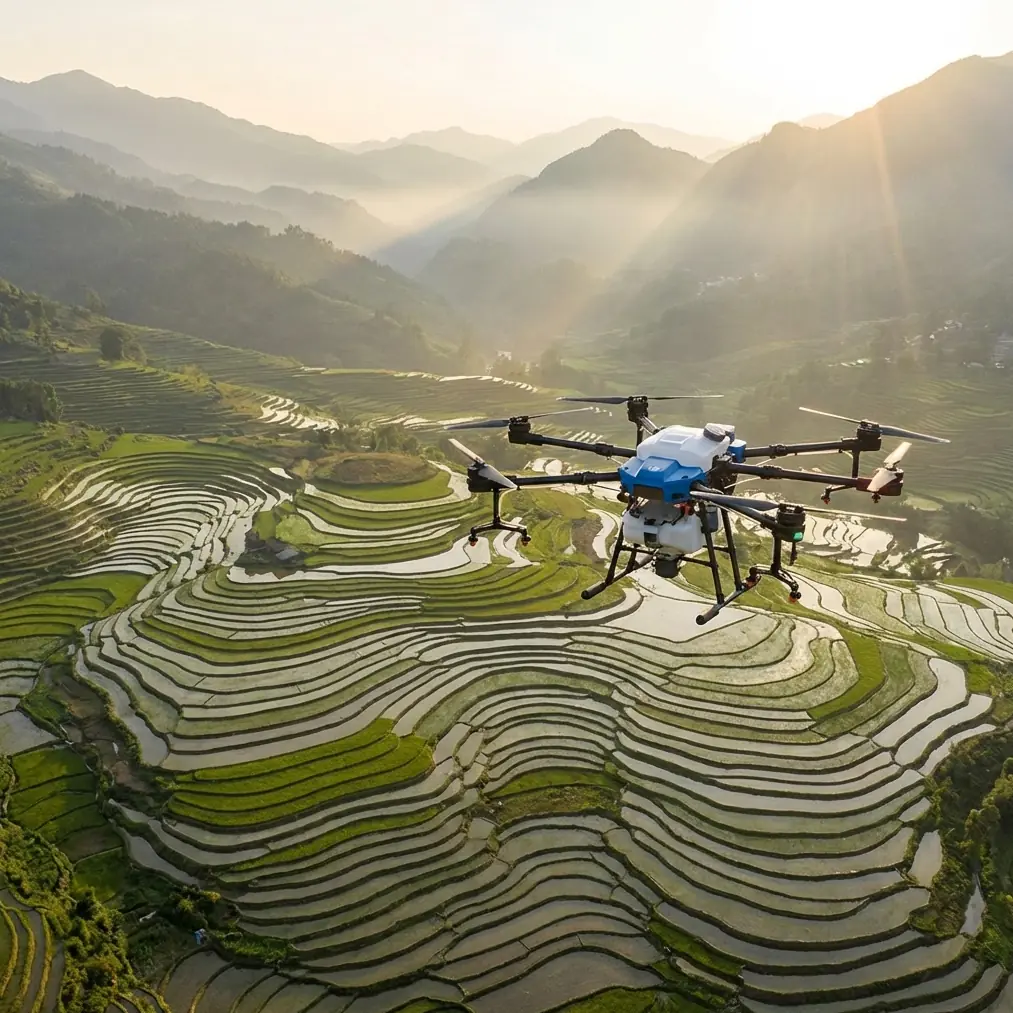
Agras T100 on Coastal Solar Farms: A Field Report on Flight Setup, Weather Discipline, and Precision Workflow
META: Expert field report on using the Agras T100 around coastal solar farms, with practical insight on flight altitude, RTK precision, weather risk, and operational setup.
Coastal solar farms look simple from a distance: long rows, repeatable geometry, open sky, easy access. On the ground, they are not simple at all.
Salt-laden air degrades hardware. Wind behaves differently over panel arrays than it does over bare soil. Surface glare can confuse visual interpretation. Moisture, low cloud, and frontal weather can compress a working day fast. If you are planning to use an Agras T100 in this environment—whether for inspection support, site documentation, vegetation control planning, or a tightly managed multispectral data collection mission—the drone itself is only part of the story. The workflow matters more.
What follows is a field-style assessment built around two operational themes that are easy to underestimate: connection discipline and weather discipline. One comes from training-drone programming practice. The other comes from aviation meteorology. Both translate surprisingly well to real work around coastal energy assets.
Why a coastal solar farm is a demanding UAV environment
A solar farm by the coast is rarely steady in the way operators hope. Even when the site looks calm at ground level, the air mass above it may be transitioning. Fronts matter here.
One of the reference materials compares cold fronts and warm fronts in plain operational terms. That matters because both bring cloud and precipitation as they pass, but they behave differently. A cold front tends to compress its weather into a narrower zone, with stronger changes during passage—wind, cooling, and sometimes abrupt deterioration. A warm front usually spreads precipitation over a wider area, often before the front itself arrives. For a drone team mapping a solar farm, this changes scheduling. A cold-front day can lure crews into launching during a short “still workable” window, then punish them with a rapid shift. A warm-front pattern often ruins data quality earlier than expected because the broad rain zone and overcast conditions arrive in advance.
For solar farm mapping, this is more than a comfort issue. It affects:
- image consistency across rows,
- RTK fix stability if conditions force interruptions and restarts,
- panel-surface visibility,
- and the simple question of whether you can finish a block before weather closes in.
If your mission depends on centimeter precision, you do not just need the T100 to fly. You need it to fly in conditions that let the data stay coherent from the first pass to the last.
The most useful altitude insight for this scenario
For coastal solar farm mapping, the best operational altitude is usually not “as low as possible.” That instinct often backfires.
A practical sweet spot is to begin route testing around 25 to 35 meters above the array, then adjust based on row spacing, panel tilt, glare, wind, and the sensor payload. On a site with strong reflection or uneven micro-turbulence between panel rows, flying too low can exaggerate airflow disturbance, increase small corrections, and reduce image consistency. It also narrows your swath width enough to create more passes than necessary, which adds battery swaps, mission stitching, and exposure variation.
At the same time, climbing unnecessarily high weakens the detail advantage you are trying to preserve. The right height is the lowest altitude that still gives stable tracking, clean overlap, and predictable geometry across the block.
In coastal conditions, I generally favor the upper half of that 25–35 meter test range for initial runs, especially when:
- the wind is cross-row rather than along-row,
- the panels are producing strong glare at the current sun angle,
- or the site has exposed perimeter zones where marine airflow accelerates.
That is not a universal number. It is a disciplined starting point. The point is to tune altitude to data quality and route stability, not to fly by habit.
What a training drone manual teaches us about a professional T100 workflow
One of the reference sources comes from an educational TT drone programming manual, not an Agras manual. At first glance that seems unrelated. It is not.
The manual makes three concrete points that matter far beyond classroom drones:
Device state must be reset when moving from one operating mode to another.
In the source, after using upload programming mode, the operator must restore the device to its initial settings before switching to real-time mode. The visual confirmation is the matrix display showing “TT.”Connection identity changes depending on hardware configuration.
Without the expansion module, the drone WiFi name begins with Tello. With the module attached, it changes to RMTT.A connection should be verified by explicit visual cues, not assumption.
In that setup, a warning icon changes into a green check mark, and the aircraft indicator light flashes purple for RMTT or green for Tello EDU.
This is classroom hardware, yes. But the operational lesson is exactly right for a serious T100 mission on a coastal solar site: never treat connection state, mode state, or hardware state as obvious.
On a real field team, that principle becomes:
- confirm the aircraft is in the correct mission mode before takeoff,
- verify the actual network/control link being used,
- check that payload, RTK, and route planning states match the current job,
- and use visible confirmation steps every time, especially after a mid-day interruption.
That matters because coastal projects create interruptions. Gusts pick up. Light changes. Moisture moves in. Batteries get swapped under pressure. A crew that resumes from memory instead of from verified system state is the crew that collects a bad block of data without realizing it until post-processing.
The TT document’s “restore initial settings” step may sound basic, but in professional field practice it translates into a hard rule: before relaunching a partially completed mission, force a fresh validation of aircraft state and payload state rather than assuming continuity.
That one habit prevents more mapping errors than many teams admit.
RTK fix rate is not just a spec sheet metric
Around solar farms, centimeter precision has obvious value. You want repeatable alignment with panel rows, service roads, drainage lines, and fencing. If the mission includes multispectral work or repeated temporal comparison, the quality of your RTK fix rate becomes central.
But here is the field reality: a good RTK fix rate is not merely “on” or “off.” It is about whether the drone can hold a clean geometric solution through the entire block, especially after pauses and route resumptions.
This is where the connection discipline above becomes operationally significant. If your crew restarts a mission after weather delay or after changing a payload parameter, and does not fully validate aircraft and mission state, the resulting positional inconsistency can show up later as subtle edge drift, irregular overlap, or row misregistration.
On a coastal solar farm, where long regular lines make alignment errors very visible, those small mistakes are easier to spot—and harder to excuse.
I advise teams to treat RTK fix verification as part of the launch checklist and part of the relaunch checklist. Not one check in the morning. Every time.
Weather risk is not abstract here: icing and frontal moisture have direct operational consequences
The aviation meteorology reference is blunt about icing. It states that ice reduces lifting area, can damage landing gear mechanisms, can block static and dynamic pressure ports so critical instruments become inaccurate or fail, can obstruct intake flow, can impair camera visibility, and can even affect antenna performance and communications.
Even though a civilian drone mission on a coastal solar farm is unlikely to resemble manned icing scenarios exactly, the operational message is clear: moisture accumulation on airframe surfaces, lenses, and communication elements is not a cosmetic issue.
The camera point is especially relevant. The source notes that icing on the camera lens can severely affect the pilot’s view. Translate that to a T100 workflow and the meaning broadens: whether it is ice, condensation, or wind-driven salt moisture, anything degrading lens clarity will compromise inspection and mapping outputs long before it creates an obvious flight emergency.
The antenna point matters too. The source warns that icing on antennas can affect communications or even interrupt the link. For coastal operators, substitute “salt moisture and contamination risk” into that same mindset. You should not wait for total link failure to care. Reduced communication margin, intermittent quality loss, and unstable telemetry can all degrade mission confidence.
The practical takeaway is simple:
- avoid marginal moisture windows,
- inspect exposed surfaces between sorties,
- and do not push a mapping block just because precipitation has not fully started.
Frontal weather can create a false sense of “still flyable.” The data often deteriorates before the human eye labels the conditions as bad.
How this affects multispectral and vegetation-related work around solar sites
Many solar farm UAV missions are not pure geometry. They include vegetation monitoring along panel rows, drainage corridors, embankments, and perimeter growth zones. That brings multispectral workflows into play, and with them, stricter demands on consistency.
Cloud transition during a warm-front approach can flatten contrast and vary illumination across adjacent flight lines. Cold-front passage can introduce gust-related aircraft corrections that disturb uniform overlap. In either case, low-confidence weather windows make later comparison much harder.
This is also where people misuse agriculture terminology around a platform like the Agras T100. Terms such as spray drift, nozzle calibration, and swath width belong to application planning, but they still teach useful thinking even when the mission is mapping-focused.
- Spray drift reminds us that coastal wind is directional and often deceptive.
- Nozzle calibration is a model for system calibration discipline in general: every output depends on setup quality.
- Swath width is not just about covering more ground; it is about balancing efficiency against consistency.
The T100 operator who understands these as workflow concepts—not isolated features—usually produces better results across both application and mapping tasks.
Building a repeatable T100 mission routine for coastal arrays
Here is the field structure I would use.
1. Pre-arrival weather screening
Do not only check whether rain is forecast. Identify whether a cold front or warm front is nearby. The source material distinguishes them clearly: cold fronts bring narrower but sharper weather transitions; warm fronts tend to produce broader precipitation zones, often ahead of the front. That distinction helps decide whether to launch early, delay, or split the site into shorter blocks.
2. On-site connection and system-state verification
Borrow the TT manual’s logic. In that source, operators confirm state changes with explicit indicators like the “TT” display and color-coded connection behavior. On a T100 team, use the same mindset:
- verify aircraft mode,
- verify payload mode,
- verify control link,
- verify RTK state,
- verify route file version.
Do it visually. Do not rely on memory.
3. Altitude test pass
Start at 25–35 meters above the array, then inspect image quality, overlap behavior, and route stability. Adjust for glare, row geometry, and wind. This one test pass is often more useful than ten minutes of argument.
4. Coastal contamination checks between sorties
Inspect lens surfaces, exposed connectors, and communication-critical elements. Moisture and salt residue can produce soft failures before obvious failures.
5. Relaunch discipline after interruption
If a sortie is interrupted by wind shift, battery swap, or changing light, reset the validation process. The TT training document’s reset-and-confirm logic is the right model here.
The human factor that keeps these missions clean
People like to talk about advanced aircraft features. On solar farms, the better differentiator is usually procedure quality.
Teams lose data quality through haste, not lack of technology. They assume a route resumed correctly. They accept unstable weather because “it’s only one more block.” They chase lower altitude without asking whether it actually improves output. They trust connection continuity instead of verifying it.
The best operators I see around coastal infrastructure behave differently. They are methodical without being slow. They look for confirmation, not reassurance. They understand that precise flying starts long before takeoff.
If you are setting up an Agras T100 workflow for solar farm work and want to compare mission design options, this is a useful place to start the conversation: message our field team on WhatsApp.
The T100 can be a strong platform in coastal energy environments, but only if the workflow respects what the site is trying to do to your aircraft, your link stability, and your data. That means watching fronts, avoiding moisture traps, validating system state after every disruption, and choosing altitude based on output quality instead of instinct.
Those are not glamorous habits. They are the habits that keep a professional operation reliable.
Ready for your own Agras T100? Contact our team for expert consultation.