
Monitoring Remote Vineyards With the Agras T100
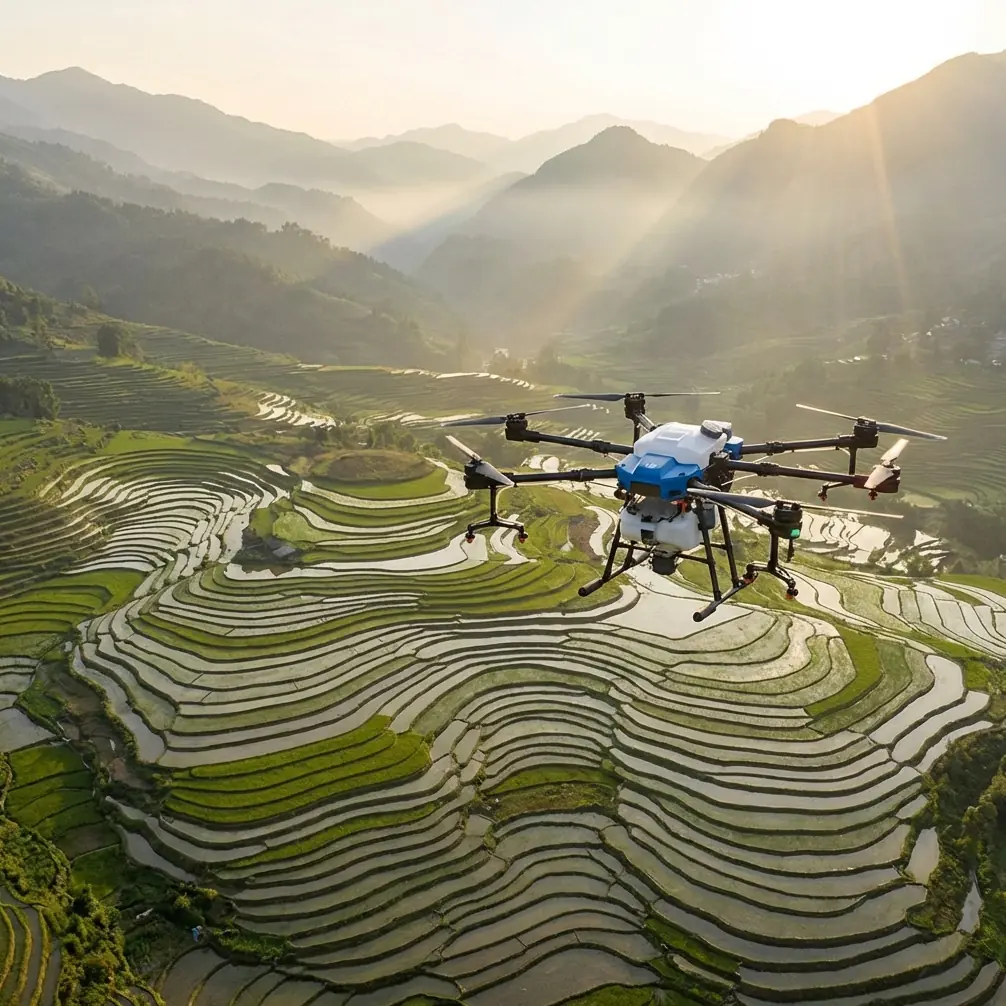
Monitoring Remote Vineyards With the Agras T100: A Practical Field Strategy for Cleaner Coverage and Better RTK Stability
META: Learn how to monitor remote vineyards with the Agras T100 using RTK discipline, nozzle calibration, antenna positioning, drift control, and EMI-aware flight planning.
Remote vineyards create a very specific kind of pressure on drone operations. The terrain is uneven, the rows are narrow, signal conditions can change from block to block, and a small mapping or spraying error tends to show up fast. A missed strip on flat broadacre land is one thing. In a vineyard cut into hillsides with wind exposure and trellis wire everywhere, it becomes an operational problem.
That is where the Agras T100 deserves a more careful look.
Not because it solves every challenge by itself. It does not. But in remote vineyard work, the T100 sits in an unusually useful position: it combines agricultural payload capability with the kind of positioning discipline and route repeatability that matter when you are trying to monitor crop variability, manage treatment placement, and keep flights dependable far from easy infrastructure.
I spend a lot of time with growers and service teams who assume the hard part is simply getting the aircraft in the air. In reality, the harder part is making every pass trustworthy. If the RTK fix rate is inconsistent, if the antenna setup is poor, if nozzle calibration is neglected, or if electromagnetic interference is dismissed as “just a signal issue,” then the data and treatment quality both start to drift. In vineyards, drift of any kind is expensive.
The real vineyard problem is not distance alone
People describe these sites as remote, but remoteness is only part of the story. The deeper issue is operational isolation.
A vineyard in a distant valley may have patchy communications, variable terrain, and little room for recovery if something goes wrong mid-mission. Add steep row geometry, metal trellis systems, irrigation infrastructure, and local radio noise from pumps or nearby equipment, and you have an environment that can quietly degrade navigation quality.
For an aircraft like the Agras T100, centimeter precision is not a luxury feature in those conditions. It is the difference between a pass that tracks the intended row and one that gradually creeps into overlap or undercoverage. On broad row crops, a few decimeters can sometimes be absorbed. In vineyards, where canopy targets are linear and tightly spaced, that same error can alter spray placement, distort monitoring consistency, and complicate repeat missions.
This is why operators who focus only on payload or speed often miss the bigger picture. The T100’s value in vineyard monitoring is not just that it can cover ground. It is that it can do repeatable work when the setup is disciplined.
Start with the mission objective, not the aircraft
For remote vineyards, I recommend splitting T100 operations into three separate goals rather than blending everything into one broad “drone job”:
- canopy condition monitoring
- treatment verification
- precision spray execution
That sounds obvious, yet many field teams still launch with vague intent. One flight is supposed to inspect stress, confirm previous coverage, and apply product with the same operational settings. That usually produces mediocre outcomes across all three.
If your priority is monitoring, you need route consistency, stable RTK behavior, and predictable altitude control over variable terrain. If your priority is application, then swath width management, droplet behavior, and nozzle calibration move to the front. If your priority is comparing one vineyard block against another over time, then repeatability matters even more than raw daily coverage.
The Agras T100 becomes much more effective when you define the mission this way, because each decision starts to support the real objective rather than a generic flight.
Where electromagnetic interference starts to hurt vineyard performance
One issue that does not get enough serious discussion is electromagnetic interference, especially in vineyards with dense metal structures and scattered support equipment.
Trellis wires, power lines near access roads, pump stations, repeater hardware, and even vehicles parked too close to the launch area can all contribute to unstable signal behavior. The effect is rarely dramatic at first. More often, it shows up as slower RTK convergence, a weaker fix rate, or route inconsistency at the edge of blocks.
That creates a chain reaction. If the aircraft is fighting for stable positioning, your line spacing loses confidence. If line spacing degrades, swath width assumptions become less reliable. If swath width becomes less reliable, spray overlap and drift exposure both increase.
The field fix is not complicated, but it does require discipline: antenna adjustment must be treated as part of mission preparation, not an afterthought.
In practice, that means choosing a launch point with the cleanest possible local signal environment, then checking antenna orientation and placement before the first route is flown. I have seen crews improve RTK stability simply by moving the staging position away from parked machinery and adjusting the antenna setup so the signal path is less obstructed by nearby structures. It is not glamorous work. It is high-value work.
If the T100 is giving you inconsistent RTK behavior in a remote vineyard, do not immediately blame the aircraft or the terrain. First inspect the electromagnetic environment around your base position. Then refine antenna placement. In many cases, that is the fastest path to a better fix rate and more stable route tracking.
Why RTK fix rate matters more than operators admit
A strong RTK fix rate is one of those performance details that sounds technical until you see what happens without it.
In vineyard monitoring, repeat missions are where the money is. You are not just flying once. You are trying to compare one pass against the next to identify disease pressure, vigor differences, water stress patterns, or treatment response. That only works when the aircraft can revisit rows with near-identical spatial accuracy.
Centimeter precision matters here because vineyards exaggerate small mistakes. A slight offset can make one row appear healthier or weaker simply because the aircraft sampled the canopy from a different position or height profile. The data may still look clean on a screen, but the agronomic interpretation gets less reliable.
This is also where multispectral workflows can become useful if your operation supports them. The T100 is not simply a flying camera platform in the way a dedicated survey drone might be, but vineyard teams increasingly operate in mixed fleets or use structured monitoring workflows alongside treatment missions. If you are correlating spray performance or crop response with multispectral observations, route consistency becomes even more critical. Weak positioning discipline undermines that comparison fast.
So when I talk about RTK fix rate in a vineyard context, I am not talking about a spec-sheet checkbox. I am talking about whether your monitoring record can actually support decisions.
Spray drift is a remote-vineyard management issue, not just a weather issue
Most operators know wind matters. Fewer treat spray drift as a system problem.
In remote vineyards, drift risk often increases because terrain channels airflow in strange ways. A block can look calm at takeoff and still produce lateral movement halfway through the route. Add inconsistent speed control, poor nozzle calibration, or overconfidence in a wide swath width, and the result is misplaced product and uneven canopy contact.
The Agras T100 gives operators the ability to work efficiently, but efficiency in vineyards is earned through setup. You do not start with the widest practical swath width and hope for the best. You start by matching swath width to canopy geometry, wind behavior, and row spacing, then validate coverage.
Nozzle calibration sits at the center of that process.
If the nozzles are not properly calibrated, two problems emerge at once. First, the intended application rate becomes less trustworthy. Second, droplet size behavior may shift enough to increase drift potential or reduce canopy penetration. In a vineyard, that means one section may receive stronger deposition while another gets a weaker treatment, even though the route log looks perfectly normal.
That is why I advise operators to think of nozzle calibration as part of monitoring quality too. When the application side is stable, your later observations mean more. If the spray pattern is inconsistent, your monitoring data becomes harder to interpret because the crop response is now shaped by application variability as much as plant condition.
A practical operating method for remote vineyard blocks
When teams ask me how to use the Agras T100 more effectively in vineyards, I usually suggest a five-part field routine.
First, inspect the launch environment for interference sources. Look for pumps, metal clutter, power equipment, and unnecessary vehicles near the base point. If something can be moved, move it. If the launch point can be shifted to a cleaner zone, shift it.
Second, verify antenna adjustment before route import and takeoff. A stable setup at the beginning saves time later. If the RTK fix is slow or intermittent, stop there and solve that problem first.
Third, reduce assumptions around swath width. Vineyard rows are not open-field geometry. Narrower, cleaner coverage usually beats aggressive spacing that produces uncertain overlap. The best setting is the one that matches the site, not the one that looks fastest on paper.
Fourth, calibrate nozzles with discipline and revisit calibration when changing liquid properties, target canopy density, or operating conditions. This is one of the easiest ways to reduce hidden variability.
Fifth, document each block as its own operational environment. One remote vineyard may have strong fix performance and calm airflow in the lower rows, while the adjacent block suffers from crosswind exposure and signal noise. Treating those blocks as identical leads to avoidable errors.
Operators who build this kind of routine around the T100 usually notice something interesting: mission stress drops. Not because vineyards become simple, but because the aircraft starts behaving more predictably within the complexity.
Weather sealing and site resilience matter more in remote work
Remote vineyard operations also punish weak equipment handling standards. Dust, moisture, residue, and washdown exposure are harder to avoid when field support is limited. That is where a protection rating such as IPX6K becomes operationally relevant.
This is not just a durability talking point. In remote sites, downtime is amplified. If you lose the day because equipment cannot tolerate wet cleaning conditions, residue buildup, or demanding field handling, the cost is larger than a delayed task. It may mean missed weather windows, postponed treatments, and unnecessary repeat travel.
For the T100, resilience features matter because they support continuity. A robust platform does not replace good maintenance, but it gives operators more breathing room in the real conditions vineyards create.
Why this matters for monitoring, not only spraying
The phrase “monitoring vineyards” often gets narrowed to imagery alone. That is too limited.
In practice, monitoring with the Agras T100 is about building confidence in what the vineyard is telling you. Sometimes that means direct observation of coverage and canopy response. Sometimes it means repeatable route behavior that supports comparison over time. Sometimes it means identifying where application quality may have been compromised by drift, interference, or row geometry.
That broader view is what makes the T100 useful. It can sit inside a real operational loop: assess block condition, execute precise treatment, revisit the same area with reliable spatial discipline, then adjust the next mission based on what changed.
If you are managing remote vineyards, that loop matters more than any individual feature.
And if your team is working through recurring issues such as unstable fixes near trellis-heavy blocks, inconsistent coverage in exposed rows, or uncertainty around setup choices, it helps to compare field notes with someone who has already debugged those conditions. If that would be useful, you can message a vineyard drone specialist here.
The bottom line for Agras T100 vineyard work
The Agras T100 is not at its best when used like a generic ag drone dropped into a vineyard. It performs best when operators respect the vineyard as a high-precision environment.
That means taking RTK fix rate seriously. It means using antenna adjustment to reduce electromagnetic interference instead of tolerating unstable positioning. It means treating nozzle calibration as essential to both spray quality and later crop interpretation. It means setting swath width based on canopy reality, not optimistic assumptions. And it means valuing resilience details like IPX6K because remote work magnifies every interruption.
For vineyard teams in isolated terrain, those habits turn the T100 from a capable machine into a dependable system. That is the difference that actually shows up in the rows.
Ready for your own Agras T100? Contact our team for expert consultation.