
Agras T100 for Remote Wildlife Scouting: Why Low
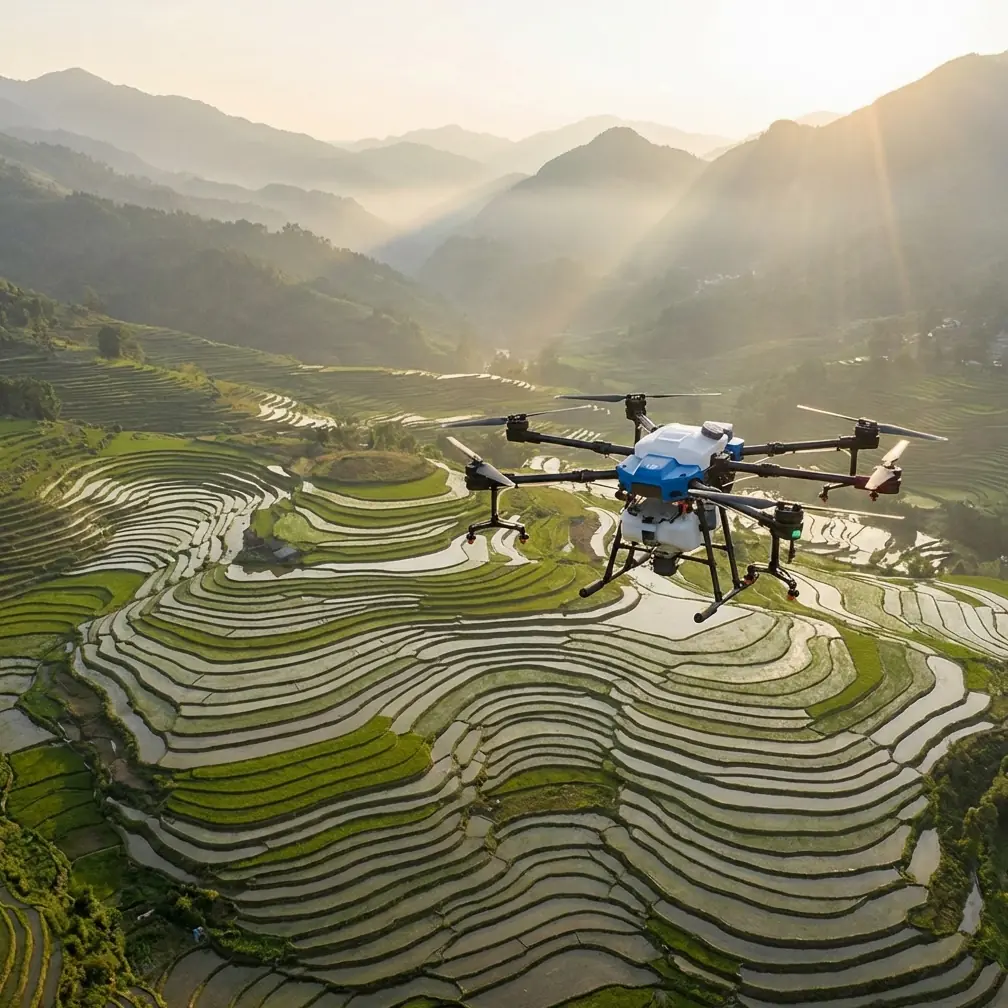
Agras T100 for Remote Wildlife Scouting: Why Low-Altitude Avoidance Testing Changes the Real Conversation
META: A technical review of the Agras T100 for remote wildlife scouting, with practical insights on low-altitude autonomous avoidance, pre-flight cleaning, RTK reliability, and field-safe operations.
When people discuss the Agras T100, the conversation often drifts toward payload, spraying efficiency, and broad-acre farm productivity. That misses a more interesting question for field professionals working far from paved roads and stable infrastructure: how well does a large low-altitude aircraft fit into complex, semi-wild environments where terrain, vegetation, birds, utility lines, and shifting mission paths all stack risk into the same flight envelope?
For remote wildlife scouting, that question matters more than brochure-level performance claims.
The most useful recent signal does not come from a product sheet. It comes from a flight test completed in Tianjin that focused on improving autonomous collision-avoidance capability for low-altitude aircraft. The standout detail was the validation of a test method combining a real aircraft with a simulated intruding aircraft. That is not a trivial lab exercise. It points to a practical way of stress-testing autonomous avoidance logic against edge cases that are difficult, expensive, or unsafe to reproduce with only physical aircraft. More importantly, the test was framed as a new technical path toward solving safety problems in large-scale low-altitude operations.
That has direct relevance to how an operator should think about the Agras T100 in scouting roles.
Why this Tianjin test matters to an Agras T100 operator
The Tianjin result is easy to underestimate if you read it as general aviation news. It is actually highly relevant to any serious Agras T100 deployment below the traditional airspace layers. Wildlife scouting in remote areas rarely gives you clean operating geometry. You may launch near tree lines, fly over uneven ground, work around ridges or riverbeds, and adapt routes when animals move or when a protected zone needs a closer look. Low-altitude airspace is not empty just because it is rural. It is cluttered, dynamic, and unforgiving.
The tested method, blending a real aircraft with simulated intruders, matters because low-altitude avoidance problems are full of interactions that can be rare but operationally decisive. A scouting mission may be stable for 95 percent of the sortie and still become hazardous in seconds if route changes, vertical separation tightens, or sensor interpretation degrades near terrain or foliage. A validation method that can repeatedly model intrusions without requiring fully physical aircraft encounters is exactly the kind of systems-level progress that supports safer scaling.
That last phrase from the test summary deserves attention: the work was presented as a way to address the safety problem of scaled low-altitude operations. Not isolated flights. Scaled operations.
For the Agras T100, that distinction is critical. A machine can be impressive on a single manual sortie and still be poorly suited to repeated, structured field work in remote habitats. Once you start conducting recurring scouting runs, safety is no longer about pilot talent alone. It becomes a systems question involving autonomous assistance, route discipline, situational sensing, and how consistently the aircraft responds when the environment stops behaving like a planning map.
A technical review framed around scouting, not spraying
The Agras T100 was built for demanding outdoor work. That gives it surprising relevance beyond treatment runs. In remote wildlife scouting, the platform’s value comes from endurance under field stress, stable low-altitude behavior, and navigation confidence where visual references can be deceptive.
This is where RTK fix rate and centimeter precision enter the conversation. In an agricultural workflow, those terms are usually discussed in relation to repeatable passes and input placement. In wildlife scouting, they take on a different operational significance. A stronger RTK fix rate can mean tighter consistency when revisiting the same corridor, water source, nesting edge, or migration bottleneck. Centimeter-level positioning is not only about mapping elegance. It supports repeat observation from comparable angles and altitudes, which improves data integrity when comparing habitat changes over time.
That matters if your scouting program includes multispectral sensing. If you are using multispectral payloads or correlated habitat data layers to assess vegetation stress, water retention, or feeding patterns near a protected area, repeatability becomes more valuable than raw speed. The aircraft has to return to roughly the same space in a trustworthy way. Otherwise, the data starts to drift before the aircraft ever does.
And then there is swath width, which people often treat as purely an application metric. In scouting, the better lens is coverage logic. A wider effective area per pass can reduce the number of low-altitude traverses required over sensitive habitat. Fewer passes can mean less disturbance to wildlife and lower cumulative risk exposure near obstacles. That is a simple but often overlooked tradeoff.
The pre-flight cleaning step most operators rush past
If I were briefing a remote team on safe Agras T100 scouting practice, I would start with something mundane: cleaning.
Not cosmetic cleaning. Functional cleaning of the aircraft’s safety-relevant surfaces before takeoff.
Dust films, dried residue, insect impact marks, plant oils, and moisture streaking can all degrade the performance of vision-based or assistive sensing components. Even when an aircraft has rugged environmental protection such as IPX6K-level sealing, that rating should not be mistaken for immunity to degraded sensing conditions. Water resistance tells you the aircraft can tolerate harsh cleaning and difficult environments. It does not tell you a dirty sensor window can still interpret the world correctly.
For wildlife scouting, this matters because remote sites often introduce contamination in layers. You drive in on dusty tracks. You set up near brush. Wind carries fine debris. Dawn moisture condenses on exposed surfaces. If the mission begins without a careful wipe-down of the forward sensing areas, navigation cameras, lighting surfaces, and relevant external housings, you are accepting avoidable uncertainty before the props spool up.
That pre-flight cleaning step is directly connected to the Tianjin story. If the broader industry is investing in more sophisticated low-altitude autonomous avoidance, operators need to do their part to preserve sensor quality in the field. Avoidance logic is only as useful as the aircraft’s ability to perceive what is around it and interpret its geometry correctly.
The best teams treat cleaning as part of the safety chain, not maintenance theater.
What “real aircraft plus simulated intruder” tells us about future readiness
The Tianjin test validated a method rather than merely a one-off maneuver. That is the deeper point. In UAV operations, methods shape reliability more than demonstrations do.
A mixed real-and-simulated intrusion test allows engineers to model conflict conditions with more breadth than an all-physical setup. It opens room to test timing offsets, closure rates, encounter geometries, and decision thresholds that would be difficult to stage repeatedly in the field. For an aircraft class operating low and close to environmental obstacles, that kind of methodology is especially relevant because danger does not always come from one obvious obstacle straight ahead. It can come from the way multiple variables interact at once.
An Agras T100 used for remote scouting may not be sharing airspace with dense aircraft traffic in the classic sense, but it is still part of the low-altitude scaling problem. As more civilian aircraft work close to the ground for agriculture, inspection, logistics support, and ecological monitoring, the airspace gets busier in practical terms. A robust autonomous assistance layer will increasingly separate serious operators from those relying on visual luck and reactive stick inputs.
That is why this test news matters even though it does not mention the T100 by name. It signals where the operational standard is moving: toward validated autonomous risk reduction for low-altitude missions conducted at scale.
How this changes field planning for wildlife scouting
A remote scouting mission with the Agras T100 should be planned as a low-altitude systems operation, not as a simple out-and-back flight.
That means four priorities.
First, protect sensor reliability before launch. Clean the aircraft thoroughly, especially the surfaces tied to autonomy and navigation. If the site is dusty, inspect again after setup and before arming.
Second, verify navigation integrity, not just satellite count. RTK fix rate is a practical measure here. A weak or inconsistent fix can undercut route repeatability and compromise close-proximity work near terrain transitions or habitat boundaries where precise path control matters.
Third, choose path geometry that reduces unnecessary low-altitude exposure. Swath width, line spacing, and revisit logic should be organized to get the needed observations with the fewest disruptive passes. If a multispectral workflow is involved, align flight planning with repeatable light conditions and consistent geometry rather than chasing maximal area in a single run.
Fourth, treat autonomous assistance as something to support and monitor, not something to blindly trust. The Tianjin test shows the industry is making progress on low-altitude autonomous avoidance, but field conditions still reward disciplined oversight. Remote scouting often lacks the forgiving margins of an open farm block.
Drift, calibration, and why agricultural discipline still helps scouting teams
Even if the aircraft is being used primarily for observation, agricultural operating habits still pay dividends.
Take nozzle calibration and spray drift as examples. On their face, they seem irrelevant to a scouting mission. Yet the discipline behind them is exactly what high-quality field operations need. Nozzle calibration trains teams to respect system accuracy rather than assuming outputs are correct. Spray drift awareness trains them to read micro-weather, edge effects, and downwash interactions instead of relying on broad forecasts.
That same mindset improves scouting safety. Operators who understand drift mechanics tend to be better at reading local wind behavior near canopies, ravines, and open water. They are less likely to assume the aircraft will behave the same way at every point along the route. In remote wildlife environments, those micro-conditions often shape both flight quality and image quality.
So while the mission may not involve application work, the operational habits developed in precision agriculture carry over well to ecological observation.
The T100’s real value in this context
The Agras T100 makes the most sense for remote wildlife scouting when the mission asks for a durable, precise, repeatedly deployable low-altitude platform rather than a lightweight hobby-style observer. Its relevance grows when the work involves structured revisits, difficult field access, environmental contamination, and the need to gather consistent visual or multispectral data over time.
That is also why news about autonomous avoidance testing should be watched closely by T100 users. The Tianjin test offered two concrete signals: one, a low-altitude autonomous avoidance flight test was successfully completed; two, the test method combining a real aircraft with a simulated intruding aircraft was validated as a pathway toward safer scaled low-altitude operations. Those details matter operationally because remote scouting is already part of the broader low-altitude scaling challenge, whether operators frame it that way or not.
If you are building a serious scouting workflow around the T100, the takeaway is simple. Do not evaluate the aircraft only by what it carries or how much ground it can cover. Evaluate it by how reliably it can operate in a maturing low-altitude ecosystem where autonomous risk management, navigation discipline, and pre-flight sensor care are starting to define professional standards.
For teams comparing field setups or mission planning approaches, a direct technical discussion is often more useful than generic product talk. If you need that kind of practical exchange, this Agras T100 field support chat is a straightforward place to start.
The future of low-altitude work will not be decided by who can launch first. It will be shaped by who can operate repeatedly, safely, and with data quality that stands up over time. For remote wildlife scouting, that is the real benchmark.
Ready for your own Agras T100? Contact our team for expert consultation.