
Agras T100 in Dusty Spray Work: A Field-First Operating
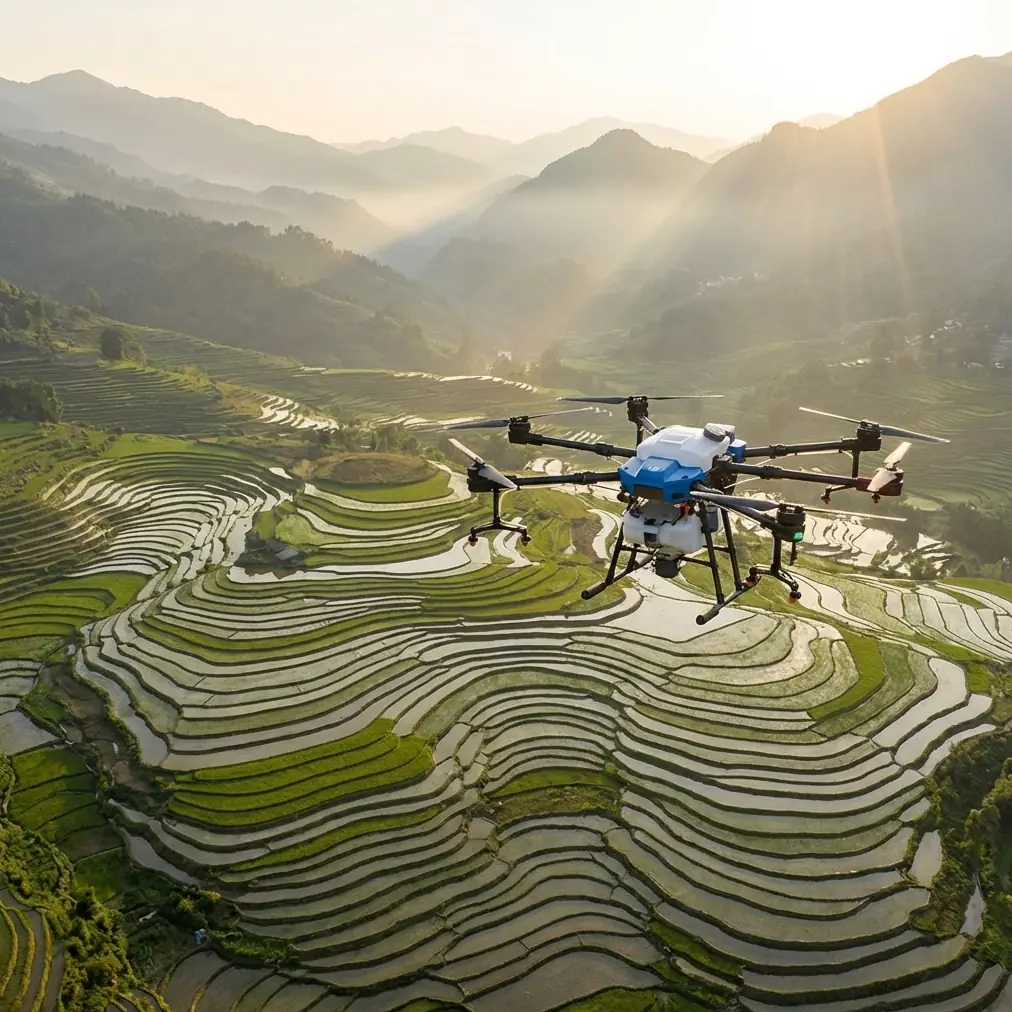
Agras T100 in Dusty Spray Work: A Field-First Operating Playbook for Safer, Cleaner Results
META: Practical Agras T100 guidance for dusty spraying jobs, covering crew coordination, drift control, nozzle planning, obstacle awareness, mixing choices, and workflow decisions that protect efficiency.
Dust changes everything.
On paper, spraying is about coverage, droplet placement, and finishing the job window on time. In the field, especially on dusty construction corridors, stockpile edges, haul roads, and exposed grading zones, the real challenge is keeping the operation controlled when visibility, ground texture, and airborne particulates start working against you. That is where an Agras T100 program succeeds or fails—not in marketing specs, but in discipline.
If you are planning to use an Agras T100 for dusty spray work, the smartest way to think about it is not as a single aircraft problem. It is a system problem. Aircraft, crew spacing, spray method, obstacle communication, chemical selection, refill rhythm, and light conditions all interact. Get those connections right, and the drone becomes a precise tool. Ignore them, and dust magnifies every small mistake.
Start with the site, not the drone
The reference material on agricultural flight operations makes one point very clearly: before any job begins, the team has to confirm the task itself. That means identifying the treatment area, terrain, obstacles, crop or surface condition, timing window, chemical type, and any special restrictions. For dusty construction spraying, the same logic applies almost one-to-one.
You need to know:
- where the active spray zone begins and ends
- which areas are unsuitable for flight
- whether power lines, poles, trees, fencing, structures, or elevated equipment sit near the route
- how dust behaves on that site at different times of day
- whether adjacent areas include sensitive surfaces, landscaping, water channels, or organic production zones
That last point matters more than many operators admit. One of the source documents specifically calls for confirming the spray area’s obstacles and nearby production sites, including other crops and organic areas. Operationally, that is a drift-management issue. On a dusty worksite, off-target movement is not only about the liquid. Dust itself can carry treatment residue farther than expected when the site is dry and disturbed. The Agras T100 may be the platform, but boundary discipline is what protects the job.
Light is not just for photographers
A surprising but useful insight comes from the photography reference: beginners often obsess over equipment when they should be learning light. For drone spray crews, especially in dusty environments, that idea translates directly into flight planning.
The article highlights two golden windows: the hour after sunrise and the hour before sunset. Why does that matter here? Because harsh overhead midday light makes depth, haze, and airborne particulates harder to read. In dusty conditions, top-down glare can flatten the visual scene and make it tougher for both pilot and visual support crew to judge aircraft position, plume behavior, and obstacle spacing.
By contrast, softer early or late light often makes dust layers, drift direction, and terrain texture easier to interpret. The same source also notes that diffuse overcast light works well for close-up and still subjects because it reduces harsh shadows. In drone operations, overcast conditions can also improve visibility of surface wetting patterns and reduce contrast extremes that hide ruts, spoil piles, cables, or machinery silhouettes.
This does not mean every spray job should happen at sunrise or sunset. It means the team should treat light as an operating variable, not background scenery. The photography piece says good images need a clear subject and a clean frame. Spray work needs the same mentality: clear target, clean airspace, clean visual picture.
The first hover tells you more than a spec sheet
One of the strongest details in the operations guideline is what happens immediately after takeoff: observe power behavior and check whether the airframe shows abnormal shaking or resonance. That is not a ceremonial step. It is your first real-world verdict on whether the aircraft should proceed.
Dusty sites are rough on rotating systems, exposed surfaces, and fast field turnarounds. A clean preflight can still miss a mounting issue, contamination effect, or imbalance that only appears under lift. The guideline even gives a concrete distance rule tied to altitude: at 1 meter of aircraft height, personnel should keep about 3 meters away; at 2 meters, about 10 meters away. That specific spacing principle matters on construction spray jobs because loose dust and rotor wash can reduce comfort, visibility, and safety quickly.
For an Agras T100 team, the takeaway is simple: treat the first hover and climb as a functional test, not the start of production. Watch for vibration. Watch spray system behavior. Watch whether dust recirculates into the flight path. Watch whether the aircraft holds position cleanly enough to support a stable RTK fix rate and predictable line entry. Centimeter precision is only useful if the aircraft is operating in an environment where the crew can trust what they are seeing.
Crew communication is not optional on dusty jobs
The reference document repeatedly emphasizes that the spotter and pilot must fully understand the site condition and spray method. If there is any misunderstanding, flying should stop, the team should go back, confirm the site, correct the procedure, and only then resume.
That sounds conservative until you work a dusty site with blind corners, stockpiles, temporary fencing, and moving machines.
Dust can hide:
- cable runs
- uneven berms
- scaffold edges
- parked equipment
- personnel movement
- wildlife
On one quarry-adjacent dust suppression job, a small fox broke from a scrub patch near a drainage edge just as the aircraft approached a turn. It was not dramatic, but it was exactly the kind of thing that proves why live observation matters. The sensors did their job, the aircraft checked its path, and the crew adjusted the next pass geometry to keep a wider buffer around that edge. Wildlife encounters on industrial sites are easy to dismiss until one appears under the aircraft at low altitude.
The source material also describes the spotter as the pilot’s eyes for areas the pilot cannot directly assess, especially for obstacles such as buildings, wires, poles, and trees, including their position, number, height, and distance. In dusty T100 operations, that role becomes even more valuable because visibility is not static. A route that looked open ten minutes ago can look different after a few passes if traffic or wind increases airborne material.
If your crew cannot communicate quickly and precisely, your aircraft capability will not save the workflow.
Chemical and mixing choices affect uptime more than people expect
One of the most practical details in the source data concerns formulation compatibility. Powder-type pesticides require more water for dilution, while plant protection drones use about 90% less water than manual application. The result is a serious risk of incomplete dilution and spray system blockage.
Even though that reference is agricultural, the operational lesson applies broadly to an Agras T100 on dusty suppression or surface-treatment work: avoid mixes that do not suit low-volume aerial application. Any slurry-prone, poorly dissolved, or residue-heavy mixture creates downstream problems—nozzle restriction, uneven output, poor atomization, inconsistent swath width, and unnecessary downtime for cleaning.
On dusty sites, nozzle calibration already matters because you are balancing enough volume to wet the target without creating excess runoff or drift. Add a marginal mix, and the whole system gets less predictable. This is why experienced teams decide the liquid strategy before arrival. The source recommends preparing enough spray volume in advance to avoid delays, and that point is easy to underestimate.
According to the workflow document, drone operating efficiency can range from 200 to 600 mu per day depending on terrain. The exact unit matters less here than the lesson: output swings dramatically with site complexity. On a dusty construction job, refill friction and mix inconsistency can easily become the bottleneck long before flight time does.
Build around redundancy, not hope
The source recommends a “2 flying, 1 backup” principle to maintain treatment efficiency when pest timing is tight and field conditions create unexpected problems. That same planning mindset is ideal for industrial spray work.
Dust causes surprises:
- filters load faster
- nozzles need more frequent inspection
- visibility can collapse when wind shifts
- access roads slow ground support
- support vehicles pick up delay across large sites
If your project schedule matters, one aircraft and one plan is not a plan. It is a bet.
Agras T100 operators working on active, dusty sites should think in layers:
- primary aircraft
- backup aircraft or spare critical components
- pre-mixed refill staging
- clearly assigned crew roles
- route alternatives if wind or traffic alters one section of the site
The reference also notes that one aircraft needs at least a pilot and an assistant. That sounds basic, but in practice some teams still try to compress roles. On dusty jobs, that is usually where quality drops first. Someone has to watch the aircraft, someone has to manage the ground cycle, and someone has to maintain site awareness if the operation expands.
PPE and human factors matter because dust compounds exposure
The operational guideline is unusually specific about protective gear: helmet, face covering, protective eyewear, long sleeves, long pants, boots, and no hanging necklaces or chest tags. That level of detail is not administrative clutter. It reflects a reality every serious drone spray contractor knows: exposure is cumulative.
Dusty environments add two kinds of strain at once:
- airborne particulates from the site itself
- contact risk during refill, handling, and maintenance
The same source also stresses safe conditions during replenishment to prevent chemical exposure. On a construction spray program, refill discipline should be treated as part of flight safety, not a separate chore. A rushed top-up in a contaminated or windy staging area can turn into the highest-risk part of the day.
Keep the frame clean: obstacle mapping and route simplicity
The photography article’s point about a clean composition is more relevant to drone work than it first appears. A cluttered frame makes a weak image; a cluttered route makes a weak operation.
For the Agras T100, route design on dusty sites should aim for simplicity:
- stable entry and exit lines
- predictable turn areas
- obstacle buffers that account for reduced visibility
- swath width chosen for consistency, not bravado
- spray drift managed through line orientation and wind awareness
When teams chase aggressive coverage in visually messy environments, performance usually degrades. A slightly narrower, repeatable pattern often outperforms a theoretically wider pass that becomes inconsistent once dust rises.
If you are comparing route options or site setup logic for your own T100 deployment, this field coordination thread can be discussed directly here: message our operations desk on WhatsApp.
A practical Agras T100 workflow for dusty spraying
Here is the operating sequence I recommend, based on the source material and how these jobs actually behave in the field.
1. Confirm the task in detail
Do not start with “spray this site.” Start with boundaries, treatment objective, timing, adjacent risk areas, obstacles, traffic patterns, and expected dust behavior.
2. Choose the light window deliberately
If possible, avoid the harshest midday visual conditions. Early and late windows often improve obstacle reading and plume observation. Overcast can be an advantage.
3. Assign clear roles before powering up
Pilot, spotter, refill lead, safety lead. The source explicitly recommends clear responsibilities and even a task allocation sheet. That is worth adopting.
4. Use the first lift as a diagnostic event
After takeoff, check for vibration, resonance, abnormal behavior, and how dust interacts with rotor wash. Keep crew spacing disciplined.
5. Verify communication before production passes
If the spotter and pilot are not aligned on route, spray method, or obstacle callouts, stop and reset. The source is right on this point: continuing with confusion is the real error.
6. Protect the spray system from bad liquid decisions
Avoid problematic formulations. Plan nozzle calibration and refill volume in advance. Do not let poor dilution or sediment turn a flight job into a maintenance job.
7. Build backup capacity
If the schedule matters, redundancy matters. The “2 plus 1” planning idea exists because field conditions are never as clean as desktop assumptions.
8. Debrief the day
The source calls for summarizing the task, analyzing issues encountered, and improving the operating plan. That habit is how crews get sharper, especially on variable dusty sites.
What makes the Agras T100 viable in dust is not just hardware
People looking at the Agras T100 often focus on platform capability alone: payload, positioning, sensors, precision, environmental protection, and uptime. Those matter. But dusty spray work exposes a deeper truth. The aircraft is only as effective as the operating method around it.
Two details from the source material stand out because they have immediate operational significance.
First, the instruction to halt flying when the spotter and pilot do not share the same understanding is not bureaucracy. On dusty sites, ambiguity becomes drift, missed strips, or obstacle incidents.
Second, the warning about powder formulations and clogging under low-water drone application is not just an agricultural footnote. It is a reminder that aerial spray systems are unforgiving when chemistry and delivery method are mismatched.
Add the takeoff vibration check, crew PPE discipline, and output planning range of 200 to 600 mu per day depending on terrain, and a pattern emerges: the best T100 operations are built on control, not speed.
That is the real edge in dusty spraying. Not rushing. Not guessing. Not letting the site dictate the workflow.
Ready for your own Agras T100? Contact our team for expert consultation.