
Agras T100 Pre-Flight Cleaning for Remote Power
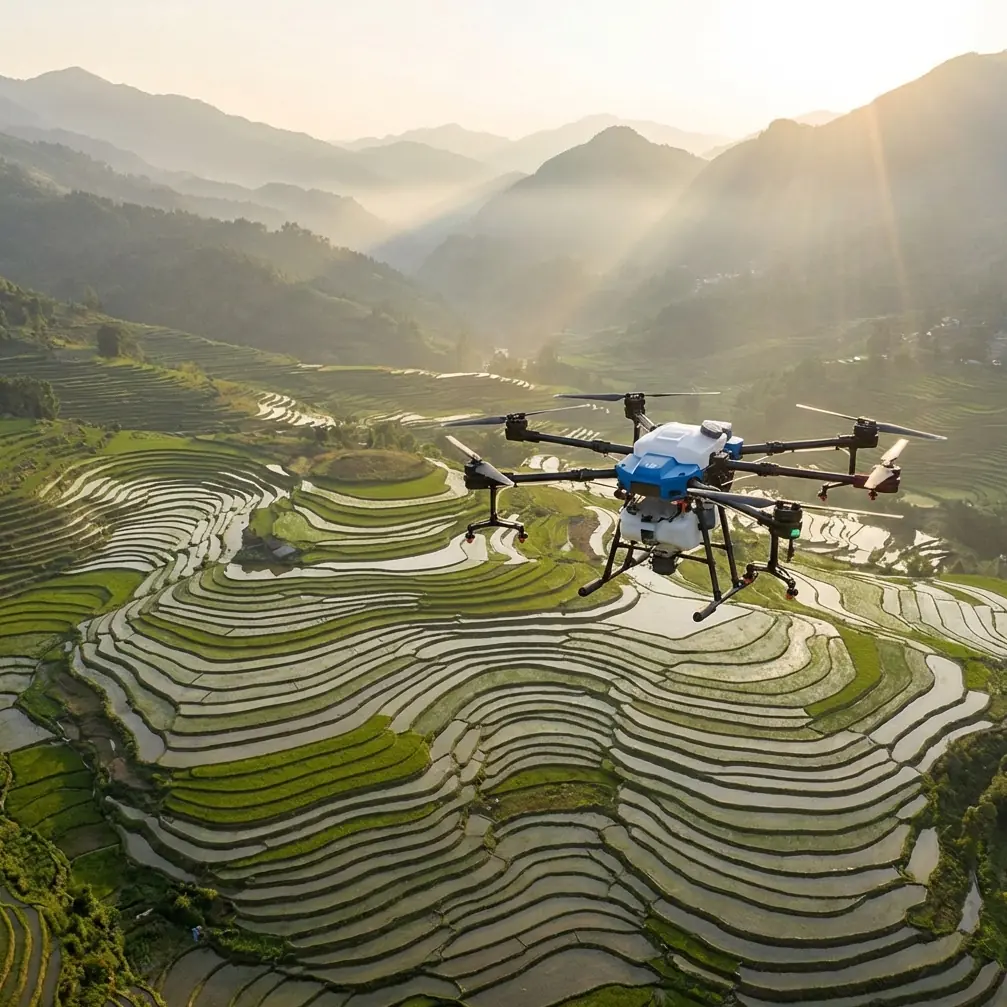
Agras T100 Pre-Flight Cleaning for Remote Power-Line Spraying: A Practical Safety Tutorial
META: Learn how a disciplined pre-flight cleaning and maintenance routine supports safer, more precise Agras T100 spraying around remote power-line corridors, with expert guidance on dust control, nozzle care, and operational reliability.
Remote power-line vegetation work is unforgiving. Crews often launch from rough tracks, dry clearings, or improvised staging points where dust, grit, and plant debris are everywhere. In that setting, an Agras T100 is not just carrying liquid and following a route. It is relying on sensors, moving parts, spray components, and a tightly managed airframe condition to stay predictable when the margin for error is slim.
That is why the first serious safety step is not takeoff. It is cleaning.
I teach this as a maintenance discipline, not housekeeping. A regular service habit helps preserve the condition of the aircraft and its components over time, and that becomes operationally significant when the worksite is remote and the mission involves spraying along power-line corridors. Dust and dirt are not cosmetic issues. They are the first threat to consistency. The available reference material makes this point clearly: protecting the drone from dust and grime should be treated as the top maintenance priority, and that principle matters even more when the aircraft is expected to deliver stable application performance far from a workshop.
For Agras T100 operators, the useful lesson is straightforward. Do not treat pre-flight cleaning as something separate from spray quality, navigation confidence, or mission safety. These are linked.
Why cleaning comes before calibration
A power-line spraying job in a remote area usually combines three stressors at once: long travel to site, exposure to fine dust, and repeated launches from uneven terrain. By the time the aircraft is assembled, loaded, and positioned, contamination has already started to build on the frame and around the spray system.
That build-up matters because calibration assumes a clean baseline.
Take nozzle calibration. If residue, dust, or dried chemical traces are present around the nozzle body or outlet, your measured spray behavior can mislead you. You may think you are calibrating for a swath width target, droplet placement pattern, or drift-control setup, when in reality you are compensating for contamination. The result is not merely inefficient spraying. Around utility corridors, it can mean inconsistent coverage on target vegetation and higher spray drift risk near poles, insulators, or adjacent non-target plants.
This is where the maintenance principle from the reference data becomes practical rather than abstract. Regular care of the drone and its parts helps maintain equipment condition. In the field, that translates into a repeatable ritual: clean first, inspect second, calibrate third, then fly.
If you reverse that order, you are building your mission on a dirty platform.
The Agras T100 field reality: dust changes everything
The Agras T100 is designed for demanding agricultural and industrial-style spraying tasks, but remote utility work adds its own complications. Access roads can throw up fine particulates that settle into hinges, landing gear interfaces, motor housings, pump areas, and sensor surfaces. A single day of operations may include multiple landings near dry grass, gravel, or disturbed soil. Every landing circulates more debris into the aircraft.
The reference source highlights a foundational truth that experienced operators already know: drone designs differ, so cleaning and maintenance methods are not identical across every model. That matters for Agras T100 crews because copying a generic routine from a smaller camera drone or a different spray platform can leave critical areas overlooked. A remote spraying aircraft has its own contamination profile. The frame may be robust, but the operational burden is heavier. There are liquid pathways, spray hardware, intake zones, and mission-critical surfaces that deserve model-aware attention.
At the same time, the source also states that despite those design differences, there are still common cleaning, repair, and maintenance techniques worth following. That is the bridge between general drone care and a T100-specific field routine. You do not need an improvised, overly complex maintenance doctrine. You need a universal discipline adapted to this aircraft’s spray mission.
A practical pre-flight cleaning sequence for remote corridor spraying
Before every sortie, I recommend a structured routine that takes only a few minutes when done consistently. The goal is not to make the aircraft look polished. The goal is to remove contaminants that interfere with precision and safety.
1. Start with the landing surfaces and lower frame
The lower airframe collects the worst of the dust during transport and touchdown. Wipe or blow away loose dirt from landing gear, lower arms, and the underside of the body. If the aircraft is being deployed repeatedly from the same rough clearing, this area can become a persistent source of recontamination. Every time the aircraft lifts off or lands, debris is stirred and redistributed.
Operational significance: cleaner lower surfaces reduce the chance that dust migrates toward spray-system interfaces or onto sensor-relevant areas during startup and launch.
2. Inspect and clean the spray system before checking output
Nozzles, hoses, couplings, and nearby surfaces should be examined for residue and particulate accumulation. This is the moment to catch partially obstructed outlets, dried deposits, or contamination around the nozzle mounts. Use a method appropriate for the T100’s component design rather than assuming all drones are cleaned the same way. The reference material is clear on that point: model differences matter.
Operational significance: nozzle cleanliness is directly tied to nozzle calibration integrity, droplet consistency, and spray drift management. In power-line vegetation work, drift is not a theoretical concern. It affects target accuracy and environmental stewardship.
3. Clean sensor-exposed areas gently and deliberately
Even when the mission emphasis is spraying rather than imaging, the aircraft depends on reliable sensor input for stable operation. Dirt on exposed sensing surfaces can undermine confidence in low-altitude, corridor-adjacent work. Keep these surfaces free from haze, dust, and streaking. Do not use aggressive methods that could damage coatings or housings.
Operational significance: stable flight and dependable obstacle or position awareness begin with clear sensor pathways. If your operation depends on centimeter precision or a strong RTK fix rate, it makes little sense to ignore the contamination that can degrade system trust in the first place.
4. Check fasteners, joints, and high-vibration zones while cleaning
Cleaning is the best time to inspect. A rushed visual check after the aircraft is already loaded rarely catches subtle issues. During wipe-down, pause at arm joints, mounts, and areas where repeated vibration can expose wear or looseness.
Operational significance: this step turns cleaning into maintenance intelligence. The source emphasizes regular care of the drone and its parts, and that is exactly what this is: using routine cleaning to detect developing mechanical concerns before they become field failures.
5. Finish with a contamination control reset
Once the aircraft is clean, keep it clean. Do not place it back on a dusty tarp full of chemical residue and grass fragments. Keep refill tools, gloves, and containers organized so you are not reintroducing grime right before takeoff.
Operational significance: the best cleaning routine fails if the staging area is unmanaged. Remote work demands contamination discipline at the ground level, not just on the aircraft.
How this affects spray drift and swath quality
Many operators think about spray drift only in terms of wind. Wind is central, of course, but equipment condition is part of the picture. A dirty or partly obstructed nozzle can alter atomization characteristics and distort the intended spray pattern. That can narrow or unevenly shape the swath width, leading to over-application in one band and under-application in another.
In a power-line corridor, those errors compound quickly. Vegetation strips are often linear and narrow. Precision matters because the treatment zone may sit close to infrastructure or sensitive surrounding growth. If your Agras T100 is expected to hold a consistent application profile, nozzle condition must be controlled before the first pass.
This is where a short pre-flight cleaning step pays off more than many crews expect. It supports a more honest calibration. It helps preserve predictable spray geometry. It reduces the chance that operators misread poor pattern quality as a route, altitude, or weather problem when the true cause is residue at the spray outlet.
Why remote jobs amplify maintenance mistakes
A maintenance shortcut taken at a central facility is often recoverable. A maintenance shortcut taken 40 or 50 minutes from the nearest support vehicle is something else entirely.
Remote power-line jobs magnify small preventable issues because field support is limited. You may not have replacement parts, ideal wash resources, or a sheltered bench for deeper intervention. That makes the source guidance about habitual maintenance especially relevant. Regular upkeep is not just good practice in theory. It is a way to reduce the chance that a simple contamination issue disrupts an entire day’s schedule.
Experienced crews know that remote work punishes optimism. “It will probably be fine” is not a maintenance strategy. A clean aircraft gives you better odds of dependable performance when access is difficult and time on site is expensive.
Adapting general drone maintenance advice to the T100
The reference material gives two ideas that belong together: first, every drone has design differences; second, there are still shared maintenance methods that apply broadly. For Agras T100 users, the smart approach is to combine those ideas rather than choose one over the other.
The shared methods are simple:
- maintain the aircraft regularly
- protect it from dust and dirt
- use common-sense cleaning and care techniques
- inspect components as part of routine upkeep
The model-specific adaptation is where professionalism shows. The T100 is not being used here as a recreational platform. It is operating as a working spray aircraft in a remote infrastructure setting. That means your “common” maintenance routine must be built around spray hardware cleanliness, contamination control, and pre-flight inspection discipline.
If your team wants a field-ready checklist tailored to this kind of corridor operation, send the job scenario through this direct WhatsApp line and use it to compare your current routine against a cleaner launch workflow.
The overlooked connection: safety features depend on clean conditions
The narrative spark for this article was a pre-flight cleaning step for safety features, and that deserves emphasis. Operators often talk about safety systems as if they exist separately from maintenance. In reality, those systems depend on the aircraft being kept in sound condition.
A dusty sensor cover, debris near moving assemblies, or residue around spray components can all distort the environment in which those safety features are supposed to function. That does not mean the technology is weak. It means maintenance is part of the safety chain.
For Agras T100 work around remote power lines, this is the mature way to think about risk control:
- route planning matters
- environmental assessment matters
- RTK health matters
- nozzle calibration matters
- pre-flight cleaning matters just as much as the others because it supports all of them
This is especially true when crews are aiming for centimeter precision in corridor-following tasks. Precision systems cannot compensate indefinitely for neglected physical condition.
A field habit worth standardizing
If I were writing one standard operating rule for Agras T100 crews handling remote spraying, it would be this: no calibration and no takeoff until the aircraft passes a clean-hands inspection.
That inspection does not need to be bureaucratic. It needs to be disciplined. Touch the surfaces that collect grime. Look at the spray outlets. Clear the sensor-exposed zones. Inspect the parts that absorb vibration and dust. Then proceed.
One reference detail states that protecting a drone from dust and dirt is the foremost maintenance task. Another states that regular care of the drone and its components helps preserve condition. Those are not generic platitudes. In the context of remote power-line spraying, they translate into fewer avoidable interruptions, more trustworthy nozzle setup, and stronger consistency from one sortie to the next.
The Agras T100 is capable equipment. But capability in the brochure sense is not the same as capability in the field. Field capability is what remains after transport dust, repeated refills, rough landings, and long operational days. The crews who get the best results understand that reliability begins with what they do before the props spin.
Clean first. Then inspect. Then calibrate. Then fly.
Ready for your own Agras T100? Contact our team for expert consultation.