
Agras T100 for Dusty Power-Line Spraying
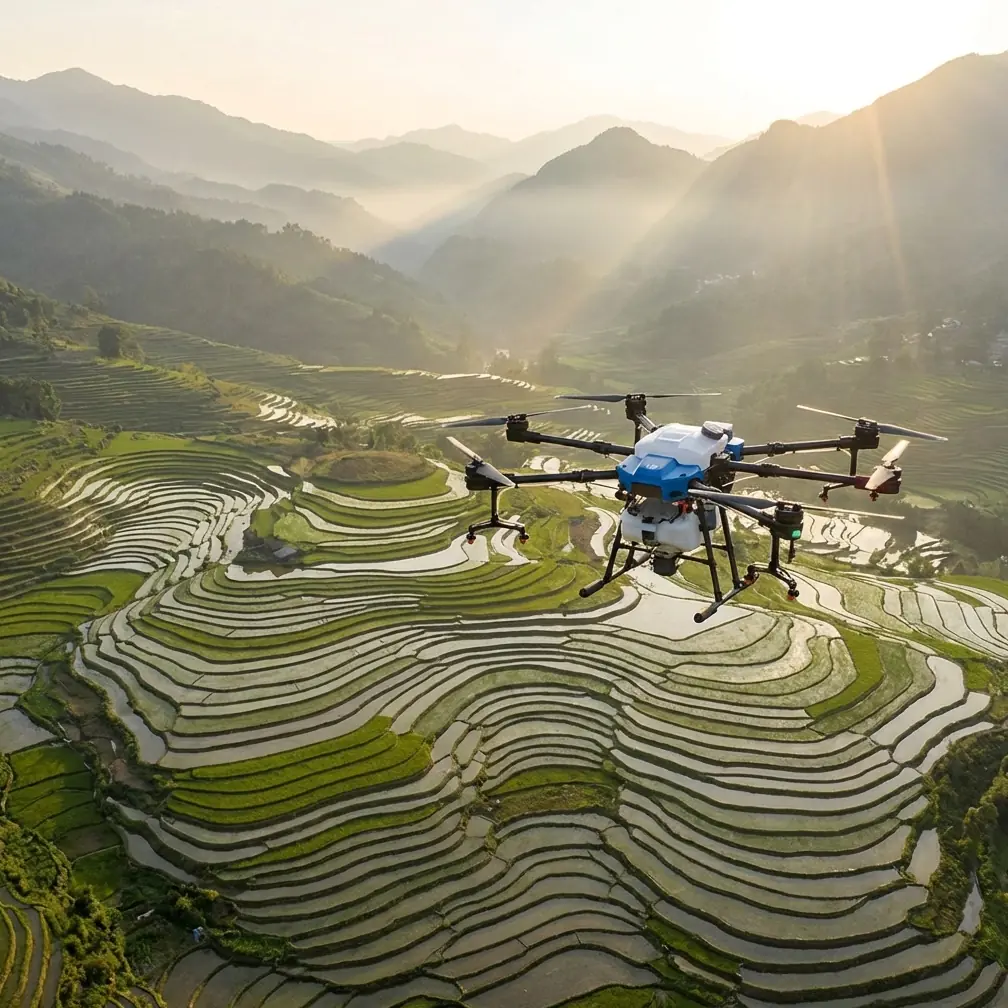
Agras T100 for Dusty Power-Line Spraying: What Actually Matters in the Field
META: A technical review of Agras T100 for dusty power-line vegetation spraying, with practical insight on route precision, spray drift control, nozzle setup, and cross-region operations.
Power-line corridor vegetation control is not ordinary crop spraying. The job sits at the uncomfortable intersection of narrow access roads, dust, uneven ground, variable wind, and a constant need for repeatable accuracy. If you are evaluating the Agras T100 for this kind of work, the real question is not whether it can carry liquid and fly a route. Plenty of platforms can do that. The real question is whether it can sustain precision when the environment is working against it.
That is where the T100 becomes interesting.
I am approaching this from the perspective of applied UAV operations rather than brochure language. In dusty utility corridors, performance is shaped by three things more than anything else: route discipline, droplet behavior, and workflow resilience. The reference material behind this discussion is not a glossy product sheet. It points instead to something more useful: how programmed flight, coordinate-based precision, and spray practice affect real operations.
Why power-line spraying is a different problem
Vegetation management under and around power lines is often treated as a simple extension of agricultural spraying. It is not. The target geometry is linear, fragmented, and full of edge conditions. A field pass can tolerate some inconsistency at the margins. A utility corridor usually cannot. Missed patches become regrowth problems. Excessive drift creates liability. Dust adds another layer by affecting visibility, landing surfaces, equipment fouling, and sometimes sensor confidence.
This is why the T100 should be judged less like a broad-acre farm drone and more like a route execution tool with a spray system attached.
The educational DJI reference is surprisingly relevant here. On pages 128–129, it describes a programmed patrol sequence in which the aircraft lifts off, climbs to 150 centimeters, follows a planned route, waits 1 second at the end, and lands. That example is built for teaching, not utility work, but the operational lesson is serious: consistent automation removes variability from repetitive low-altitude tasks. In corridor spraying, that consistency matters far more than raw flight bravado. A pilot who improvises every pass may look experienced; a system that repeats geometry cleanly is what protects coverage quality.
Route precision is not a luxury in corridor work
The same source also mentions placing markers at the start, finish, and between route segments so the drone can use coordinates for precise flight, then automatically return to the start when it reaches the endpoint. Translate that concept into modern utility spraying and it becomes a strong argument for centimeter-class navigation and high RTK fix stability.
Why does RTK fix rate matter so much here?
Because dusty power-line spraying often requires recurring treatment of the same strips over time. If the aircraft can return to the same line with centimeter precision, operators can reduce overlap waste, tighten swath planning, and document coverage more credibly. In practice, this is one area where a serious platform like the Agras T100 should outperform lower-tier competitors that rely on looser positioning or more pilot compensation. When a route bends with a service road, skirts a pole base, or follows a drainage edge under the line, precision is not a spec-sheet ornament. It is the difference between a clean job and a patchwork one.
The key point is operational significance: precise route adherence supports both efficacy and compliance. It also reduces pilot fatigue. On a long corridor day, that is not trivial.
Dust changes how you should think about the aircraft
Readers often ask whether dust mainly threatens motors, nozzles, or electronics. The practical answer is all three, but not equally.
For utility corridor spraying, dust first attacks workflow. It contaminates refill areas, settles on connectors, obscures visual checks, and can interfere with the discipline required for nozzle calibration and tank mixing. An aircraft with strong environmental protection, such as an IPX6K-class design philosophy in this category, matters because dusty jobs are rarely clean jobs. Even when the challenge is technically dry particulate rather than water ingress, ruggedized sealing and washdown-friendly construction can shorten turnaround between sorties and reduce maintenance friction.
This is also where the T100 should be measured against competitors. Some platforms look capable until they spend a week on rough access tracks, repeated loading cycles, and powder-fine dust around staging zones. The better machine is not always the one with the loudest payload number. It is the one crews can keep in spec without turning every evening into a teardown session.
Spray drift is the real technical battlefield
Vegetation control under power lines often happens in open, turbulent spaces. Wind channels along clearings. Heat rises from gravel access roads. Dust can visually exaggerate movement and tempt operators to overcorrect. The result is a constant battle against drift.
One of the reference documents on aerial plant protection emphasizes that UAV spraying often uses ultra-low-volume application, which means less water and a higher active-ingredient concentration in the spray mix. That single fact has major consequences for T100 operations around power lines. With lower carrier volume, droplet behavior becomes even more critical. If nozzle choice, pressure, speed, and height are not synchronized, a corridor application can become either too coarse for coverage or too fine for control.
This is where nozzle calibration stops being a maintenance chore and becomes a mission variable.
Agras operators working in dusty conditions should think in terms of a spray triangle:
- droplet size versus drift risk
- speed versus dwell time
- height versus target interception
The T100’s value in this context lies in how predictably it can hold the planned line and spray envelope. That allows the operator to tune the application rather than fight the aircraft. Many competing platforms claim precision, but corridor work exposes weak tuning very quickly. If the aircraft surges, hunts, or varies too much in low-altitude line tracking, your nozzle setup will not save the job.
Mixing discipline matters more than people admit
The second reference document makes two points that deserve more attention in any technical review of the Agras T100. First, it warns that ultra-low-volume spraying uses relatively concentrated liquid. Second, it advises against using well water because mineral content such as calcium and magnesium can affect performance, and it recommends secondary dilution.
That is not an academic footnote. It is field chemistry with direct operational impact.
For utility vegetation spraying, especially in remote and dusty staging areas, crews are often tempted to mix quickly with whatever water source is nearby. That shortcut can hurt consistency. If the chemistry is compromised before it enters the tank, even a highly capable aircraft cannot deliver a reliable result. Poor dilution practice can influence droplet formation, deposition quality, and potentially nozzle behavior. In a narrow corridor, those small deviations become visible fast.
So if you are deploying the T100 for dusty power-line work, the aircraft should be only one part of the control system. The other part is process discipline: correct water source, proper secondary dilution, and repeatable agitation protocol. Advanced hardware tends to magnify the value of good practice, not replace it.
Safety is not separate from productivity
One detail from the plant-protection reference is worth stating plainly: pesticide exposure can cause acute poisoning, chronic harm, and mutagenic, carcinogenic, or teratogenic risks, and operators should use proper protection, especially respiratory protection for fumigant-type agents.
That matters here because one of the strongest practical arguments for a platform like the Agras T100 is not speed alone. It is operator separation from the spray zone.
The educational material also notes that UAV inspection efficiency can reach 10 times that of manual work. While that figure is presented in the context of patrol rather than spraying, the deeper operational message still applies: drones shift labor away from direct exposure and into managed, standoff workflows. For power-line vegetation control, that means fewer people walking dusty corridors with handheld equipment, less direct contact with spray, and better repeatability in difficult terrain.
The significance is not abstract. Reduced exposure and reduced physical burden are part of what makes a UAV workflow economically sustainable over time.
Cross-region utility spraying is becoming more realistic
Another useful insight from the reference set comes from agricultural service operations rather than hardware. It argues that aerial plant-protection teams naturally move toward cross-regional operations because crop timing and treatment windows vary by area. The same logic applies to utility contractors.
Power-line vegetation growth is not synchronized across all territories. Dust levels, plant species, humidity, and seasonal growth pressures vary by region. A contractor using the Agras T100 across multiple service areas needs a platform and workflow that travel well. That means route templates that can be re-established quickly, calibration routines that crews can reproduce under pressure, and coordination structures that connect contractors, local stakeholders, and site managers efficiently.
The source specifically notes that associations or alliances can play an important role in coordinating with government and end users during cross-regional operations. In utility terms, think of that as a reminder that logistics and permissions matter almost as much as airframe capability. The best drone in the trailer cannot recover a poor coordination plan.
If you are building a regional T100 deployment program, it is worth designing around standardized mission packets: corridor maps, target vegetation classes, approved spray parameters, staging protocols, and maintenance checks tuned for dust-heavy environments.
What the T100 should do better than weaker rivals
A good technical review should not dodge comparison. The Agras T100’s strongest case in dusty power-line spraying is not one headline feature but a stack of interacting capabilities:
- Centimeter-precision route repeatability for corridor geometry
- Stable line holding that supports tighter spray control
- Ruggedness for dirty staging conditions and frequent cleaning
- Efficient mission automation that reduces pilot variability
- Compatibility with disciplined low-volume spraying workflows
Weaker competitors usually fail at the seams between those categories. They may offer acceptable spraying in open fields yet become inconsistent when corridor routes twist, landing areas degrade into dust, and crews need repeatable outputs over multiple days and regions. That is where a more mature platform tends to pull away.
A practical setup philosophy for dusty line work
If I were advising a team deploying the Agras T100 for this scenario, I would focus less on chasing maximum swath width and more on controlled consistency.
Start with route quality. Confirm RTK stability and verify that return paths and segment transitions are clean.
Then calibrate nozzles with the actual spray mix process you will use on site, not an idealized shop setup.
Treat drift management as a primary parameter, not a post-flight explanation.
And build your operating rhythm around cleanliness: protected mixing area, connector checks, nozzle inspections, and end-of-day washdown.
If your team is comparing corridor workflows or wants to sanity-check a T100 setup for this use case, this quick Agras field discussion channel can be a practical place to start.
The larger takeaway
The most useful thing about the reference material is that it frames UAV work as a system. One source highlights coordinate-based route precision and automated patrol logic. Another stresses cross-regional service realities, correct dilution practice, and chemical safety. Put those together and you get a clearer way to evaluate the Agras T100.
For dusty power-line spraying, the aircraft is only as good as the operation wrapped around it. But when the operation is disciplined, a platform with reliable centimeter precision, stable low-altitude route execution, and a durable field presence becomes far more than a generic sprayer. It becomes a repeatable infrastructure maintenance tool.
That distinction matters. Utility corridor work is unforgiving. The crews who do it well are not just flying. They are managing geometry, chemistry, exposure, and logistics all at once. The Agras T100 looks strongest when judged by that standard.
Ready for your own Agras T100? Contact our team for expert consultation.