
Agras T100 for Coastal Surveying: Field-Proven Workflow
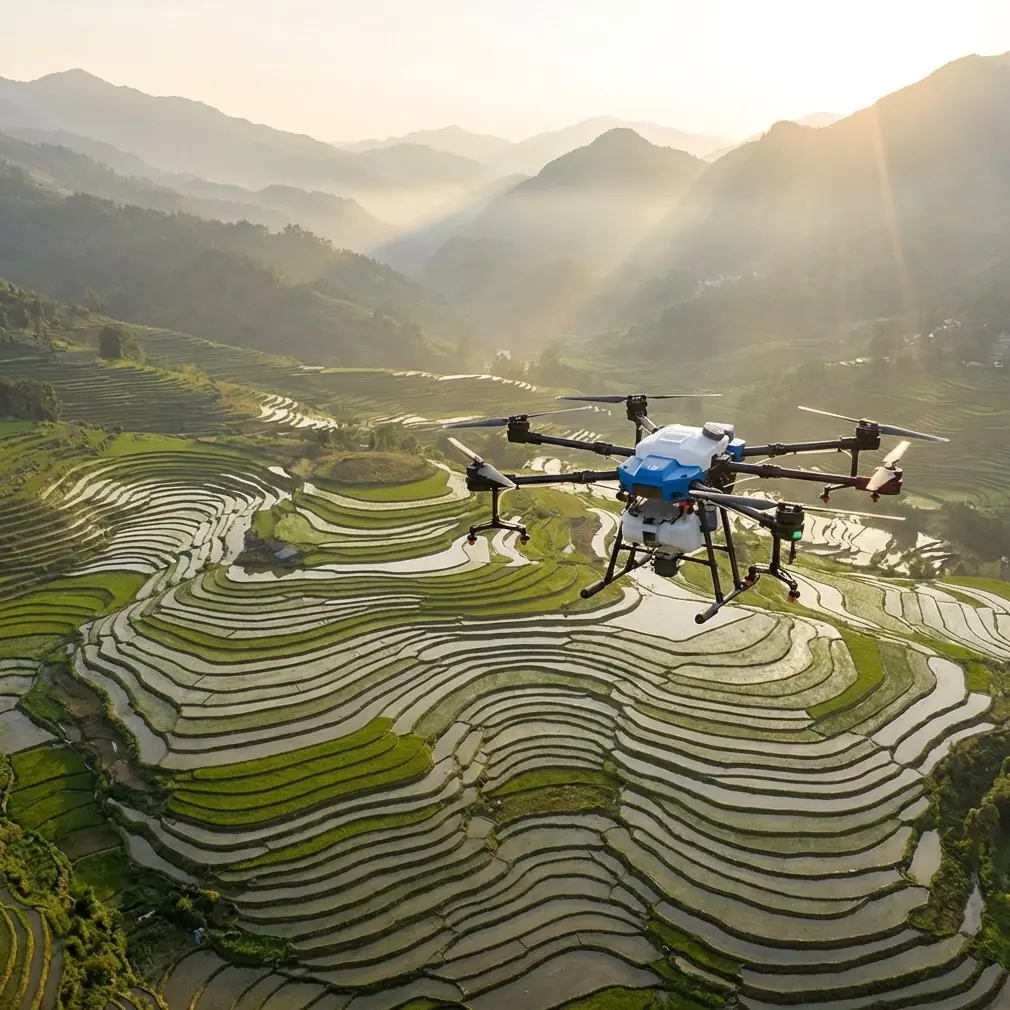
Agras T100 for Coastal Surveying: Field-Proven Workflow That Prevents Drift, Data Gaps, and Wasted Days
META: A practical Agras T100 coastal surveying workflow covering field prep, weather limits, battery logistics, drift control, RTK discipline, and GIS data processing for reliable results.
When people hear “Agras T100,” they often think first about spraying. That is understandable. Yet in real field operations, especially along coastal corridors, the machine’s value is shaped less by brochure language and more by discipline: power planning, weather judgment, calibration habits, data handling, and what the team does after landing.
I learned that lesson the hard way on a shoreline project where the aircraft itself was not the problem. The real failure was operational. We lost half a day because charging access at the site had been overestimated, wind built faster than expected, and the field notes did not match the actual flight sequence. Nothing dramatic happened. That is exactly why these failures are so expensive. Quiet inefficiency compounds. By the time the team notices, the tide has shifted, the light has changed, and the best flying window is gone.
For readers evaluating the Agras T100 for coastal surveying support work, corridor observation, shoreline condition documentation, and related field tasks, the most useful question is not “Can it fly here?” It is “Can my workflow hold up here?” Coastal environments punish weak planning. Salt, wind, scattered access points, and long travel distances expose every shortcut.
This guide focuses on that workflow.
Start with the constraint that ruins most coastal days: power
One of the most practical reference points from real UAV service operations is the battery expectation for electric multirotors: teams commonly prepare 5 to 10 battery sets, plus chargers, and when local charging is inconvenient, they bring vehicle-mounted generation equipment. That detail may sound ordinary, but in coastal surveying it is decisive.
Agras T100 missions near shorelines rarely happen beside ideal infrastructure. You may be working from a seawall access road, a fishery service track, reclaimed land, or an isolated staging point where grid power is either unavailable or too far from the active launch area to be useful. If your team assumes it can “top up later,” the aircraft becomes a hostage to logistics.
With the T100, build your day around battery rotation instead of treating batteries as a background issue. That means:
- enough packs to sustain the productive weather window,
- chargers matched to the actual turnaround rhythm,
- a field-safe power source when the site lacks dependable charging,
- and a written charge/use log.
Why does this matter operationally? Because coastal surveying windows are narrower than inland teams often expect. Wind tends to increase later in the day. Reflections and haze complicate visual interpretation. Access routes can lengthen retrieval time. If the first two hours are your cleanest window, you cannot afford to spend one of them waiting on a battery cycle.
This is also where many teams misread the phrase “best practices.” Best practice is not simply bringing more batteries. It is calculating whether your total energy on site matches your route plan, travel distance between launch points, and any re-flight allowance. A shoreline mission with even one missing battery set can turn a complete coastal strip into fragmented, nonuniform coverage.
Respect wind before you talk about precision
The second reference detail deserves more attention than it usually gets: when wind exceeds level 3, spray work sees major drift. Even though that statement comes from plant protection operations, the underlying lesson transfers directly to coastal surveying. Wind is not only a drift problem. It is a consistency problem.
If you are using the Agras T100 in mixed field roles that include coastal observation, treatment-adjacent assessment, or environmental documentation, wind changes everything:
- swath consistency,
- hover stability,
- edge control near embankments,
- repeatability of flight lines,
- and the reliability of any RTK-dependent geospatial output.
This is where terms like RTK fix rate and centimeter precision stop being marketing vocabulary and become operational thresholds. Along a coast, poor fix continuity can create subtle alignment errors that are easy to miss in the field and frustrating to clean up later. Add gusty crosswinds, and those errors become harder to diagnose because the line between navigation deviation and environmental push gets blurred.
My recommendation is simple: define a no-argument weather stop rule before departure. The reference material points to a practical ceiling where stronger winds create unacceptable drift, and that is useful beyond spraying. If the shoreline corridor is experiencing sustained conditions that compromise line accuracy or stable altitude control, postpone. A team that insists on flying because it already mobilized to site usually pays for that decision twice—once in the field and once in the office.
Preflight on the coast is not routine; it is risk control
The source material also highlights a sequence many teams skip when they are in a hurry: arrive early, study terrain, inspect the route for obstacles, determine takeoff and landing points, and verify system settings before departure. On the coast, that sequence becomes even more critical.
A proper Agras T100 coastal preflight should cover five things.
1. Launch and recovery surfaces
Coastal ground is often uneven, damp, sandy, or crowded with loose debris. Your launch point should protect the aircraft from intake contamination and rotor wash disturbance. If the T100 is expected to work around fine salt residue or wet particulate, cleanliness matters from minute one.
2. Obstacle path review
Seaside projects often involve wires, poles, masts, breakwater structures, temporary fencing, pumps, or aquaculture equipment. Obstacle review must be done on foot or by close visual inspection, not assumed from satellite imagery.
3. Communications check
The reference text specifically mentions testing support gear such as radios before takeoff. In coastal work, this matters because teams can become spread out along linear corridors. One person may be watching shoreline edge conditions while another tracks people entering the work zone. A missed radio check becomes a safety issue fast.
4. Payload and nozzle calibration
If your T100 workflow includes spray-enabled coastal vegetation management or treatment verification, nozzle calibration is not a side task. It determines whether your output matches the area being covered and whether your records will make sense later. Calibration problems are often misdiagnosed as wind issues because both can produce uneven results.
5. Safe separation from people
The source emphasizes keeping people away from the work area because any sudden aircraft incident poses high risk. That caution is even more relevant on coasts, where walkers, fishers, maintenance crews, and local residents may enter the area unexpectedly. A shoreline is not a controlled industrial yard. Someone always appears where you thought no one would.
Match the aircraft to a documented field record, not memory
One of the most underrated facts in the source is the end-of-day recordkeeping routine: log treated area, flight sorties, resource consumption, and whether total usage matches total operational area. This is not paperwork for its own sake. It is how serious teams prevent compounding error.
For Agras T100 coastal surveying, a disciplined record should include:
- battery ID and cycle usage,
- sortie count,
- launch location and landing location,
- route segment covered,
- weather notes,
- any RTK anomalies,
- observed drift or lateral correction,
- payload or application volume where relevant,
- and unfinished corridor sections.
Why does this matter so much on the coast? Because shoreline operations are rarely completed in one perfectly continuous block. You may stop for wind, access changes, tide conditions, or public interference. If your records are weak, next-day continuation becomes guesswork. The reference material specifically notes recording the stopping point so the following day’s work can resume at the correct field position. That detail is operational gold. In a coastal corridor, restarting from the wrong segment can create overlap, omission, or contradictory datasets.
I encourage teams to reconcile area covered with material consumed every day. If application volume or battery draw does not roughly align with the completed segment, something is wrong—possibly drift, leakage, over-application, route inefficiency, or simply bad logging. Better to catch that at dusk than after three more mission days.
Do not ignore the office side of a coastal UAV workflow
The second reference document shifts from fieldwork to data handling, and it makes a strong point: hardware and software choices shape how useful your UAV operation becomes after landing.
For internal processing, the reference recommends a computer with a CPU better than 4 cores, at least 4 GB of memory, and no less than 500 GB of storage. It also notes that many photogrammetry tools favor strong GPU performance, and support for NVIDIA-class cards is often better than for alternatives. On paper, those are modest thresholds. In practice, they are the minimum reminder that coastal surveying is not finished when the aircraft powers down.
If your Agras T100 missions feed into orthomosaic creation, condition mapping, treatment verification, or field-to-office reporting, post-processing capacity becomes part of flight planning. A team that can fly all day but cannot process coherently by evening is not efficient. It is just accumulating backlog.
The software references are equally practical:
- Esri Drone2Map is highlighted for lightweight drone data processing and orthomosaic generation.
- ArcMap is noted for integrating UAV imagery, mapped samples, and geotagged photos into one professional map environment.
- ArcGIS Portal is described as a sharing framework that lets multiple users collaborate across field and office workflows.
That combination matters for coastal teams because shoreline work usually involves more stakeholders than a simple inland field job. Environmental managers, infrastructure owners, agronomy teams, contractors, and remote analysts may all need access to the same outputs. If your workflow stops at local image storage on one laptop, the T100’s field value gets trapped in a bottleneck.
A better model is simple: fly with traceable logs, process quickly, publish the right outputs, and let the field and office inform each other. If you need to compare route planning, data handoff, or field coordination approaches with an experienced team, this direct WhatsApp line is often the fastest place to start: message a coastal UAV workflow specialist.
A practical daily workflow for Agras T100 coastal missions
Here is the structure I now recommend after seeing where teams actually lose time.
Before departure
Prepare enough power assets for the full window. For electric operations, think in terms of 5–10 battery sets if the mission scale justifies it, plus chargers and backup generation where charging access is uncertain. Confirm weather, especially wind trend rather than just current speed.
On arrival
Reach site early. Walk the route. Identify obstacles, launch points, landing points, and public access risks. Confirm radios and mission roles.
Before first lift
Check airframe condition, payload system, nozzle behavior if relevant, RTK status, and route logic. If your fix rate is inconsistent before launch, solve it before you commit to the corridor.
During operations
Watch wind continuously. Do not let schedule pressure override drift control or line quality. Along public coastlines, assign one team member to people awareness rather than splitting that attention across the whole crew.
After landing
Clean the aircraft, inspect the system, review consumption, and compare field notes against actual completed coverage. Record the exact endpoint for next-day continuation.
In the office
Transfer imagery and logs immediately. Process on a machine that can keep pace. Build orthomosaics or mapped outputs without delay, then share through a collaborative GIS environment when multiple teams need visibility.
Why this approach suits the Agras T100
The Agras T100 is most useful when treated as part of a system, not a standalone platform. Coastal jobs expose that truth faster than inland work does. You are balancing environmental variability, logistics, public proximity, and data expectations at the same time. A capable aircraft helps, but only if the surrounding workflow is equally capable.
That is why the most valuable lessons from the source material are not flashy. They are practical: bring enough batteries, account for charging limitations, avoid wind conditions that cause drift, inspect the route before flight, test supporting equipment, keep people clear, and document exactly what happened each day. Add a modern GIS processing chain on the back end, and the T100 becomes much easier to deploy with confidence.
The teams that struggle with coastal UAV work usually are not under-equipped in theory. They are under-disciplined in sequence. The teams that succeed make the day predictable before the aircraft ever leaves the ground.
Ready for your own Agras T100? Contact our team for expert consultation.