
Agras T100 Surveying Tips for High-Altitude Power Line Work
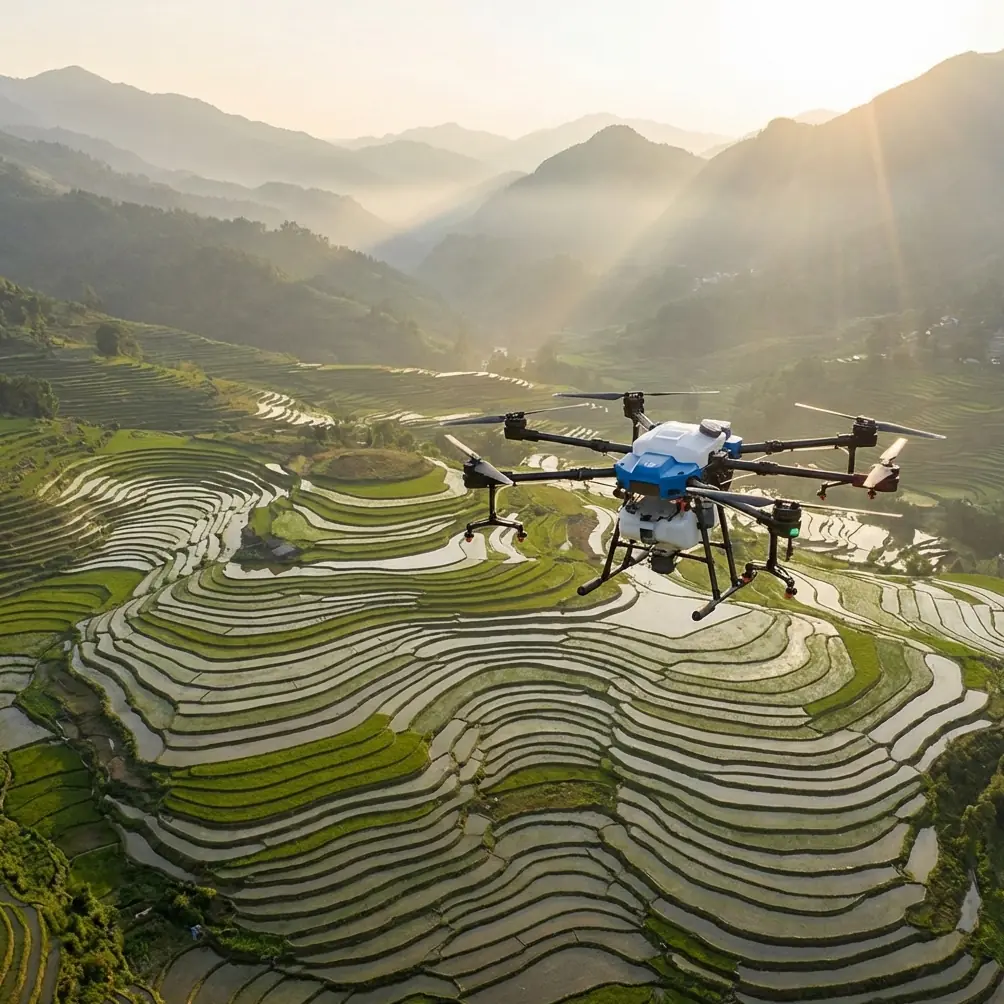
Agras T100 Surveying Tips for High-Altitude Power Line Work
META: Practical Agras T100 tutorial for high-altitude power line missions, covering RTK fix rate, weather shifts, swath control, nozzle setup, and safe field workflow.
High-altitude power line work punishes sloppy planning. Air gets thinner. Wind behaves differently along ridgelines than it does at launch. A route that looks clean on a map can turn turbulent the moment the aircraft crosses a saddle or rounds a tower line. If you are using the Agras T100 in this environment, the difference between a smooth mission and a difficult one often comes down to how you prepare for changing conditions before the first takeoff.
This tutorial is written for crews using the T100 around transmission corridors in elevated terrain, especially where the job includes line inspection support, corridor assessment, vegetation evaluation, and precision application near rights-of-way. The T100 is usually discussed in an agricultural context, but its value in utility-adjacent field operations becomes clearer when you focus on what actually matters on mountain jobs: stable positioning, predictable coverage, environmental resilience, and the ability to adapt when weather shifts mid-flight.
That last point is not theoretical. On one recent ridge mission profile I use in training scenarios, conditions changed halfway through the route. The launch point was calm enough to inspire confidence. At line height, that confidence would have been misplaced. A crosswind built quickly from the valley side, temperature dropped, and the aircraft began encountering uneven gusts on the leeward edge of the corridor. That is where the T100 setup either saves the operation or exposes weak planning.
The first discipline is mission definition. People often say “surveying power lines” as if it were one task. It is not. You may be documenting conductor clearance, checking encroaching vegetation, creating a corridor map for follow-up maintenance, or performing a targeted application where vegetation pressure threatens access or line integrity. Each objective changes how you should configure the aircraft, choose speed, and think about altitude.
If your purpose is corridor mapping or repeated route capture, centimeter precision matters more than raw pace. The T100’s RTK-capable workflow becomes the backbone of consistency here. A strong RTK fix rate is not just a nice specification to mention in a brochure-style discussion. In high-altitude utility work, it determines whether repeated passes line up tightly enough to compare vegetation growth, identify changes around poles and towers, and keep the aircraft where you expect it to be relative to obstacles. When the route hugs steep terrain, a weak fix can turn a carefully planned lateral buffer into an uncomfortable guess. Crews that monitor RTK health throughout the mission rather than only at takeoff usually make better decisions when terrain starts interfering with signal quality.
The second discipline is understanding what the spray system means even when your primary goal sounds like inspection. Around power lines, vegetation management is often inseparable from surveying. That is why spray drift and nozzle calibration are not side topics. They are operational controls. A poorly calibrated nozzle setup can distort droplet size and flow consistency, which directly affects how well you can treat narrow target zones without contaminating adjacent ground cover. In corridor work, you are not painting a broad, forgiving field. You are often dealing with irregular strips, edge growth, access tracks, and variable elevation. The T100 becomes useful because you can tune it for that precision rather than forcing field-style assumptions onto a utility environment.
Before launch, I recommend treating nozzle calibration as part of the survey checklist, not the spray checklist. That sounds unusual until you realize the route data and the application outcome are linked. If a corridor section requires a tight swath width to stay clear of sensitive areas, the aircraft’s movement profile, altitude discipline, and nozzle performance all affect the result. Swath width is not a number you pick once and forget. In mountain corridors it changes with wind angle, speed over ground, and local turbulence around structures. A swath that behaves predictably on level farmland can stretch, feather, or drift off target when it passes between towers on a ridge shoulder.
The mid-flight weather shift I mentioned earlier is a good example. The route began with a broad enough margin to maintain efficient corridor coverage. Roughly halfway through, the aircraft met a crosswind that pushed drift toward the downslope side. This is where crews who only watch the aircraft visually tend to react too late. The better response is procedural: reduce exposure by tightening the working swath, reassess flight speed, and confirm that the positioning solution is still holding at the level needed for safe corridor tracking. The T100’s usefulness under those conditions is not that it somehow defeats weather. No aircraft does. Its value is that a disciplined operator can reconfigure the mission logic fast enough to preserve control and data quality.
That is also where environmental sealing matters more than many buyers realize. An IPX6K-rated airframe is easy to dismiss as a durability bullet point until you work around mist, sudden precipitation, rotor wash over wet vegetation, or moisture carried upslope by changing afternoon weather. On high-elevation line routes, conditions can move from dry to uncomfortable in minutes. The T100’s weather resistance does not remove operational risk, but it buys margin when you are forced to recover through damp air or continue safely through a brief change while returning to a secure landing point. That margin matters because mountain weather rarely gives long warnings.
A practical T100 workflow for power line surveying starts on the ground with three layers of verification.
First, validate terrain assumptions. Do not rely on a single planned altitude above takeoff point when your corridor climbs and drops aggressively. Build around true relative clearance from terrain and structures. Transmission corridors often create a visual trap: the line itself gives the illusion of a stable reference, while the ground beneath it shifts dramatically.
Second, confirm RTK performance before committing to the full route. I am not talking about a quick glance. Watch whether the fix remains stable as the aircraft moves away from the launch area and changes aspect relative to terrain. A high RTK fix rate is essential if your mission depends on repeated passes with centimeter precision. That precision is what turns the T100 from a rough corridor tool into a platform capable of consistent, trackable results.
Third, evaluate wind where the job actually happens, not just where you are standing. Along power lines, the difference between launch conditions and line-height conditions can be severe. Saddles, escarpments, and tower placements create localized airflow that can push spray, distort a swath, or force repeated micro-corrections in flight path. If weather changed mid-flight once on your route, assume it will again and plan your abort thresholds accordingly.
I also advise crews to think carefully about payload choices when a utility mission blends surveying and vegetation assessment. If you are integrating multispectral data into corridor analysis, the T100’s role becomes broader than simple application. Multispectral imagery can help identify stress patterns in vegetation near access roads, tower bases, and line-adjacent growth zones that are not obvious in a standard visual pass. That matters operationally because it allows maintenance teams to prioritize where regrowth or species-specific pressure may create future problems. In practice, this means your flight planning has to serve both coverage quality and data integrity. You are no longer just moving along a line; you are collecting information that may shape maintenance decisions weeks later.
The trick is not to overcomplicate the sortie. Utility crews sometimes make the mistake of stacking too many objectives into one flight because the corridor is remote and the access is difficult. That is understandable, but the mountain environment punishes excess ambition. Keep each mission leg narrow in purpose. One leg may prioritize stable corridor capture with strong positional confidence. Another may be designed around treatment accuracy, where nozzle calibration and drift control take priority. Another may target multispectral collection at lower speed for cleaner data. The T100 can support these different roles, but only if the operator resists turning one route into three different jobs at once.
Let’s talk specifically about spray drift around power infrastructure, because this is where field instincts can become dangerous. Drift is not just a product loss issue in line corridors. It can affect non-target vegetation, access areas, and sensitive spaces near infrastructure easements. At altitude, even moderate crosswinds can carry fine droplets farther than expected, especially when the route runs along an exposed ridge. The T100 should be flown with a conservative attitude in these conditions: slower where necessary, lower only when safety and obstacle clearance permit, and always with nozzle calibration verified against the real application profile rather than a default setup. Precision application in a corridor is won before takeoff, not improvised in the air.
When weather changes during the mission, I use a simple decision framework.
If the aircraft remains positionally stable, the RTK solution holds, and drift can be controlled by adjusting speed and swath width, the mission may continue in a reduced-risk mode. If the aircraft starts making frequent correction inputs, if gusts push coverage off the intended corridor, or if visibility and moisture worsen, terminate the leg and recover. Utility work rewards conservative judgment. There is no trophy for finishing a route that should have been paused ten minutes earlier.
Another often overlooked point is route repeatability. High-altitude power line programs are rarely one-off events. Crews revisit the same stretches to compare vegetation growth, inspect post-weather changes, or document work completed between maintenance cycles. This is where the T100’s ability to support repeatable pathing with centimeter precision becomes operationally valuable. A repeated mission flown with strong RTK discipline gives utility teams comparable records instead of loosely similar images and notes. That consistency improves decisions. It reduces argument over whether change is real or just a result of poor route replication.
For teams building a formal corridor workflow, I recommend writing mission templates around the environmental reality of each route segment rather than around the aircraft’s maximum capability. One exposed ridge section may demand a narrower working swath and stricter weather limits. One valley section may create signal challenges that make RTK monitoring more important than speed. One tower cluster may justify dedicated multispectral passes because vegetation pressure is structurally or operationally more sensitive there. The T100 performs best when the mission respects local geography instead of flattening it into a generic route.
If you are refining that workflow and want a second set of eyes from someone who thinks about utility operations in practical terms, here is a direct way to start the conversation: message me here. Sometimes a ten-minute discussion about route logic saves an entire day in the field.
The larger point is simple. The Agras T100 is not defined by one specification or one category label. In high-altitude power line work, its real value comes from how its capabilities intersect: RTK-backed positioning for repeatability, weather-resistant construction that adds margin when conditions shift, controlled swath management for corridor accuracy, and the flexibility to support both application and data-driven vegetation assessment. Those features only matter when they are translated into disciplined operating choices.
That is why the most effective T100 crews do not chase maximum output on mountain line routes. They chase control. They protect fix quality. They verify nozzle behavior. They respect drift. They split missions by objective. And when the weather changes mid-flight, they adjust early instead of explaining later.
Ready for your own Agras T100? Contact our team for expert consultation.