
Tracking Highways in Extreme Temperatures With the Agras T10
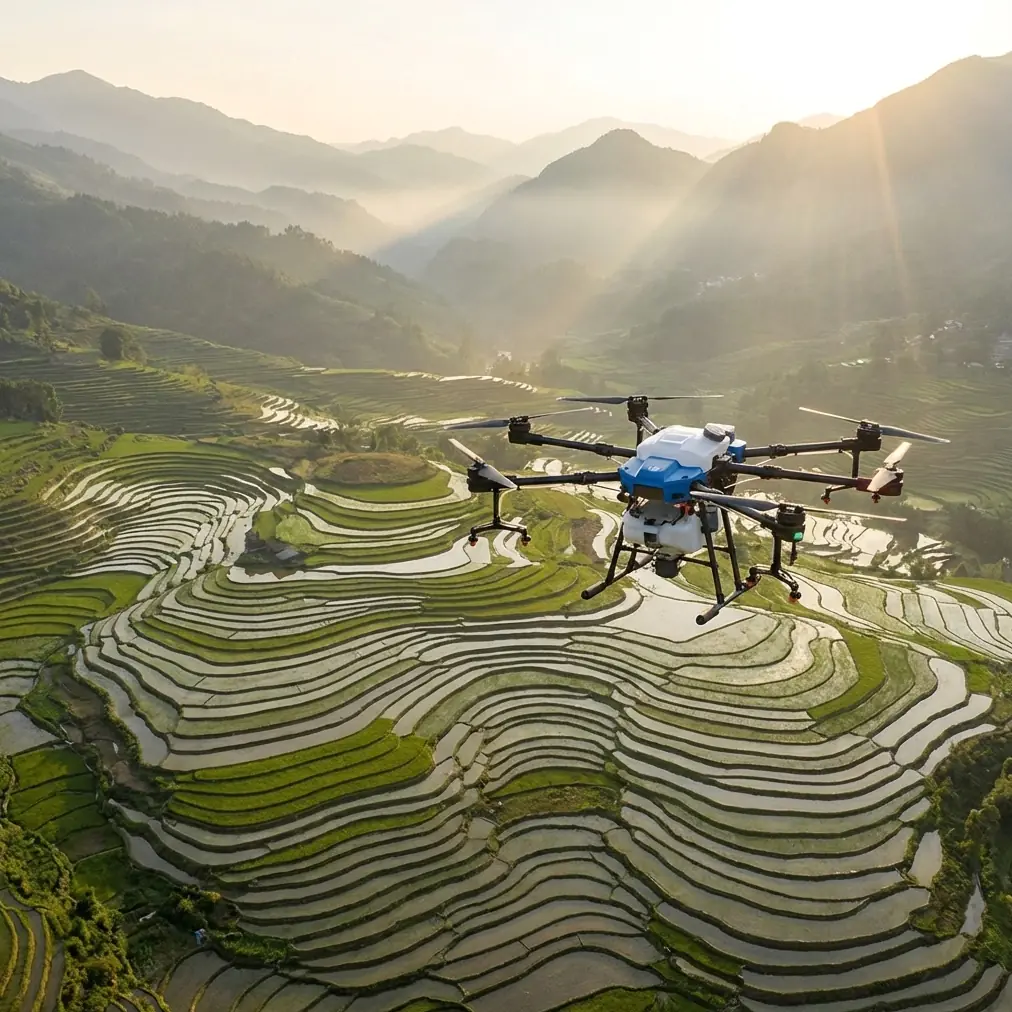
Tracking Highways in Extreme Temperatures With the Agras T100
META: Expert technical review of using the Agras T100 for highway corridor work in extreme heat and cold, covering RTK fix stability, spray drift control, nozzle calibration, swath planning, and sensor-aware operations.
Highway corridor work punishes equipment in ways row-crop operations do not. Heat radiating off asphalt distorts air, crosswinds funnel between barriers, dust coats sensors, and long linear routes expose every weakness in navigation stability. If the mission involves the Agras T100, the real question is not whether it can lift a payload or fly a programmed route. The question is whether it can keep doing precise, repeatable work when pavement temperatures spike, morning frost lingers on shoulders, and the environment shifts by the mile.
That is where a technical review needs to start.
The Agras T100 makes sense for infrastructure-adjacent operations because highway work is about consistency over distance. On a farm, a small deviation may disappear into a large block of acreage. Along a highway, an error shows up immediately. A drifted pass can miss a narrow verge. A shaky RTK fix can distort the edge of a treatment zone. A poor nozzle setup can push droplets into guardrails, drainage channels, or active traffic margins. Precision matters more when the workspace is narrow and the consequences are visible.
For teams tracking highways in extreme temperatures, three performance areas matter most: navigation integrity, application control, and environmental survivability. The Agras T100 sits in an interesting place because it combines the payload mindset of an agricultural platform with the route discipline required for corridor management. That blend is exactly why it deserves serious attention for this use case.
Start with positioning. In corridor operations, centimeter precision is not a luxury term. It is the difference between cleanly following a shoulder boundary and wasting material outside the intended swath. The T100’s RTK-enabled workflow is operationally significant because long, thin job sites amplify positional drift. If your fix rate drops in sections with overhead signage, tree overhang, embankments, or intermittent interference, the route begins to lose its reliability. That affects more than mapping. It affects treatment confidence. A stable RTK fix rate helps the aircraft maintain alignment over repeated passes, especially when a highway median or embankment leaves very little room for overlap error.
The second detail that deserves more scrutiny is swath width. Operators often focus on maximum coverage numbers, but that mindset can backfire on roadsides. Highway vegetation is irregular. One section may open into a broad shoulder, while the next pinches down near guardrails, culverts, or utility posts. The practical advantage of the T100 is not simply that it can cover ground. It is that swath width can be treated as a controlled variable rather than a static brag point. In extreme heat, thermals rising from pavement can push fine droplets laterally. In colder conditions, denser air changes rotor wash behavior and deposition patterns. Dialing swath width to match wind structure and roadside geometry is what separates controlled application from a messy one.
That brings us directly to spray drift, which is the issue that quietly defines highway drone work. Drift is not just lost output. Near transport corridors, drift can mean contact with non-target grasses, runoff-prone edges, wildlife habitat strips, or roadside infrastructure. The T100’s usefulness depends heavily on how intelligently the operator configures droplet size, flight height, speed, and nozzle calibration. Nozzle calibration is not a setup chore to rush through before takeoff. It is the control point that determines whether the aircraft’s delivery system matches the actual fluid behavior under local conditions.
In high-temperature operations, calibration needs to account for evaporation pressure. Smaller droplets can disappear or move off target faster over superheated pavement. That can make a perfectly acceptable farm setting inappropriate for highway margins by midday. In cold-weather windows, viscosity shifts can alter flow characteristics enough to affect uniformity if calibration has not been checked. The operator who treats calibration as a living parameter rather than a fixed preflight box will get better results from the T100 than the operator who relies on a standard seasonal profile.
I have seen this most clearly on a corridor inspection and treatment planning job that began just after sunrise, with frozen shoulders in shaded sections and intense reflected heat building by late morning. The route itself was predictable. The microclimates were not. One embankment held cold air. A south-facing lane edge generated thermal shimmer early. The T100’s value in that environment was not raw capacity. It was the platform’s ability to maintain disciplined line tracking while the operator kept adjusting application logic to match changing atmospheric behavior.
There was one moment that drove home how much sensor intelligence matters in these jobs. A small group of deer moved out from scrub near a drainage cut and crossed toward the opposite verge just as the aircraft was transitioning into the next segment. The system’s sensing and avoidance behavior gave the operator time to pause the operation cleanly rather than force a risky continuation or abrupt manual correction. That matters operationally for two reasons. First, wildlife encounters are common along highway edges, especially at dawn and dusk. Second, a drone used in these environments has to be capable of responding to non-map obstacles that appear without warning. In practice, that kind of sensor-mediated interruption protects the route, the aircraft, and the surrounding environment at the same time.
Durability is another piece of the T100 discussion that gets too little attention when people fixate on payload or acreage-style productivity. A corridor crew working near roads deals with water spray, grime, fine dust, and the constant threat of contamination during transport and redeployment. That is why an IPX6K-level protection discussion is relevant here. High-pressure water resistance is not a marketing footnote when the aircraft needs frequent cleaning after exposure to muddy shoulders, road spray, or chemical residue. In extreme temperatures, contamination management becomes even more critical because residue buildup can interfere with cooling, sensor readability, and routine inspections. A platform that tolerates aggressive washdown procedures has a practical advantage for crews that redeploy day after day across dirty rights-of-way.
The same realism should be applied to multispectral conversations. For pure highway tracking, multispectral capability is not always the first requirement, but it can become useful when the mission goes beyond simple application into vegetation differentiation and corridor condition analysis. If a team is trying to distinguish stressed invasive growth from dormant desirable cover along long stretches of roadside, multispectral data can support more selective treatment planning. That reduces unnecessary passes and helps crews avoid blanket assumptions about vegetation condition based on visible color alone. In extreme temperature periods, visual assessment is notoriously deceptive. Heat stress, water stress, and seasonal dormancy can look similar from a distance. A multispectral layer can sharpen decisions before the T100 is tasked with treatment.
There is also a workflow reality many teams underestimate: highway jobs are rarely uniform enough for a single flight profile. The T100 performs best when operators think in segments. Open verge sections can accept one speed-height-swath combination. Constricted areas near barriers, signage, culbs, or drainage transitions often need a tighter, slower profile. Extreme temperature conditions make this segmentation even more important because the atmosphere can behave differently over blacktop, gravel shoulder, and vegetated slope within the same kilometer. A one-size route wastes the aircraft’s capability.
If I were advising a team using the Agras T100 for this kind of work, I would insist on a corridor-specific setup routine:
First, verify RTK performance before committing to long autonomous runs. A high-quality fix at launch tells you less than you think if the route passes through sections with reflected interference or partial obstruction. Monitor fix stability as a mission variable, not a startup metric.
Second, calibrate nozzles for the day’s actual temperature band, not the season on the calendar. A 15-degree swing between morning and afternoon can materially change fluid behavior.
Third, reduce the temptation to maximize swath width. A narrower, cleaner pass is often the more efficient choice when it reduces drift, minimizes rework, and keeps deposition where it belongs.
Fourth, build wildlife pauses into operational planning. Roadsides are living environments. The deer incident I mentioned was not unusual. Birds, foxes, and smaller mammals can all appear near cut slopes and drainage features with very little warning.
Fifth, clean the aircraft aggressively and inspect it with discipline. An IPX6K-style ruggedness profile supports that habit, but it does not replace it.
The T100’s real strength in highway tracking under extreme temperatures is not that it turns a complex job into a simple one. It does something more useful. It gives a skilled operator enough precision and enough system resilience to manage variables without losing control of the mission. That distinction matters. Corridor operations are not won by broad specifications. They are won by repeatability: route after route, shoulder after shoulder, under conditions that shift faster than a brochure ever admits.
For teams trying to tighten that workflow, the best results come from combining aircraft capability with a strong field protocol. That means documenting RTK behavior by segment, logging nozzle settings against temperature and wind conditions, and treating every route as a data source for the next one. If you are building that kind of operating method and want to compare notes from the field, this quick WhatsApp channel for corridor drone ops is a practical place to continue the conversation.
So where does that leave the Agras T100?
As a highway-tracking platform in extreme temperatures, it is best understood as a precision corridor tool with agricultural DNA. That combination is useful precisely because roadside work is neither pure mapping nor pure spraying. It is a hybrid discipline. You need centimeter precision to follow narrow treatment boundaries. You need stable RTK behavior to preserve route integrity across long linear jobs. You need disciplined nozzle calibration to manage drift over hot pavement and cold shoulders. You need robust environmental sealing because roadside grime is relentless. And you need sensors that can deal with the unexpected, including wildlife stepping into the operational envelope.
Those details are not accessories to the story. They are the story.
Anyone evaluating the T100 for this niche should ignore generic claims and ask narrower questions. How steady is the RTK fix rate over linear infrastructure? How predictable is droplet placement when thermal lift builds over asphalt? How easily can the aircraft be cleaned and turned around between dirty deployments? How well does the sensing stack support safe interruptions when the route is no longer clear? Those are the questions that determine whether the aircraft becomes a reliable corridor asset or an expensive compromise.
The Agras T100 earns attention because it can answer those questions in a way that aligns with real highway operations. Not perfectly, and not automatically. But credibly, when the crew behind it knows how to use its strengths.
Ready for your own Agras T100? Contact our team for expert consultation.