
Tracking Solar Farms in Windy Conditions With the Agras T100
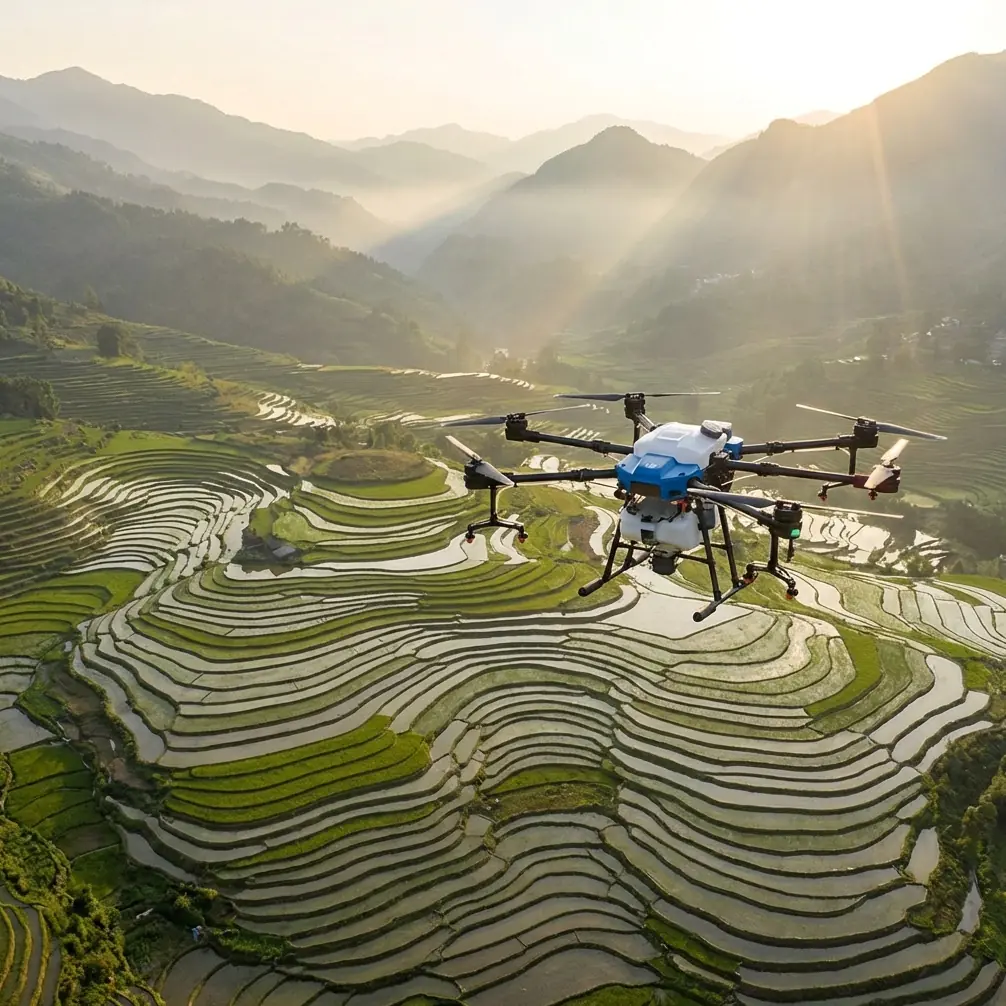
Tracking Solar Farms in Windy Conditions With the Agras T100
META: Practical expert guidance on using the Agras T100 around solar farms in windy conditions, with focus on spray drift, RTK fix stability, nozzle calibration, swath control, and safe pre-flight preparation.
Wind changes everything at a solar farm.
It shifts spray patterns, pushes fine droplets beyond the intended row, and turns a routine vegetation-management mission into a precision problem. Around photovoltaic panels, that problem gets sharper. You are not just trying to cover ground efficiently. You are trying to control drift near sensitive surfaces, maintain clean flight lines across long repetitive arrays, and keep the aircraft stable where open terrain often creates gusts and crosswinds with very little warning.
For operators looking at the Agras T100 for this kind of work, the real question is not whether the platform is capable in broad terms. The useful question is narrower: how do you configure and operate it so it performs well in windy solar farm environments without sacrificing accuracy, safety, or treatment quality?
That is where disciplined setup matters more than headline specifications.
The problem at solar farms is not acreage alone
A solar installation can look simple from the air. Long corridors. Regular geometry. Predictable access lanes. But those same features create their own operational traps. The rows form wind channels. Panel surfaces can influence local airflow. Open land around the site allows gusts to build speed. Even a moderate breeze can distort deposition enough to create uneven treatment from one pass to the next.
On a farm field, some variation in droplet placement may be tolerable depending on the task. At a solar site, drift can become both a performance issue and a maintenance issue. If spray moves off target, vegetation control weakens where it matters most, and overspray risks reaching module surfaces or nearby equipment zones that should stay clean.
This is why the Agras T100 should be viewed less as a simple spraying machine and more as a controlled application system. The aircraft, nozzles, navigation stack, and workflow all have to cooperate. In windy conditions, weak discipline in any one of those areas can compromise the mission.
Start with the part many crews rush: cleaning before takeoff
There is one pre-flight step that deserves more attention than it usually gets: cleaning the aircraft’s sensing and spray-related surfaces before every windy-site mission.
That means wiping down obstacle-sensing windows, checking camera or positioning-related surfaces for dust film, and cleaning around the spray system so residue does not affect nozzle output or pattern consistency. At solar farms, airborne dust is common. Fine debris kicked up from service roads can settle quickly on exposed components. If you launch without dealing with that contamination, two problems can emerge at once. First, safety systems may not interpret the environment as reliably as they should. Second, residual buildup around nozzles and spray plumbing can subtly alter atomization.
Those are not cosmetic issues. They are operational ones.
A partially contaminated sensing surface can reduce confidence when flying close to repetitive structures and narrow maintenance corridors. A nozzle with residue from the previous job can produce a different droplet profile than the one you planned for during calibration. In windy conditions, small inconsistencies get amplified. The aircraft may still fly and spray, but the outcome becomes less predictable. That is exactly what solar-farm operators should be trying to eliminate.
This is also where an environmental durability rating such as IPX6K matters in practical terms. A drone built to tolerate demanding washdown and harsh operating conditions is better suited to dusty infrastructure sites where frequent cleaning is not optional. For solar work, that rating is not just a line on a spec sheet. It supports a maintenance habit that directly protects flight safety and application consistency.
Wind exposes poor nozzle calibration fast
If there is one mistake that shows up quickly on solar vegetation jobs, it is casual nozzle calibration.
Many operators focus on route design first because the geometry of a solar site invites that mindset. But route precision alone does not control drift. Nozzle behavior does. If the T100 is carrying a spray setup that is even slightly out of balance, a breezy day will reveal it immediately. Uneven flow rates or inconsistent spray quality across nozzles can turn a well-planned pass into a striped result on the ground.
Calibration should therefore be treated as the first line of drift management, not an administrative box to tick.
On the T100, nozzle calibration affects how the aircraft converts a flight path into a real swath on the vegetation target. In calm conditions, you may get away with minor deviations. In gusty conditions near solar arrays, you usually will not. The operator needs confidence that each nozzle is delivering the intended output and that the chosen droplet profile matches the wind reality of that day.
The operational significance is straightforward. A calibrated system helps hold a predictable swath width, which means fewer coverage gaps and fewer overlapping passes. That protects both efficiency and containment. Once swath performance starts drifting in the real world, the pilot often compensates subconsciously by altering spacing or speed. That usually creates more variability, not less.
A better approach is to calibrate carefully, verify output before launch, and then fly the mission you planned rather than improvising after the spray pattern has already gone wrong.
RTK stability matters more than many spraying crews admit
Solar farms reward repeatable lines. They also punish drift in path accuracy.
That is why RTK fix rate deserves serious attention when planning T100 missions in these environments. The value of RTK is not abstract here. Centimeter precision is useful because solar layouts are repetitive and constrained. You may be flying narrow strips alongside panel rows, access roads, fences, drainage edges, and inverter pads. Small deviations matter more than they would over open crop land.
A strong RTK fix rate supports clean lane discipline, more reliable boundary adherence, and less cumulative error over long missions. In wind, that becomes even more important. Gusts can already push the airframe off its ideal line. If the positioning solution is also less stable than it should be, the aircraft has to correct from a weaker reference. That can affect both spray placement and the smoothness of the route.
For solar-farm tracking tasks, the operator should monitor RTK status as a live risk indicator, not just a startup condition. If fix quality degrades, the mission may still be technically possible, but the margin for precise work narrows. Around infrastructure, that is often the wrong time to pretend “close enough” will do.
This is one reason the T100 fits professional infrastructure workflows when used properly: it can support centimeter-level route repeatability, but only if the crew manages the positioning environment with the same seriousness they bring to payload and battery planning.
Swath width is not a fixed truth on windy days
A common planning error is to treat swath width as a constant.
It is not. Not at a solar farm, and certainly not in wind.
The effective swath depends on nozzle output, flight height, speed, droplet behavior, and local airflow. Between panel rows, wind can accelerate or shift direction in ways that differ from the open perimeter. That means the swath you expected at one section of the site may not fully match what you get near another.
For the T100 operator, this has two implications. First, route spacing should be conservative enough to preserve target coverage when gusts increase. Second, the aircraft’s precision navigation should be used to support controlled overlap rather than maximum theoretical productivity. On paper, a wider swath may look efficient. In practice, an exaggerated spacing plan can leave thin untreated bands that become obvious a week later when regrowth appears in alternating lines.
The smarter method is to build the mission around actual field conditions, not idealized assumptions. If wind is active, reduce the temptation to chase aggressive lane spacing. Let the platform’s route accuracy work in your favor. Precision is only valuable if it is paired with realistic agronomic judgment.
Spray drift near panels is a contamination and compliance issue
Spray drift is often discussed as a general agronomy problem. At a solar farm, it becomes a site-management issue too.
Panels, mounting hardware, sensor stations, and electrical enclosures all create zones where off-target deposition may cause trouble. Even when the chemistry itself is appropriate for the vegetation program, unintended contact with infrastructure can increase cleaning needs, complicate documentation, and create avoidable disputes about whether the application was properly controlled.
This is where the T100’s precision potential should be used deliberately. Flying lower is not automatically the right answer, and neither is increasing speed to “get through the gusts.” Both choices can backfire. Drift control is usually better served by combining properly calibrated nozzles, disciplined swath spacing, stable route tracking, and go/no-go judgment about wind thresholds.
That last point matters. Some days are not worth forcing.
A professional operator earns trust not by launching at every opportunity, but by recognizing when conditions no longer support a clean result. Around solar infrastructure, restraint is often a sign of competence.
Multispectral workflow can sharpen the mission before the tank is filled
Although the T100 is mainly discussed in spraying terms, the planning logic around solar-farm vegetation control benefits from better site intelligence. This is where multispectral mapping has practical value, even if it is performed by a different platform in the workflow.
Multispectral data can help identify stress patterns, drainage-related growth differences, and sections where vegetation pressure is building faster under or beside particular panel blocks. That matters because not every corridor needs the same response at the same time. If you map first and spray second, the T100 mission can become more selective, which reduces unnecessary exposure and improves labor efficiency.
For windy sites, that planning advantage is significant. The less time you spend spraying areas that do not need treatment, the less total exposure you create to shifting conditions. A multispectral-informed workflow does not replace operational discipline, but it helps the crew use the weather window more intelligently.
In other words, better data upstream reduces pressure downstream.
A practical windy-day workflow for the T100
For crews using the Agras T100 at solar sites, the best results usually come from a routine that is simple but strict.
Begin with a detailed cleaning check. Remove dust and residue from sensing surfaces and spray components. Confirm the aircraft is physically ready for a site where airborne grit is part of the environment.
Then verify nozzle calibration. Do not assume the setup is unchanged from the last job. Confirm output consistency and make sure the selected spray profile matches the actual wind and vegetation objective for the day.
Next, check RTK performance with patience. A stable fix is not a luxury when working around repetitive infrastructure and narrow corridors. It is part of the control system.
After that, set route spacing with wind in mind rather than brochure-level assumptions about maximum swath width. Conservative planning usually beats rework.
Finally, watch the first passes closely. If drift behavior or deposition looks wrong, adjust early or stand down. The cost of stopping is often lower than the cost of pretending the pattern will somehow improve on its own.
If your crew is building a site-specific operating checklist for windy solar work, it helps to compare notes with operators who handle infrastructure missions regularly. A quick way to continue that conversation is through this field-support chat: https://wa.me/example
Why the T100 is interesting for this niche
The Agras T100 stands out in the solar-farm scenario because it brings together several qualities that matter in combination: precise navigation, support for repeatable spray application, and a build profile suited to demanding outdoor conditions. None of those alone solves the windy-site problem. Together, they create a platform that can be adapted to it.
The key is avoiding lazy assumptions.
Do not assume precision navigation cancels out poor nozzle setup. Do not assume rugged construction excuses weak cleaning discipline. Do not assume a published swath translates directly to a gusty corridor between panel rows. When the T100 is used with that level of realism, it becomes far more valuable than a generic “ag drone” label suggests.
For solar-farm operators and contractors, that is the real takeaway. Success with the T100 in wind is less about raw capability than about system management. Clean the aircraft properly. Calibrate the nozzles carefully. Protect RTK integrity. Treat swath width as variable. Respect drift. Use better mapping when possible. And know when not to fly.
Those decisions determine whether the mission looks precise only in the app, or whether it is genuinely precise where it counts: on the ground, between the rows, with the wind doing its best to ruin your plan.
Ready for your own Agras T100? Contact our team for expert consultation.